About the Journal

Multicultural Shakespeare is an international journal devoted to Shakespearean studies; it is a forum in which researchers, especially those from non-English-speaking backgrounds, can air local concerns and themes that contribute to the creation and understanding of Shakespeare as a global phenomenon. Initially devoted mainly to translations, Multicultural Shakespeare developed into a publication mediating vigorous discussions on the adaptation of Shakespeare’s texts, their ontology and cross-cultural significance. It created an opportunity to present the universal dimension of Shakespeare’s works by focusing on the local values found in the cultures of Australia, Brazil, China, Finland, France, Germany, Great Britain, Greece, Holland, Hungary, India, Israel, Japan, Korea, Norway, Poland, Romania, Russia, Spain, Switzerland, and the USA.

Announcements

Thematic volume cfp

2026-01-25

Authors are invited to submit articles for publication in the winter issue 2026, in the thematic volume of Multicultural Shakespeare: Translation, Appropriation and Performance, Multicultural Reimaginings: Contemporary Fictional Afterlives of Shakespeare, edited by Michela Compagnoni, Roma Tre University (michela.compagnoni@uniroma3.it) and Urszula Kizelbach, Adam Mickiewicz University, Poznań (urszulak@amu.edu.pl). Complete article submissions should be sent to the Guest Editors for an initial round of peer-reviewing as well as through the OJS system: Submissions | Multicultural Shakespeare: Translation, Appropriation and Performance (lodz.pl)

Each article submission should include an abstract (ca. 250-300 words) and a list of ca. 4-6 keywords. Articles should be between 7,000 and 9,000 words in length, and they should follow the formatting style of the journal (please see Instructions for Authors, which are to be found here https://czasopisma.uni.lodz.pl/szekspir/editorial_instructions).


Theatre and book reviews should be sent directly to the Theatre and Book Reviewers.   

For a full announcement, visit: https://www.czasopisma.uni.lodz.pl/szekspir/announcement/view/292

Read more about Thematic volume cfp

Current Issue

Vol. 31 No. 46 (2025): Thematic Volume: Shakespeare Shelter for Ukraine
					View Vol. 31 No. 46 (2025): Thematic Volume: Shakespeare Shelter for Ukraine

Volume curators: Nicoleta Cinpoeş, Imke Lichterfeld

Published: 2025-12-30

Full Issue

Articles

  • The Ukrainian Project in the Free World: The Ukrainian Shakespeare Society

    Ludmiła Mnich
    21-36
    DOI: https://doi.org/10.18778/2083-8530.31.03
  • Shakespeare Studies at the Ivan Franco National University of Lviv: Maiia Harbuziuk in memoriam

    Myroslava Tsyhanyk, Khrystyna Novosad-Lesiuk
    37-47
    DOI: https://doi.org/10.18778/2083-8530.31.04
  • The Quest for Selfhood: Shakespeare’s Sonnets Interpreted by Maria Hablevych

    Anna Sverediuk, Oksana Dzera
    49-67
    DOI: https://doi.org/10.18778/2083-8530.31.05
  • Britain, Shakespeare, and Ukraine Interview with Prof. Nataliya Torkut, Head of Український Шекспірівський центр [Ukrainian Shakespeare Centre; Ukraïns’kij Šekspìrìvs’kij centr] by Dr. Olha Kvasnytsia, journalist at the newspaper День [The Day; Denʼ]

    Olha Kvasnytsia, Nataliya Torkut
    69-90
    DOI: https://doi.org/10.18778/2083-8530.31.06
  • Virtual Museum “#Hamlet_UA: Act 1, Scene 1943” in the Context of Decolonizing Knowledge about Ukraine

    Nataliya Torkut, Svitlana Deineka, Roman Lavrentii
    91-110
    DOI: https://doi.org/10.18778/2083-8530.31.07
  • Lost (in) Translations: How Ukrainian Shakespeareana Must Be Bigger Than We Think

    Daria Moskvitina, Bohdan Korneliuk
    113-139
    DOI: https://doi.org/10.18778/2083-8530.31.08
  • Modernising the Ukrainian Language through the Power of Translation: Ihor Kostetskyi’s Shakespeare’s Sonnets

    Lada Kolomiyets
    141-162
    DOI: https://doi.org/10.18778/2083-8530.31.09
  • “Love looks not with the eyes, but with the mind”: Reading Vladyslav Yerko’s Illustrations to Shakespearein Ukrainian

    Darya Lazarenko, Yurii Cherniak
    163-177
    DOI: https://doi.org/10.18778/2083-8530.31.10
  • The Precariousness of Human Existence in William Shakespeare’s Plays: A Ukrainian Perspective

    Olha Bandrovska, Nataliya Torkut
    181-200
    DOI: https://doi.org/10.18778/2083-8530.31.11
  • Macbeth in Wartime Ukraine

    Viktoriia Marinesko, Anastasiia Brynko
    201-210
    DOI: https://doi.org/10.18778/2083-8530.31.12
  • William Shakespeare’s Hamlet: A Novelty on the Ukrainian Puppet Stage

    Roman Lavrentii, Olesia Ostapiuk
    211-230
    DOI: https://doi.org/10.18778/2083-8530.31.13
  • Depicting Collective Support on the Theatrical Stage: The Case of We Are Hamlet

    Hanna Veselovska
    233-242
    DOI: https://doi.org/10.18778/2083-8530.31.14
  • Shakespeare, Trauma, and Social Change: Inclusive Ukrainian Theatre Projects (2019–2023)

    Sofiia Rosa-Lavrentii
    243-255
    DOI: https://doi.org/10.18778/2083-8530.31.15
  • The Hamlet Syndrome (dir. Niewiera & Rosołowski, 2022) – Drawing a Portrait of the Maidan Generation with Piotr Rosołowski

    Agnieszka Rasmus
    271-284
    DOI: https://doi.org/10.18778/2083-8530.31.17
  • Romeo and Juliet: From a Performance for Teenagers to an Innovative Dramatic Performance in the Time of War

    Yuliia Shchukina, Liudmyla Vaniuha
    285-300
    DOI: https://doi.org/10.18778/2083-8530.31.18
  • Shelter from the Storm: Two Recent Shakespeare Stagings by the Ivano-Frankivsk Drama Theatre

    Oksana Fedorkiv, David Livingstone
    303-314
    DOI: https://doi.org/10.18778/2083-8530.31.19
  • War-torn King Lear: Adaptation as Catharsis

    Gabriela Cheaptanaru
    315-328
    DOI: https://doi.org/10.18778/2083-8530.31.20

Other

  • Introduction: Shakespeare Shelter

    Nicoleta Cinpoeş, Imke Lichterfeld
    7-11
    DOI: https://doi.org/10.18778/2083-8530.31.01
  • Foreword: Shakespeare in Ukraine

    Irena R. Makaryk
    13-17
    DOI: https://doi.org/10.18778/2083-8530.31.02
  • “Hereafter, in a better world than this, I shall desire more love and knowledge of you”: Kelly Hunter on Art, Healing, Trauma and Working with Ukrainian Families. A Conversation with Darya Lazarenko and Imke Lichterfeld

    Darya Lazarenko, Imke Lichterfeld
    257-270
    DOI: https://doi.org/10.18778/2083-8530.31.16
  • “Ha*l*t is a play about a play that never happened.” Notes on HA*L*T

    Imke Lichterfeld
    331-332
    DOI: https://doi.org/10.18778/2083-8530.31.21
  • L_UKR_ECE at the Craiova International Shakespeare Festival, Romania, 2022

    Sorin Cazacu, Anna Kowalcze-Pawlik
    333-335
    DOI: https://doi.org/10.18778/2083-8530.31.22
  • Exploring Object Afterlives: Ophelia. Subject Study at the 28th Gdansk International Shakespeare Festival, 2024

    Anna Kowalcze-Pawlik
    337-340
    DOI: https://doi.org/10.18778/2083-8530.31.23
  • Working Title: A Collaboration Made in York

    Philip Parr
    341-344
    DOI: https://doi.org/10.18778/2083-8530.31.24
  • Theatre Studio of IDP’s Uzhik Production of King Lear, directed by Viacheslav Yehorov, staged at the Other Place, Stratford-upon-Avon, on 14 and 15 June 2024

    Cristie Carson
    345-349
    DOI: https://doi.org/10.18778/2083-8530.31.25
  • Afterword: IF Shakespeare UA. The First International Shakespeare Festival in Ivano-Frankivsk, Ukraine, 17–23 June 2024

    Nicoleta Cinpoeş, Anna Kowalcze-Pawlik
    351-360
    DOI: https://doi.org/10.18778/2083-8530.31.26
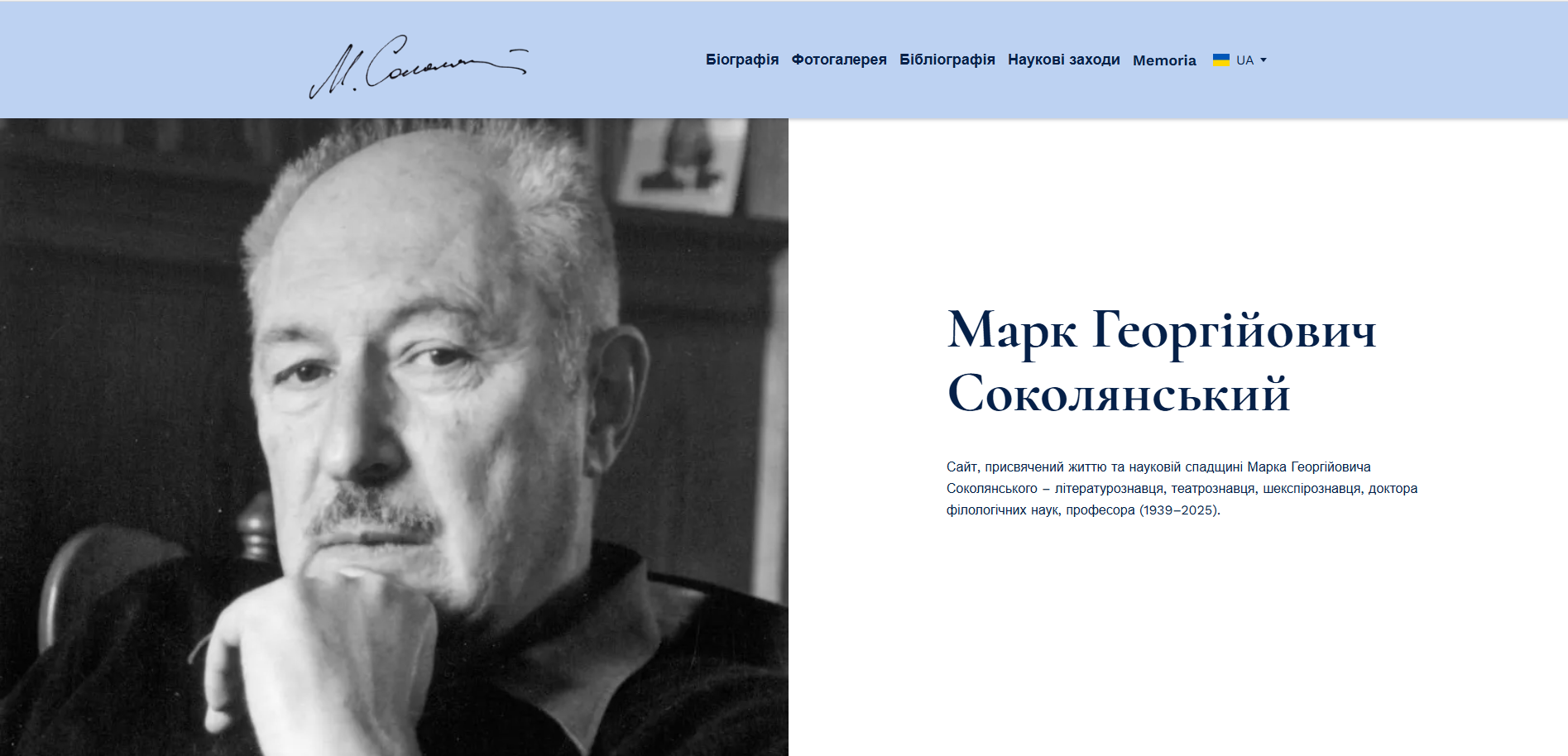
  • In Memoriam: Mark Sokolianskyi (1939–2025)

    Nataliya Torkut, Daria Moskvitina
    361-362
    DOI: https://doi.org/10.18778/2083-8530.31.27
  • Contributors

    Nicoleta Cinpoeş, Imke Lichterfeld
    363-371
View All Issues

Increase in the contribution of foreign reviewers in the assessment of articles submitted for publication in the semi-yearly “Multicultural Shakespeare: Translation, Appropriation and Performance” – financed under Agreement No. 605/P-DUN/2019 12.06.2019 with funds provided by the Ministry of Science and Higher Education for activities popularising science