Poles and Finns under Russian rule
DOI:
https://doi.org/10.18778/2300-0562.08.03Keywords:
Russian Empire, Finland, Poland, political systems comparitionAbstract
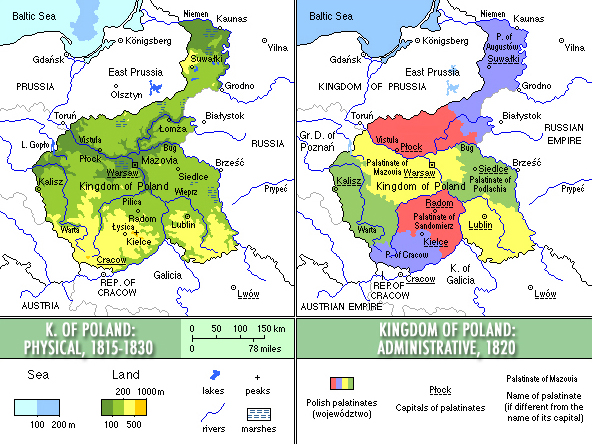
An attempt to compare Russian Tsar Alexander I was the head of the Grand Duchy of Finland, which the Russian army captured in 1809 as a result of the Russo-Swedish war. The final act of the Congress of Vienna of June 1815 decided to establish the Kingdom of Poland. Beside the title of Grand Duke of Finland tsar, Alexander I was awarded the title of the King of Poland. From that moment on, for over one hundred years, the fate of the Grand Duchy of Finland and the Kingdom of Poland was intertwined during the rule of five Russian tsars.
The aim of this paper is to answer the question whether two different ways on the road to independence – romantic Polish way with national uprisings, and pragmatic Finnish, relative loyal to the Russian tsars – had an impact on their policy towards both nations. The Kingdom of Poland and the Duchy of Finland were autonomous, were in a personal union with Russian tsars, had their own constitutions, parliaments, armies, monetary systems and educational structures, and official activities were held in Polish (Polish Kingdom) and Swedish (in the Grand Duchy of Finland). Both countries also had their own universities.
The first national uprising in the Kingdom of Poland, which broke out in November 1830, resulted in a wave of repression. The Constitution was replaced by the so-called The Organic Statute, the Sejm (the Parliament) and the independent army were liquidated. The Kingdom was occupied by the mighty Russian army, and in 1833 martial law was introduced. The second national uprising of January 1863 led to another wave of repression and intensive Russification of Polish territories. In 1867, the autonomy of the Kingdom of Poland, its name and budget were abolished. From 1872 the Polish language was only an optional choice. After 1863, the policy of the Russian authorities changed towards the Grand Duchy.
A session of the Finnish parliament (Eduskunta) was convened for the first time since 1809, the new parliamentary law allowed the dissemination of the Finnish language. After the deadly assault on Alexander II in 1881, his son Alexander III made attempts to limit also Finland’s autonomy. The years 1899–1904 were called the first period of Russification in Finland (“the first period of oppression”). The Manifesto of June 1900 introduced obligatory Russian language in correspondence of officials with Russia. In 1901, the national Finnish army was liquidated. In Russia this was the beginning of the process of the empire’s unification into one cultural, political and economic system. After a short thaw as a result of the 1905 revolution in Russia, the Grand Duchy of Finland, the so-called “second period of oppression” and anti-Finnish politics took place. During the great war of 1914–1918, the Grand Duchy was on the side of Russia. The territories of the former Kingdom of Poland were under German rule since 1915. After the outbreak of the revolution in Russia, the Eduskunta (on 6 December 1917) passed a Declaration of Independence. After a short period of regency, on 19 July 1919, the Finns adopted the republican system with a parliamentary form of government.
On 11 November 1918 Germany surrendered on the Western Front. On that day, the Regency Council in Warsaw handed over military authority to the Polish Legion commander Józef Piłsudski. Although Poland still had to fight for the final shape of the state, the 11th of November 1918 is considered the first day of recovered Polish independence.
References
Aittokoski H., 2004, Finland shaken 100 years ago by murder of Governor-General Bobrikov, “Helsingin Sanomat International Edition”, 15 June 2004, http://www.hs.fi/english/article/1076153076611
Anderson E., 1969, The Scandinavian Area and the Crimean War in the Baltic, “Scandinavian Studies”, 41 (3): 263–275.
Ascher A., 1994, The Revolution of 1905: Russia in Disarray, Stanford University Press.
Ascher A., 2002, P.A. Stolypin: The Search for Stability in Late Imperial Russia, Stanford University Press, California.
Cieślak T., 1983, Historia Finlandii, Ossolineum, Wrocław–Warszawa–Kraków–Gdańsk–Łódź.
Colvile R.F., 1940, The Navy and the Crimean War, “The RUSI Journal”, 85: 73–78 online. DOI: https://doi.org/10.1080/03071844009427344
Davies N., 1996, Europe: a History, Oxford University Press.
Davies N., 2005, Gods Playground: A History of Poland, Columbia University Press.
Ganse A., 2007, Swedish War of Liberation, 1521–1523, World History at KMLA (Korean Minjok Leadership Academy), http://www.zum.de/whkmla/military/16cen/sweddan15211523.html
Jensen R., 2018, The 1904 Assassination of Governor General Bobrikov in the Context of the Era of Anarchist Terrorism, Northwestern State University; Terrorism in Nordic Countries, “Terrorism and Political Violence”, 30 (5): 828–843. DOI: https://doi.org/10.1080/09546553.2018.1445821
Johnson A.S., Bickford C.A., Hudson W.W., Dole N.H., 1899, “Cyclopedic Review of Current History”, 9, Garretson, Cox & Co.
Kennan G., 1981, Siberia and the Exile System, James R. Osgood, McIlvaine & Co., London.
Kieniewicz S., 1967, Polish Society and the Insurrection of 1863, “Past & Present”, 37. DOI: https://doi.org/10.1093/past/37.1.130
Kirby D., 2006, A Concise History of Finland, Cambridge University Press. DOI: https://doi.org/10.1017/CBO9781107280229
Kirby D., 2014, The Baltic World 1772–1993: Europe’s Northern Periphery in an Age of Change, Routledge, New York. DOI: https://doi.org/10.4324/9781315846873
Kirby D.G., 1980, Finland in the Twentieth Century: A History and an Interpretation, University of Minnesota Press.
Kozelsky M., 2012, The Crimean War 1853–1856, “Kritika: Explorations in Russian and Eurasian History”, 13 (4): 903–917 online. DOI: https://doi.org/10.1353/kri.2012.0047
Kubiak K., 2017, Finlandia biało-czerwona, “Polityka”, 49, 6–12 December 2017.
Magocsi P.R., Sedlar J.W., Kann R.A., Jevich Ch., Rothschild J., 1974, A History of East Central Europe: The lands of partitioned Poland 1795–1918, University of Washington Press.
Mannerheim C.G., 2017, Wspomnienia, Editions Spotkania, Warszawa.
Morfill W., 1902, A history of Russia: from the Birth of Peter the Great to Nicholas I, James Pott.
Ponting C., 2011, The Crimean War: The Truth Behind the Myth, Random House.
Scott F.D., 1988, Sweden. The Nation’s History, Southern Illinois University Press, Carbondale and Edwardsville.
Siarczyński F., 1843/1858, Obraz wieku panowania Zygmunta III. Króla Polskiego i Szwedzkiego: zawieraiący opis osób żyiących pod jego panowaniem, znamienitych przez swe czyny pokoiu i woyny, cnoty lub występki dzieła piśmienne, zasługi użyteczne i cele sztuki, t. I, Poznań (1843), ss. 337; t. II, Poznań (1858), ss. 405.
Sierakowski S., 2018, Wyobrazić sobie Polskę, Rozmowa z Timothym Snyderem, amerykańskim historykiem o stuleciu polskiej niepodległości, “Polityka”, 45, 7–13 November 2018.
Słownik encyklopedyczny: Historia, 1997/1998, W. Głuch (ed.), Wydawnictwo Europa, Wrocław.
Szordykowska B., 2011, Historia Finlandii, Wydawnictwo TRIO, Warszawa.
Crimean War, [in:] Encyclopaedia Britannica, https://www.britannica.com/event/Crimean-War
Declaration of the Rights of the Peoples of Russia, https://www.marxists.org/history/ussr/government/1917/11/02.htm
How did Sweden/Scandinavia switch to the feudal system?, https://www.reddit.com/r/AskHistorians/comments/19zdt8/how_did_swedenscandinavia_switch_to_the_feudal/
http://motherearthtravel.com/history/finland/history-4.htm
http://www.europecentenary.eu/the-finns-in-the-first-world-war/
http://www.unofficialroyalty.com/march-13-1881-assassination-of-tsar-alexander-ii-of-russia/
http://www.zum.de/whkmla/military/16cen/sweddan15211523.html
https://alphahistory.com/russianrevolution/reform-and-reaction-in-russia/
https://encyclopedia.1914-1918-online.net/article/decree_on_peace
https://en.wikipedia.org/wiki/Arseny_Zakrevsky
https://finland.fi/life-society/main-outlines-of-finnish-history/
https://upload.wikimedia.org/wikipedia/commons/9/9f/Finlandduchy.jpg
https://upload.wikimedia.org/wikipedia/commons/7/70/KingdomofPoland1815.jpg
https://www.bl.uk/people/nicholas-ii-of-russia
https://www.britannica.com/biography/Alexander-III-emperor-of-Russia
https://www.britannica.com/event/January-Insurrection
https://www.britannica.com/event/World-War-I
https://www.deviantart.com/spiritswriter123/art/The-Good-Tsar-561246337
https://www.helsinki.fi/en/helsinki-university-museum/about-us/history-of-the-university
https://www.quora.com/Why-is-the-quote-The-War-to-End-All-Wars-ironic
People, Nicholas II of Russia, https://www.bl.uk/people/nicholas-ii-of-russia
The Continental System and the blockade 1807–1811, https://www.britannica.com/event/Napoleonic-Wars/The-Continental-System-and-the-blockade-1807-11
The Final War, The Swedish-Russian War of 1808–1809, http://www.multi.fi/~goranfri/index.html
The Finns in the First World War, http://www.europecentenary.eu/the-finns-in-the-first-world-war/
The May Laws, http://www.jewishencyclopedia.com/articles/1132-alexander-iii-alexandrovich-emperor-of-russia
The Rise of Nationalism in Finland, http://countrystudies.us/finland/11.htm
The Russian Empire, http://countrystudies.us/finland/13.htm
The Russian Grand Duchy of Finland, http://countrystudies.us/finland/10.htm
Downloads
Published
Issue
Section
License

This work is licensed under a Creative Commons Attribution-NonCommercial-NoDerivatives 4.0 International License.
How to Cite