 https://orcid.org/0009-0005-2242-292X
Abstract. One of the key components of the image of athletes is the media discourse. The media message reaching its recipients affects their perception of sport and people involved in it. This seems particularly important in the context of sports for people with disabilities due to a number of stereotypes attributed to people with disabilities in society. The image of para-athletes created in the media can have various consequences, and what largely determines them is the way media messages are formulated. The purpose of the following considerations is therefore to analyze sports articles with particular attention to the types of media used in writing about sports for people with disabilities. In the first part of the work, I wanted to present the specificity of parasport related to it, as well as the role played by the media in relation to the situation of para-athletes, including Paralympic athletes. Then, I described the research methods and tools that I used at the stage of analyzing press materials and selecting appropriate typologies. The last part contains the results of my analysis of press articles contained in 25 issues of “Przegląd Sportowy” from the period August 17, 2021–September 13, 2021, around the Paralympic Games in Tokyo on August 24, 2021–September 5, 2021.
Keywords: Paralympic Games, disability, parasport, paraathletes, sport of people with disabilities, paralympic athletes, media discourse.
Sport for people with disabilities has always been an underrepresented field in mass media (Sahaj 2016). In major Polish media, athletes with disabilities are rarely seen, and the coverage is usually limited to information about individual sporting events featuring the national team (Niedbalski 2015). This situation has started to gradually change in our country in recent years. We can now follow the Paralympic Games on television, evidenced by Telewizja Polsat purchasing the broadcasting rights for the Winter Paralympic Games in Beijing and their summer edition to be held in Paris in 2024 (Office of the Government Plenipotentiary for Persons with Disabilities 2022). Additionally, on the Internet, we have the opportunity to observe Polish athletes with disabilities on their private channels, where they can shape their own image (Niedbalski 2015). The presence of para-athletes in the public sphere is extremely important; however, without the right narrative around it, it is insufficient to achieve inclusive goals. The way media talk about parasport also reflects its social perception. Mass media are active in the production and distribution of knowledge, and what they share can be a leading source of awareness about a given phenomenon for many (Niedbalski 2015). Some recipients, in matters they do not encounter daily, build their worldview based on mass communication (Struck-Peregończyk, Leonowicz-Bukała 2018). Therefore, the way mass media formulate their messages and the topics they address is extremely important.
The issue of the image of athletes with disabilities in Polish media was analyzed by Niedbalski in 2015. The sociologist, studying the media discourse about sports for people with disabilities, examined radio and television broadcasts as well as the press. The analyses conducted by the researcher, as he notes, “were based on data and information from before 2013 and earlier years” (2015: 143), so the way media have treated para-athletes over the years could have changed. Niedbalski categorized and described the types of media discourses and how within them, athletes with disabilities are discussed. He identified a stereotypical discourse framework, a discourse of ignorance, a discourse of superiority and condescension, and a discourse of comparing people with disabilities to fully able-bodied people. According to him, the initial appearances of parasport in the media were accompanied by a stereotypical discourse framework. However, this is a broad category encompassing many aspects; by focusing on specific aspects through discourses, I distinguished: the discourse of absence, the discourse of tragedy, the rehabilitation discourse, and the superhero discourse, which I compared with my findings in the final stage of the study.
The most popular types of images of people with disabilities created by the media, as indicated by sociological analyses, are the figure of the victim and the hero or, alternatively, the “super-crip” (Struck-Peregończyk, Leonowicz-Bukała 2018). The ill and dependent individual requiring assistance, and the person with extraordinary abilities overcoming adversity. Niedbalski (2015) also points to the low interest of the media and the fragmentary nature of media materials on the topic of sports for people with disabilities.
The issue of the narrative around para-athletes was also partially discussed in the context of advertising and mass media by Sahaj (2016), focusing on people with disabilities as creators, recipients, and users of media. Many aspects of how athletes are talked about or how their images are created by the media remain unexplored or superficially examined.
The aim of this article is to analyze and identify ways of talking about athletes with disabilities in the context of the Tokyo 2020 Paralympic Games in Polish sports press, using the example of “Przegląd Sportowy”. In such a medium as a sports magazine, messages are exclusively about sports, targeting readers who are interested in this topic, which distinguishes my analysis from existing research works. Moreover, in my study, I focus only on the images of athletes with disabilities. From the sociological texts I have accessed, only Niedbalski (2015) paid attention solely to the figures of athletes with disabilities. Furthermore, in my analysis, I emphasize how the entire journal is constructed in the context of content about parasport, the language used, and the themes addressed.
Therefore, the text supplements the state of knowledge about the image of para-athletes in the media and the discourse related to them, simultaneously capturing certain methods and tools used to build the image of sports for people with disabilities. In this context, the influence of media on public opinion and the shape of sport is significant, as well as the fact that “broader processes that are already present in other fields of social life are reflected” (Nosal 2015: 17) in sports competitions themselves.
Sports for people with disabilities, although increasingly similar to sports for fully able-bodied individuals, differ significantly in many aspects. Broadly understood sports activities for people with disabilities should be seen as “a form of participation in physical culture (physical recreation and sports), whose main goal is to maintain and develop functional agency regained in the process of medical rehabilitation, and for those who express a need for competition, striving to achieve the best possible results” (Koper, Tasiemski 2013: 117). A crucial characteristic of sports for people with disabilities is the existence of rules and regulations that take into account the functional capabilities of individuals with various types and degrees of dysfunction. Additionally, there are specific disciplines created specifically for certain categories of disabilities, such as goalball for the visually impaired. The specificity of sports for people with disabilities is also reflected in the specialized equipment they use: “the development of new technologies has enabled people with significant movement impairments to participate in sports competitions in disciplines that were previously completely inaccessible to them” (Koper, Tasiemski 2013: 120). For example, the creation of hand-powered bicycles has made it possible for individuals with severe lower limb dysfunctions to compete in cycling.
The continuous improvement of equipment translates into better results for athletes and increasing competition, which leads to the growing specialization of sports for people with disabilities. This field can be divided into three types based on the level of specialization: adaptive sports, recreational sports, and elite sports. This analysis focuses on articles related to elite sports for people with disabilities, characterized by extensive and ongoing specialization. This type of sports involves the most rules and regulations governing competition. These can be felt even at the stage of choosing a sports discipline, as not every disability will fit within the formal frameworks applicable in a given area. The Polish Paralympic Committee states that “each sports discipline has a separate medical classification, which also determines the start groups” (Polish Paralympic Committee 2017: 9), meaning categories in which athletes with similar or the same types of disabilities can fairly compete. Classification of athletes is crucial to ensure the fairest competition possible. It is essential to apply the appropriate rules governing a given sports discipline and a systematic way of grouping athletes according to their functional capabilities (Koper, Tasiemski 2013). The classification system is continually refined in response to the ever-evolving sports competition.
The primary objective of individuals participating in elite sports is to achieve the highest possible results, set records at prestigious national competitions, and subsequently excel on the international stage (Koper, Tasiemski 2013). Practicing elite sports involves systematic training and competing in events: “Elite sports take the form of a spectacle, whose participants are essentially individuals with exceptional physical abilities and psychophysical capabilities, subjecting themselves to intense training and strict personal life regimens” (Koper, Tasiemski 2013: 117). The presence of this type of sports in the media is valuable for gaining sponsors and related financial rewards (Niedbalski 2014). According to Niedbalski, sports and media “constitute a kind of tandem, based on mutual exchange, from which both parties derive mutual benefits” (Niedbalski 2014: 302).
However, despite the growing specialization, sports for people with disabilities face “the problem of so-called ‘non-media-friendliness’ (...) and low public interest in events from the world of elite sports” (Niedbalski 2015: 207). Parasports typically appear in the media when it is politically correct to do so, gaining the status of the most noble when compared to other competitors, without paying attention to the accuracy of the messages. During sports events, there is a sudden interest in sports for people with disabilities. The temporary focus is on the “spectacle”, where “what is visible is primarily difference, but not shown in its positive variation, forcing a redefinition of the way of looking at and understanding a different body, but in a poorly understood carnivalization and grotesqueness” (Kubiński 2017: 175). Watching this can evoke admiration in viewers, transforming into discouragement caused by, on one hand, an inspiring individual, and on the other hand, a sense of guilt for not achieving anything remarkable with their normative, fully able-bodied selves (Kubiński 2017). This reaction may stem from the fact that “very often a person with a disability, especially practicing sports, is for the normative society not so much an athlete, but a ‘patient struggling with their limitations” (Kubiński 2017: 171). Thus, the way mass media formulate their messages and the topics they address is extremely important. The message broadcast in mass media is a kind of “carrier of views, creating knowledge for the broader masses” (Niedbalski 2015: 132). The most significant parasport event enjoying exceptional media interest is the Paralympic Games. It is during these Times – directly before, during, and immediately after tchem – that the most media coverage about athletes with disabilities appears. These messages were the subject of my interest in the conducted study.
The main aim of this article is a qualitative analysis of the content of the printed sports daily “Przegląd Sportowy” to identify ways of building narratives about parasport and its athletes. This is important due to the fact that, according to Jabłońska citing Teun van Dijk (2006: 56), “there are a number of similarities between the ways of speaking and writing that individuals use to express their beliefs”. This also applies, according to the researcher, to the processes of discourse reception. The aim of this analysis is to describe the ways of formulating messages about people with disabilities in sports and to identify patterns emerging in this area. The research attention is focused on the space allocated to materials about sports for people with disabilities, its composition, the topics covered, and the language used for description.
The subject of the study was 25 issues of the daily “Przegląd Sportowy” published in the period (17.08.–13.09.2021), as this was the time when the most materials on the topic of interest appeared. The issues selected for the study were published in the week preceding the Paralympic Games in Tokyo, during the Games, and the week after their conclusion. The reason for choosing these issues was preliminary research suggesting that articles related to sports for people with disabilities appear in “Przegląd Sportow” only during major parasport events. “Przegląd Sportowy” is the oldest and most widely read sports daily in Poland, as well as the only printed sports daily in Poland. Due to the unique structure of printed press and its wide availability, the printed version of the daily was analyzed.
The main research question was: How does “Przegląd Sportowy” talk about sports for people with disabilities in the context of the Tokyo 2020 Paralympic Games? It was further refined by four detailed research questions: (1) Does “Przegląd Sportowy” write about athletes with disabilities? (2) How much space is allocated to athletes with disabilities in individual issues of “Przegląd Sportowy” and in which part of the daily is this space located? (3) How are athletes with disabilities portrayed in “Przegląd Sportowy”? (4) What language is used by “Przegląd Sportowy” journalists to write about athletes with disabilities?
The issues of the daily from the period (17.08.–13.09.2021) were analyzed using discourse analysis, which, as Jabłońska (2006) writes, should show the relationships between text, social cognition, power, speech, and culture. This seems important due to the fact that language, according to French sociologists Foucault and Bourdieu, is a source of violence and hidden power relations (Jabłońska 2006). Although the theories of the classics characterize different philosophies of discourses, “they situate language at the center of all practices and socialization” (Jabłońska 2006: 58). A researcher analyzing discourse should therefore take an interdisciplinary approach and reveal the aforementioned linguistic violence and power relations (Jabłońska after van Dijk 2006). The author also points out that in contemporary discourse research, both statements and texts are included as part of the analysis, whereas in the past there was no agreement on this issue (Jabłońska 2006). Discourse analysis is conducted by examining the meanings and textual statements, “text” is broadly understood here as any object or activity endowed with social meaning (Rancew-Sikora, Pawliszak 2012: 6), including images. Discourse thus consists of written and spoken messages present in the public sphere. Content analysis, which involves examining recorded human messages, according to Babbie (2004: 346), is a method “well-suited to studying messages and answering the classic question in message research: ‘who says what to whom, why, how, and with what effect?’”
To study discourse, it is therefore necessary to analyze messages formulated for the general public. Due to the transient nature of spoken content, I decided to analyze textual materials and the images published with them, which in printed form allow for the closure of the boundaries of the studied material. Grounded theory allowed for an open and flexible research process that began with observation, which then enabled the formulation of preliminary research hypotheses. In this research method, “hypotheses, concepts, and properties of concepts are built during empirical research and are modified and verified during research” (Konecki 2000: 26). According to it, “data collection, hypothesis building, and hypothesis verification are not clearly separated in time as in traditional research but are procedures that intertwine multiple times during a long proces” (Konecki 2000: 27).
The research process began with analytical observation. It allowed, at the initial stage, to notice certain regularities in describing athletes with disabilities in the media and to familiarize myself with those already described by other sociologists, with which the research hypotheses were confronted during the comparative analysis stage. This analysis was conducted by comparing the author’s distinguished modes with the discourses developed by Niedbalski (2015).
Each stage of data collection and analysis was accompanied by note-taking to appropriately understand the regularities occurring in the discourse. According to Babbie, this allows finding order in the chaos that arises during data collection. In qualitative data analysis, it is important to organize and sort emerging thoughts during the process (Babbie 2004: 346). Based on the noted observations, I identified the following modes of writing about athletes with disabilities in “Przegląd Sportowy”:
Analytical observation, along with the analysis of all appearing materials regarding ways of talking about athletes with disabilities, resulted in the gradual emergence of types that turned out to be crucial at the coding stage. Based on the following guidelines, individual fragments of the daily’s issues were coded into appropriate modes.
| Modes | Types of content corresponding to the ways of writing about athletes with disabilities | |||
|---|---|---|---|---|
| Sport | Discussing competition and rivalry |
Information about athletes’ achievements | Reporting medals won at events | |
| Barriers and overcoming them | Stories of injuries | Stories of illnesses | Stories of accidents | |
| Role combination | Reflections on how an athlete with disabilities combines private life, professional career, and sports career | |||
| National | Representing the country internationally | Athletes as sources of “our hope” and pride | ||
| Technical and structural | Information about the equipment used by athletes with disabilities | Relationship between disability and sports discipline | ||
Source: own elaboration.
The results presented below are divided into sections. Each section answers the specific research questions posed in the study. The part discussing the composition of the content in the daily touches on the placement of the text, accompanying photographs, and the most frequently addressed topics. Next, I answer the question about the language used to talk about athletes with disabilities, distinguishing its types. In the last, longest part of the article, I present the five modes – sport, national, barriers and overcoming them, role combination, and technical and structural – describing the ways of talking about para-athletes, which include elements already mentioned earlier – selection of topics, photographs, layout of space in the issue, and language.
The presence of the topic of sports for people with disabilities is still rare in sports press. The example of “Przegląd Sportowy” shows the event-driven nature of texts about athletes with disabilities. This means that interest in parasport arises only during major sports events, which fades away after their conclusion. When deciding to select individual issues of the daily (17.08.–13.09.2021), I also wanted to check whether articles related to sports for people with disabilities were created before and after the Tokyo Paralympic Games. However, I did not notice any mentions on this topic outside the period covering the Games. I did, however, note three issues of the daily (3–5.09.2021) where, in addition to articles on the Paralympics, there were mentions of another important sports event involving athletes with disabilities in Poland, the National Tennis Day. In these three cases, there were brief mentions of the participation of athletes with disabilities in various events and/or photographs showing para-athletes during sports competitions.
Journalists, trying to capitalize on the temporary interest built around popular parasport events, create materials most often presenting stories of athletes with disabilities meant to inspire and evoke sympathy and admiration. The topics that received the most space were the successes achieved by athletes and their private stories. The accompanying photographs usually showed athletes in their everyday sports circumstances.
Analyzing the selected issues of “Przegląd Sportowy”, I noticed a clear tendency of the daily’s creators to place articles about sports for people with disabilities on one of the last pages of the issues. In four out of twelve cases, the articles were placed on the last pages of the newspaper. The remaining texts were located on the third pages from the end of the daily. Exceptions to this rule were the issues (3–5.09.2021) related to the National Tennis Day. In their case, additional fragments of articles or photographs of, among others, athletes with disabilities appeared.
There can be several reasons for such placement of articles about athletes with disabilities. One of them is the probable assumption of low interest in sports for people with disabilities. As a result, they may not reach the last pages of the newspaper because what drove their desire to buy a given issue of the press was contained on the first pages of the issue, losing the chance to arouse interest in parasport.
At the same time, the daily shows signs of creating opportunities for athletes with disabilities to demarginalize. An example of this is dedicating a large space in articles to Paralympians’ statements, quoted as individual citations or interviews on which the entire text was based. This allows athletes to create narratives about themselves to some extent. This also enables, among other things, the recognition of the problem of insufficient funding for parasport and the inequalities associated with it that athletes face daily, which may be overlooked by people outside the parasport environment.
One of the elements that make up a specific narrative in a given thematic area is language. Depending on the author’s intent, one piece of information can be communicated in many ways. Studying “Przegląd Sportowy,” I distinguished three ways of formulating messages about athletes with disabilities: using inclusive language, communal language, and gendered language.
Inclusive language is a type of neutral message formulation. Its use allows for the inclusion of all individuals in a given narrative, respecting their diversity and subjectivity.
Inclusive language covers a range of issues arising from anti-discrimination policies in modern multicultural societies. These include gender-neutral language, ethnophaulisms (offensive terms for ethnic groups), negative gender or racial stereotypes, religious prejudices, expressions offensive due to appearance or disability (Nasalski 2020: 276).
This type of language was the most commonly used in writing about sports for people with disabilities in “Przegląd Sportowy”. The use of feminatives and appropriate forms describing athletes with disabilities indicates an attempt to follow linguistic and cultural changes. However, there was noticeable inconsistency among the authors in this regard, with incorrect phrases about people with disabilities treating disability as the main feature of a person.
Gendered language, which appeared twice in the analyzed texts, reflects gender norms present in society and “talks” about representatives of the sexes accordingly (Mazur, Organista 2016). This type of language treats gender in a dichotomous way, maintaining traditional understandings of gender and equating representatives with culturally attributed stereotypes. The gendered language in the analyzed press concerned only women, with phrases like “a girl worth her weight in gold” and “girls like gold”.
However, communal language, emphasizing the shared belonging to society of both athletes and readers, was frequently used, almost in every article, in the form of phrases like „our medalist”, “our athletes”.
These measures, however, do not seem to differ significantly from those used for fully able-bodied athletes. “Przegląd Sportowy” also writes about fully able-bodied athletes as “our strikers”, “volleyball players”, and uses phrases like “second racket in the world Agnieszka Radwańska”. Gendered language in publications likely aimed to attract readers’ attention with its catchy and familiar phrases like “a girl worth her weight in gold” or “girls like gold” from everyday life. Using communal language likely aimed to arouse readers’ interest in sports for people with disabilities by evoking a sense of community.
The way of writing about athletes with disabilities consists of elements previously mentioned – selection of topics, photographs, layout of space in individual issues, and language. Based on these elements, I identified five modes in this area while examining the issues of “Przegląd Sportowy” from the period (17.08.–13.09.2021): sport mode, national mode, barriers and overcoming them mode, role combination mode, and technical and structural mode.
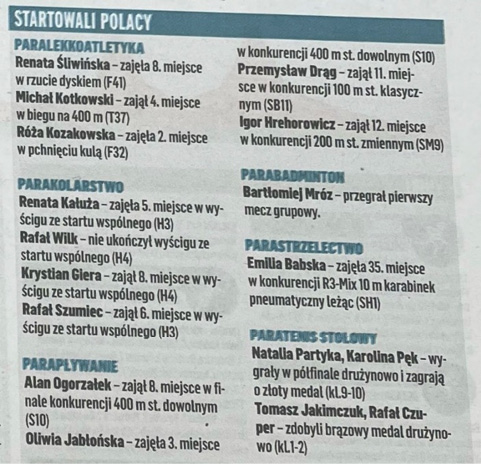
Figure 1. Summary of achievements of Polish athletes on September 1, 2021, at the Tokyo Paralympic Games
Source: “Przegląd Sportowy” (2021d), pp. 17
The sport mode of writing about athletes with disabilities primarily serves an informative function. This mode focuses on summarizing the most important moments of competitions, presenting sports achievements, appreciating the hard work put in by athletes, and informing about medals won at various sports events.
When formulating such messages, athletes’ performances were reported using phrases like “hard work”, “fighting for medals”, or “willpower and determination”. There were no expressions highlighting the athletes’ accomplishments, but there was mention of the objectively hard work that both athletes with disabilities and fully able-bodied athletes must put in to participate in the Games.
The sport mode appeared independently in two issues of the daily – published on the day of the ceremonial opening and the day of the closing of the Games. These contained articles expressing medal hopes and indicating the team’s goals for the upcoming Games, as well as summarizing the Poles’ performances and confronting their initial intentions with the actual achievements of the team: “We did not win several medals that seemed certain. If we want to return to the top 10 in the rankings, we will have to work very hard” (Przegląd Sportowy 2021f: 24). Such publications did not require the use of other ways of writing about sports for people with disabilities, as they were sufficient to serve as an informative message.
Every analyzed article utilized the sport mode, which served as a base for the publication, with the main theme and general idea of “Przegląd Sportowy” being to report on sports events. The remaining elements of the publication were created using other modes accompanying the sport mode.
One of the more frequently used ways of writing about athletes with disabilities by the authors of the analyzed sports daily was the national mode. This term focuses on presenting the achievements of Polish athletes as achievements of the entire nation. This effect is emphasized by the communal language used by the editors, highlighting the Polish origin of the athletes with words like “white-reds”, “Polish Paralympic team”, “our compatriots”. It also draws attention to the sacrifices athletes had to make on their way to representing Poland on the international stage – “represented Poland, could not give up”, “our representatives return to the throne”, “we put our whole heart into it”. This creates sports heroes for the nation, allowing readers to feel national pride in their representatives and encouraging them to support them. This could result in greater engagement in sports for people with disabilities and its gradual popularization through possible grassroots fan actions. The national-community tone is highlighted by photographs showing athletes in white-red colors, holding flags, etc.
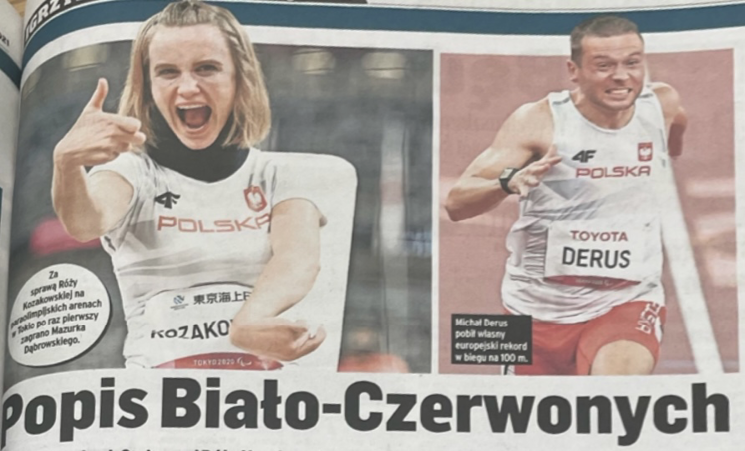
Figure 2. Róża Kozakowska, for whom “the Dąbrowski Mazurek was played for the first time in Tokyo” and Michał Derus
Source: “Przegląd Sportowy”, (2001b), pp. 13
The basis of another way of writing about sports for people with disabilities is all kinds of barriers they encountered or still encounter on their way and overcoming them. This mode is characterized by recalling stories of illnesses, disabilities, accidents, and even personal tragedies from athletes’ lives. In this case, sport appears as a way of life, sometimes as therapy that helped athletes with disabilities function – “sport gave her a sense of life”, “sport is everything to us”. These stories evoke emotional engagement in readers, which intensifies as they learn about overcoming “life’s adversities” and get to know the achievements of a particular person. An example of this was the story of Justyna Franieczek, who battled cancer, surgeries, accidents, and other personal tragedies, which was intertwined with her determination to return to sports in ¾ of the article. This combination gives the image of a superhero, providing reasons for readers of sports media to feel proud or find inspiration. The narrative built around athletes with disabilities is emphasized with the use of appropriate language. Phrases like “fought”, “fate threw heavier obstacles at her”, “performing despite adversity”, “life full of suffering”, “more hurdles”, “proving nothing can stop her” were used.
The barriers and overcoming them mode accompanied longer parts of publications concerning individual athletes, which may result from the still prevalent difficulty in separating disability from the individual and the desire to evoke emotions in the reader. Athletes with disabilities appear as people who have gone through many misfortunes in life and are unbreakable.
The role combination mode as a way of writing about people with disabilities highlights the various aspects of athletes’ lives in which they are involved and how they combine them. Every athlete not only pursues their sports career but also manages a private life and a job, requiring them to balance these roles. How athletes with disabilities do this was the subject of interviews cited in the daily’s articles. In one article, it was indicated that Justyna Kozdryk combines her sports career and training with working in the police and promoting her discipline on social media. “Kozdryk works as a police officer. Besides training, she finds time to promote the discipline” (Przegląd Sportowy 2021c: 13).
Combining the role of an athlete with other roles was only highlighted in “Przegląd Sportowy” concerning female athletes with disabilities, which may be related to the fact that women’s participation in sports is considered an additional activity to the traditional role of a woman (Kossakowski 2021). As Kossakowski and Cejer (2021: 136) state, “women are forced to juggle the roles of mother and athlete and use various strategies to reconcile them, such as adjusting training and competitions, using different forms of available support (key here are significant others)”. An example of attempting to reconcile these roles of mother and athlete can be seen in the “Przegląd Sportowy”, where one of Poland’s representatives – Kamila Kubas – dedicated the bronze medal she won five years earlier in Rio to her daughter. The kayaker added in an interview: “this year I would be selfish and say that I am proud of myself because it wasn’t easy” (Przegląd Sportowy 2021e: 17). The athlete emphasized the work of many people towards her achievement in the further part of her statement. In the words of the Polish athlete, the influence of social norms related to the modesty attributed to women, the opposite of which is selfishness, is evident in appreciating oneself and one’s work.
The technical and infrastructural way of talking about athletes with disabilities focuses on the technical and structural conditions influencing the shape of a given parasport discipline and the situations of the athletes. This mode appears in sections concerning the specifics of individual disciplines and related procedures, such as qualification.
The coach of the powerlifting team explains that due to the regulations, just qualifying for the Games is quite an achievement. ‘In our discipline, it’s very difficult to get to the Games. Only eight male athletes in a weight category and six female athletes can compete – he says. (Przegląd Sportowy 2021c: 13).
It also discusses the insufficient resources and funding needed for Polish sports for people with disabilities to equalize their chances in international competitions.
Our representatives do not hide that competitors are far ahead of them in terms of equipment quality. ‘In this respect, there is a gap between us. Athletes from the Netherlands or Great Britain have bikes made to measure. We ride on somewhat older technology. It’s impossible to compete on an equal sports level in such a situation (Przegląd Sportowy 2021a: 9).
Inequalities in this aspect and the resulting injustice find their place in this mode, using insider knowledge from people involved in parasport-athletes themselves, their coaches, or sports journalists. This allows readers to be made aware of the difficult situation of Polish sports for people with disabilities and to learn about the specifics of individual sports disciplines, such as hammer throw, “a discipline invented for people with cerebral palsy and tetraplegia who use wheelchairs. An alternative to javelin throw because athletes with paralysis of the limbs would find it difficult to hold it...” (Przegląd Sportowy 2021b: 13).
„Przegląd Sportowy”, over 25 issues of the daily published in the period (17.08.–13.09.2021), described athletes with disabilities. These texts, however, indicate an event-driven nature of creating materials in the sports press on this topic because they appear only when popular sports events take place. Outside the period of the Tokyo Paralympic Games, there were only a few mentions of parasport in 2021.
The content about people with disabilities was usually allocated the third page from the end of the daily or, in some cases, the last page of the issue. The texts in the „Przegląd Sportowy” were accompanied by photographs usually showing athletes with disabilities during sports competitions or after their completion and receiving medals. Less often, athletes were visible in non-sports situations in the photographs.
The image of athletes with disabilities in “Przegląd Sportowy” was created using several basic press tools: the language used by journalists, the topics they chose to describe, the space allocated to them, and photographs. Analyzing the content of the daily’s issues, the following modes of narrating sports for people with disabilities were identified: sport mode, national mode, barriers and overcoming them mode, role combination mode, and technical and structural mode. The modes of talking about parasport generally overlapped. They consisted of materials attractive to the reader because they contained the most important sports information, such as the compilation of the achievements of Polish representatives in recent days, as well as descriptions of Paralympians and their sports and life struggles. Combining the sport mode, national mode, and barriers and overcoming them mode created the image of a parasport superhero. In some issues, the uniqueness of athletes was further highlighted by the technical and structural mode and the role combination mode, indicating the specifics of individual disciplines, regulations associated with them, or inequalities resulting from gender role differences and underfunding of parasport.
“Przegląd Sportowy”, writing about athletes with disabilities, mostly uses inclusive language, a form of anti-discriminatory action aimed at including individuals without violating their subjectivity and autonomy. Inclusive language in the daily I analyzed took the form of feminatives, or female grammatical forms, in relation to women. It also included referring to disability as one of many features of a person, using the form “person with a disability” instead of “disabled”. However, I noticed some inconsistency in the use of this form by the journalists of “Przegląd Sportowy”. The reason for this state of affairs may be the randomness of using such phrases, their inaccurate formulation, or intentional interchangeable use of both forms, which in my opinion, should be communicated to the recipients. The creators of the daily used gendered language in two issues, characterized by formulating theses according to the binary division of gender and culturally attributed stereotypes. Communal language was also used, visible in almost every article of the daily. It was characterized by phrases emphasizing the common belonging of readers and para-athletes and Paralympians to Polish society. Such language can evoke a desire or sense of duty in readers to follow parasport. However, language is a medium in which certain unconscious internalized norms are manifested. As Wasilewska (2020: 166) writs, “Learning language rules means assimilating cultural and social norms reflected in language”. This likely explains the continued use of phrases by “Przegląd Sportowy” journalists that can be harmful and stigmatizing, yet are considered improper.
The authors of “Przegląd Sportowy”, in most of their actions, are guided by the assumption of readers’ interest in the content of their daily. Decisions about the choice of article topics, their placement, and form are usually dictated by what will attract the audience. However, the low interest in sports for people with disabilities is a result of its marginalization. Athletes with disabilities are not socially considered equal to fully able-bodied athletes. Para-athletes, for whom the media find space, are often still presented and perceived in a stereotypical manner. The superhero discourse, described by Niedbalski, whose features overlap with the barriers and overcoming them mode, is still present in the media. To evoke the right emotions, authors describe the stories of athletes’ disabilities as one of the tragedies in their lives they managed to overcome. However, in every analyzed article of “Przegląd Sportowy”, elements of the sport mode, a sports information message, can be found, allowing the creation of an image of parasport as professional sports. Additionally, in most texts, space was given to athletes and experts in the field of sports for people with disabilities, allowing them to take over the narrative to some extent.
A trend of creating sports messages consisting mainly of informative elements can be seen, ensuring the greatest possible reliability of media products. However, for this change to occur in a broader context, there is a need for a change in the language used by the media and society, so as not to infantilize parasport while not elevating it to a “superhuman” level. This also requires the media to focus on the quality of messages rather than attracting attention through evoking strong emotions.
This text can serve as an introduction to a series of potential studies on the representation of Paralympians in the media and support the practical application of the conclusions from the above discourse analysis. I would like to highlight the importance of further exploring the dominant narratives and their impact on the social perception of people with disabilities. Below are some suggestions for areas that would be worth examining in future work:
Comparative analysis of audiovisual materials from the time of the Paralympic Games with the above-presented analysis of press materials.
It would be worthwhile to expand discourse studies to include video materials published by leading media, such as broadcasts of competitions within the Games, official opening ceremonies, national team press conferences, and interviews conducted with Paralympians and their coaches. Including such media materials in discourse research would allow for the identification and analysis of differences between narratives presented in textual and visual statements. Including such materials in discourse research allows for a better understanding of what content and values are promoted by the media in the context of the Paralympics. Video analysis can reveal subtle nuances in the way athletes, their stories, and the challenges they face are presented. Moreover, by examining differences between textual and visual narratives, we can explore whether there are any biases or stereotypes that may be present in visual media but might go unnoticed in text analysis. This, in turn, can contribute to a more comprehensive view of how Paralympians are perceived and represented in the media and help identify areas where greater equality and diversity inclusion are needed.
Expanding discourse research to include direct statements from Paralympians can provide valuable insights into their personal experiences and observations. Conducting interviews with athletes and analyzing their activity on social media would allow for a better understanding of how athletes themselves perceive their role and representation in the media. This perspective could reveal how athletes perceive media messages about their achievements and challenges and assess how well these messages align with the reality of their daily lives. Analyzing materials posted on social media by Paralympians would help understand how athletes attempt to control the narrative about themselves and what communication strategies they use to influence their image in the eyes of the sports audience and media. This may reveal how Paralympic athletes negotiate their identity in the public sphere, promoting positive and inspiring images of themselves. Integrating athletes’ perspectives in discourse research can also help identify possible gaps and inaccuracies in media narratives, leading to more authentic and accurate representation of Paralympians.
Conducting public opinion research to assess its alignment with media messages about the Paralympics and Paralympians would help understand how audiences interpret and respond to various forms of media messages – both textual and visual. It would be worth including surveys, interviews, and analyses of comments posted on social media to gather data on the perception of Paralympians by different social groups. This might reveal whether there are discrepancies between the narratives presented by the media and the actual beliefs and feelings of the public. Including public opinion research in the analysis of media discourse would allow for a more comprehensive understanding of whether and to what extent media messages are reflected in the social perception of Paralympians. It can also help identify stereotypes or prejudices present in society that may be reinforced or weakened by the media.
Babbie E. (2004), Badania społeczne w praktyce, Wydawnictwo naukowe PWN, Warszawa.
Czyżewski M., Otrocki M., Piekot T., Stachowiak J. (2017), Analiza dyskursu publicznego, Wydawnictwo Akademickie SEDNO, Warszawa.
Jabłońska B. (2006), Krytyczna analiza dyskursu: refleksje teoretyczno-metodologiczne, “Przegląd Socjologii Jakościowej”, vol. 2(1), pp. 53–67.
Konecki K. (2000), Studia z metodologii badań jakościowych. Teoria ugruntowana, Wydawnictwo Naukowe PWN, Warszawa.
Koper T.T. (2013), Miejsce sportu w procesie rehabilitacji osób niepełnosprawnych fizycznie, “Niepełnosprawność – zagadnienia, problemy, rozwiązania”, vol. 3(8), pp. 111–134.
Kubiński G. (2017), Celebryta czy odmieniec. Figrura paraolimpijczyka w narracji społecznej, “Kultura Współczesna”, vol. 1(94), pp. 166–178.
Nasalski I. (2020), Funkcje i dysfunkcje języka inkluzywnego, ze szczególnym uwzględnieniem asymetrii rodzajowej w języku polskim, “Socjolingwistyka”, no. 34.
Niedbalski J. (2014), Jak “wyceniane” są osiągnięcia sportowe osób niepełnosprawnych? Analiza zjawiska z perspektywy socjologicznej, “Ruch prawniczy, ekonomiczny i socjologiczny”, no. 3, pp. 301–315.
Niedbalski J. (2015), „Ci wspaniali ludzie zmagają się z losem” – niepełnosprawni sportowcy w krzywym zwierciadle życia społecznego, [in:] Grotowska-Leder J., Przemiany społeczne we współczesnej Polsce i ich konsekwencje. Perspektywa socjologiczna, Wydawnictwo Uniwersytetu Łódzkiego, Łódź.
Niedbalski J. (2015), Obraz sportu i niepełnosprawnego sportowca w autodeskrypcji zamieszczanej na stronach i blogach internetowych, “Niepełnosprawność – zagadnienia, problemy, rozwiązania”, vol. 3(16), pp. 97–119.
Niedbalski J. (2015), Sport osób niepełnosprawnych w przekazie i dyskursie medialnym w Polsce, “Przegląd Socjologii Jakościowej”, vol. 11(2), pp. 130–159.
Nosal P. (2015), Społeczne ujęcie sportu. (Trudne) definiowanie zjawiska i jego dyskurs, “Przegląd Socjologii Jakościowej”, vol. 11(2), pp. 16–38.
Organista Z.M. (2016), „Piękne kobiety pięknie tańczą” czy „uprzedmiotowienie i upokorzenie”? Analiza dyskursu o cheerleadingu w kontekście mistrzostw Europy w piłce ręcznej mężczyzn w 2016 roku, “Przegląd Socjologii Jakościowej”, vol. 12(4).
Pawliszak P., Rancew-Sikora D. (2012), Wprowadzenie do socjologicznej analizy dyskursu (SAD), “Studia Socjologiczne”, vol. 1(204), pp. 5–15.
Polski Komitet Paraolimpijski. (2017), Dyscypliny paraolimpijskie, Polski Komitet Paraolimpijski, Warszawa.
“Przegląd sportowy”. (2021), pp. 196–207.
“Przegląd Sportowy”. (2021a), p. 198.
“Przegląd Sportowy”. (2021b), p. 200.
“Przegląd sportowy”. (2021c), p. 202.
“Przegląd sportowy”. (2021d), p. 204.
“Przegląd sportowy”. (2021e), p. 205.
“Przegląd sportowy”. (2021f), p. 207.
Sahaj T. (2016), Niepełnosprawni jako kreatorzy, odbiorcy i użytkownicy mediów, [in:] Zakrzewska-Manterys E., Pasjonaci, kreatorzy, twórcy. Ludzie niepełnosprawni jako artyści, sportowcy, animatorzy mediów, Wydawnictwo Uniwersytetu Łódzkiego, Łódź.
Struck-Peregończyk I.L.-B. (2018), Bezbronne ofiary i dzielni bohaterowie: wizerunek osób niepełnosprawnych w polskiej prasie, “Annales Universitatis Paedagogicae Cracoviensis. Studia de Cultura“, vol. 10(252), pp. 148–164.
Szarfenberg R. (2006), Marginalizacja i wykluczenie społeczne, Instytut Polityki Społecznej, Uniwersytet Warszawski, Warszawa.
Wasilewska A. (2020), Język jako medium poznawcze – edukacja językowa, “Colloquium pedagogika – nauki o polityce i administracji“, vol. 4(40).
Abstrakt. Jednym z kluczowych elementów składających się na wizerunek osób uprawiających sport jest towarzyszący im dyskurs medialny. Narracje medialne docierające do ich odbiorców wpływają na ich postrzeganie w przestrzeni publicznej. Szczególnie istotne wydaje się to w kontekście sportu osób z niepełnosprawnościami z uwagi na szereg stereotypów przypisywanych niepełnosprawności. Obraz parasportowców wykreowany w mediach może mieć istotne konsekwencje, a tym, co w dużej mierze o nich decyduje jest właśnie sposób formułowania komunikatów medialnych. Celem poniższych rozważań jest więc analiza artykułów sportowych pochodzących z prasy sportowej ze szczególnym zwróceniem uwagi na rodzaje środków wykorzystywanych w pisaniu o sporcie osób z niepełnosprawnościami. W pierwszej części tekstu przybliżyłam specyfikę parasportu, a także rolę, jaką pełnią media w odniesieniu do sytuacji parasportowców, w tym paraolimpijczyków. Następnie opisałam metody oraz narzędzia badawcze, z jakich korzystałam na etapie analizy materiałów prasowych oraz wyłaniania odpowiednich typologii. Ostatnia część zawiera wyniki wykonanej przeze mnie analizy artykułów prasowych zawartych w dwudziestu pięciu numerach „Przeglądu Sportowego” z okresu 17.08.–13.09.2021, a więc w czasie zbliżonym do Igrzysk Paraolimpijskich w Tokio trwających 24.08.–5.09.2021.
Słowa kluczowe: igrzyska paraolimpijskie, niepełnosprawność, parasport, parasportowcy, sport osób z niepełnosprawnościami, paraolimpijczycy, dyskurs medialny.