
THE ROLE OF SHORT FOOD SUPPLY CHAINS IN KOSOVO’S AGRICULTURE
Ekrem GJOKAJ  *
*
Henrietta NAGY *
Nol KRASNIQI *
Agnieszka BAER-NAWROCKA *
Abstract. Short food supply chains (SFSCs) and local markets, where farmers sell directly to consumers, are expanding across the EU, offering alternatives to conventional food chains that limit small farmers’ bargaining power and consumer traceability. In the EU, 15% of farms sell over half of their production directly. For Kosovo’s agricultural sector, SFSCs present new opportunities. This study examines SFSCs in Kosovo using data from 2,500 respondents. The findings show that 54% rely on oral contracts, 20% on written agreements, and distributors use multiple sourcing channels. SFSCs can enhance sustainability, trust, equality and growth in agriculture, business, and rural policy.
Key words: short supply chains, agricultural sector, small-scale farms, Kosovo.
1. INTRODUCTION
In recent years, agricultural policy has increasingly focused on small farmers and their role in the sustainable social and economic development of rural areas, offering support to enhance their specialisation (Toma et al., 2021). Globally, small farms constitute nearly 98% of all farms and account for over 50% of total arable land (Graeub et al., 2015; Ricciardi et al., 2018). Their development is crucial from economic, social, and environmental perspectives. Thus, addressing the challenges in logistics and the supply chain, as well as exploring opportunities to overcome them, is of great importance, considering that Kosovo, emerging from a planned economy, continues to face challenges in strengthening institutions, adapting to the demands of free market economy, and attracting investments (Gjokaj et al., 2017). Concurrently, consumers are increasingly interested in the food they purchase. Some prioritise local products, while others value the farming methods used, such as biodynamic farming or permaculture principles. Overall, there is a growing demand for more information about the products they consume (Aubry and Kebir, 2013). A short food supply chain (SFSC) serves as a key market mechanism that facilitates information exchange between producers and consumers, while also establishing a strong market link – an essential priority for enhancing the competitiveness, efficiency, and innovation of the agricultural industry, ultimately benefiting consumers and all supply chain actors (Gjokaj et al., 2018). SFSCs have been established alongside conventional food chains in response to the dominant industrial food system, which often distances and detaches food production from consumption. These chains are increasingly being considered by policymakers and decision-makers (Marsden et al., 2000).
Originally emerging as a response to the widespread agro-industrial model of long and complex food supply chains, “short supply chains” are a collective term for various forms of food production and distribution. The European Commission publication (EC, 2015) identifies short supply chains as those in which food can be identified by the farmer or traced back to the farmer, as similarly noted by Jarzębowski and Pietrzyck (2018) and Vittersø et al. (2019). The two basic criteria defining short supply chains are physical and social proximity. Generally, the distance between the producer, the product, and the consumer is shortened compared to conventional food delivery methods as it happens within the same geographical region or locality (Vittersø et al., 2019). Physical proximity refers to the transport distance from the place of production to the point of sale. Social proximity is expressed in the number of intermediaries between the producer and the consumer. In SFSCs, this number is minimal, often one but not more than two. When intermediaries are involved, their role is to facilitate a link between the producer and the consumer, ensuring that information about the origin and production methods remains intact. Ideally, the number of intermediaries should be minimal or non-existent.
In practice, and as referenced in the EU report, the opportunities for implementing short food supply chains can be grouped into the following categories (Augère-Granier, 2016):
- Direct sales: Sales directly from the farm, at farmer’s markets, from the producer’s store, or along busy roads. In these cases, the supply chain consists of only two participants – the farm and the consumer.
- Collective direct sales: Involves cooperation among producers to deliver products to consumer groups through a common food supply scheme. An intermediary may collect products from different producers and deliver them to consumers.
- Partnerships between consumers and producers: This form enables consumers to play a greater role in supporting small farms, for example, by sharing part of the production costs.
The main objective of this paper is to examine the current state of short food supply chains in Kosovo, particularly their role in improving small-scale farmers’ market access and strengthening direct consumer relationships. The study explores the hypothesis that SFSCs contribute to rural sustainability and development by enabling small farmers to engage directly with consumers and compete more effectively with conventional supply chains.
To provide a comprehensive understanding of the topic, this article is structured as follows. The introduction sets the stage by presenting the concept of short food supply chains (SFSCs) and emphasizing their importance in contemporary food systems. The literature review examines existing research, focusing on the benefits and challenges associated with SFSCs. We also analyse the current state of agriculture in Kosovo and discuss policy measures aimed at supporting SFSCs, the methodology section outlines the approach used to collect and analyse data. The results section presents the findings of this research, including an examination of food supply chain diagrams in Kosovo that illuminate the structure and dynamics of SFCSs in the country. Finally, the article concludes by summarizing key findings and insights drawn from the study. The discussion and conclusions section synthesize the research findings, discusses their implications, and provides recommendations for future research and policy development in the field of short food supply chains.
2. LITERATURE REVIEW
A range of studies have explored the potential of short food supply chains (SFSCs) in promoting sustainability and resilience in the food system, Evola et al., (2022) and Kumar et al. (2019) both have highlighted the need for further research on the factors influencing participation in SFSCs and their alignment with sustainability dimensions. Jia et al. (2024) and Bayr et al. (2022) described SFSCs as a collective network of interconnected actors managing and enhancing the flow of products, services, and information from farm to fork, with the goal of reducing intermediaries and the physical distance between producers and consumers. Luo et al. (2022) and Barbosa (2021) have provided a comprehensive overview of the research landscape, identifying key topics and research gaps in SFSCs, including the need for closer farmer-consumer relationships and the potential of SFSCs in addressing food waste and quality. These studies collectively underscore the importance of SFSCs in promoting sustainable and resilient food systems, while also pointing to the need for further research in this area.
Luo et al. (2022) identified the major research topics and proposed future research directions for short food supply chains through a comprehensive bibliometric analysis. This study provided insights into publication trends, prominent countries, institutions, journal sources, highly cited papers, research clusters, research gaps, and future research directions in SFSC research, offering valuable insights for SFSC researchers and policymakers.
Another study by Fabbrizzi et al. (2014) discusses SFSCs as a sustainable practice benefiting producers, consumers, and the community by promoting relocalisation processes and principles of sustainability. The main findings of Fabbrizzi et al. (2014) indicate that SFSCs represent a new dynamic in the agricultural market, effectively linking economic, social, and environmental aspects. These chains offer substantial benefits to producers, consumers, and the broader community, addressing crises associated with modernisation by connecting farmers and consumers within the same locality (Charatsari et al., 2024). Consumers engaging with SFSCs are motivated by a desire to participate in a social movement that prioritises environmental sustainability, fairness, and democratic principles. Meanwhile, producers benefit from direct sales, allowing them to retain a greater portion of the value and improve product quality, resulting in positive social effects for the community.
Similarly, Canfora (2016) discussed the role of SFSCs in achieving sustainability goals by reducing transportation costs and CO2 emissions, promoting biodiversity, and implementing periurban agriculture, reflecting a growing interest in this concept in EU and national legislations. The methodology used in Canfora’s study involves analysing EU law provisions and exceptions that promote SFSCs, including flexibility in the agri-food sector and special competition tools for local businesses. The main findings highlight the increasing importance of SFSCs for environmental sustainability and their economic and social benefits.
According to Malak-Rawlikowska et al. (2019), who conducted a comprehensive study on the sustainability of short food supply chains, these chains are widely believed to be more sustainable in comparison to mass food delivery systems. The methodology involved conducting a survey with 208 food producers across seven countries, following a methodology in line with Tellis, and conducting pilot surveys before the main producer survey. The primary goal was to identify different types of chains and collect data for a quantitative sustainability assessment. The main findings of their research indicate that SFSCs are economically beneficial for producers and contribute to local development with lower environmental impacts.
Renting et al. (2003) explored the role of short food supply chains (SFSCs) in rural development by examining alternative food networks. The researchers conducted qualitative research to understand how SFSCs contributed to rural economies and communities. They found that SFSCs could enhance local economic development, promote social cohesion, and support environmental sustainability. The study emphasises the importance of recognising the diverse forms and functions of SFSCs in rural areas and highlights their potential to create more resilient and sustainable food systems.
Furthermore, Mundler (2016) investigated the contributions of SFSCs to territorial development in three regions of Quebec. Employing a mixed-methods approach, combining quantitative analysis of economic data with qualitative interviews with stakeholders involved in SFSC initiatives, the study has revealed that SFSCs play a significant role in enhancing local economies, preserving cultural heritage, and fostering community resilience in the studied territories. Short food supply chains, often described as small-scale, short, traditional, fair, transparent, and socially responsible with established prestige of food producers, underscore the importance of recognising the unique characteristics of each territory and tailoring strategies to local contexts for sustainable development (Raftowicz et al., 2024).
However, scaling up SFSCs faces several barriers, as identified by various studies and reports. The EIP-AGRI Focus Group report on Innovative Short Food Supply Chain Management identifies several obstacles, including the inability of SFSCs to consistently supply enough produce to meet demand, especially from large buyers like caterers. Additionally, there is a lack of awareness among small producers about the products SFSCs can supply. Infrastructure limitations, such as the absence of local abattoirs and processing facilities, as well as the insufficient negotiating power of small producers in contract negotiations, pose challenges. Furthermore, competition among numerous small, uncoordinated SFSCs within a region adds to the complexity (EIP-AGRI Focus Group, 2015). Similarly, the study by Oleksiuk and Rull Quesada (2023) on the co-creation of business and marketing models for SMEs in short food supply chains in Lithuania, Latvia, and Poland highlights barriers such as low consumer awareness or knowledge levels about SFSCs, lack of cooperation between producers and consumers, scarcity of networking events, and insufficient procurement resources to support SFSCs in public institutions. The FAO report on Innovative Short Food Supply Chain Management also acknowledges that while SFSCs offer potential benefits, their collective impact is limited by barriers to scaling up (EIP-AGRI Focus Group, 2015).
Moreover, Aouinait et al. (2022) in their study on barriers and facilitators of purchasing from short food supply chains in Europe have found that factors such as the relative lack of convenience and high prices associated with SFSC products are significant obstacles hindering consumer engagement. Additionally, Dovleac and Bălăşescu (2017) identified weaknesses in the short food supply chain for local food, including small production volumes, seasonality of production, high cost of selling in alternative chains, and low capacity to join existing supply chains.
In the European Union countries, various provisions have been enacted at the national level to promote local markets and rural development. A notable example is the rural Code of French legislation, which advocates for the development of short supply chains. This includes initiatives aimed at increasing the presence of local products in both private and public catering services, promoting the supply of seasonal products, and implementing labelling schemes for quality, origin, and organic products (Kapała, 2022).
Similarly, Italian legislation at the regional level has introduced labelling signs and marketing tools specifically tailored to the short food supply chain. These regional laws incorporate labelling rules for identifying local goods, such as labels indicating “zero km” for products sold within local markets, serving as a significant legal instrument for promotion (Kapla, 2020).
Furthermore, several European Union member states have devised legal frameworks and incentives to support such food chains. France, for instance, has precisely defined the concept of a short chain (‘circuit court’) within its 2009 Action Plan, while Italy has established legislative decrees regulating Farmers Markets. These initiatives often benefit from Rural Development funding, with the European Commission proposed thematic sub-programs within Rural Development programs under the Common Agricultural Policy towards 2020 proposals to further support short supply chains (Kneafsey et al., 2013).
3. AGRICULTURE AND SUPPORT PROGRAMS IN KOSOVO
In 2023, agriculture along with forestry and fishing contributed 7.2% to Kosovo’s Gross Domestic Product (GDP) (MAFRD, 2024), while employing nearly 23% of the workforce (MAFRD, 2023). This disparity between labour input and economic output highlights Kosovo’s low agricultural productivity compared to regional and international benchmarks. In 2022 in Kosovo, there were roughly 188,375 hectares of arable land, including cultivated fields. Based on the size of arable land, the farm structure is classified into four main categories: (a) very small farms (less than 1 ha) constituted 9.9% of all farms, covering a total area of 18,861 ha; (b) small farms (1 ha to less than 5 ha) accounted for 50.9% of farms, representing approximately 95,480 ha; (c) medium-sized farms (5 ha to less than 20 ha) made up 29.7% of farms, covering an area of 55,774 ha; and (d) large farms (20 ha or more) comprised 9.5% of farms, occupying a total area of 18,260 ha (MAFRD, 2023).
Small farmers face high input costs and struggle to achieve economies of scale due to limited purchasing power. Unable to buy seeds and fertilizers in bulk at lower prices, they rely on intermediaries, leading to additional mark-ups (Gjokaj et al., 2021). High transportation costs further inflate expenses for small-scale purchases. On the marketing side, low production volumes make it difficult for smallholders to attract large buyers, forcing them to rely on local markets or middlemen who offer low prices (Djordjevic Milosevic et al., 2021). A lack of infrastructure such as storage and transport combined with limited market information, further restricts their competitiveness. Additionally, difficulties in meeting regulatory standards and accessing affordable finance prevent small holders from improving efficiency and securing better prices.
From the perspective of short food supply chains, the farm size distribution in Kosovo has significant implications for local food systems, market access, and sustainability. The predominance of small farms where 60.8% of farms operate on less than 5 hectares suggests that a large portion of agricultural production is suited for local and regional markets rather than large-scale industrial supply chains. Smaller farms typically rely on direct-to-consumer models such as farmers’ markets, cooperatives, and community-supported agriculture (CSA), which align well with SFSC principles by reducing intermediaries and strengthening local economies (Hanson et al., 2024). However, on the one hand, the fragmentation of land and the presence of many very small farms may present challenges related to production volume, logistical efficiency, and supply consistency, potentially limiting their ability to meet urban demand at scale. On the other, medium-sized and large farms have greater potential to balance local supply with moderate economies of scale, allowing them to engage in SFSCs while ensuring steady market availability. Encouraging cooperative models, value-added processing, and digital platforms for direct sales could enhance the role of small and medium farms in SFSCs, improving their competitiveness and sustainability.
Kosovo is a potential candidate for European Union (EU) membership. A Stabilisation and Association Agreement (SAA) signed in 2015 between the EU and Kosovo took effect on 1 April 2016, providing a comprehensive framework for structured political dialogue and enhanced economic relations. In this context, several initiatives have been undertaken to enhance the competitiveness of Kosovo’s economy, including the agriculture sector. Various instruments and activities have been implemented to strengthen this sector’s competitiveness. Between 2014 and 2020, the Rural Development Programme (RDP 2014−2020) was in operation. The programme aimed to increase the competitiveness and productivity of the rural sector, preparing it for future competition within the EU and short-term management of grants from the EU’s pre-accession assistance instruments for rural development (IPARD). Additionally, it sought to generate higher-income employment opportunities in rural areas, acknowledging potential short-term trade-offs between productivity growth and job creation. Aligned with national agricultural and rural development policies, the RDP 2014−2020 focused on specific objectives:
- enhancing the competitiveness and efficiency of primary agricultural production, processing, and marketing;
- improving hygiene standards on farms and processing sites;
- fostering sustainable rural development through investments in rural infrastructure and economic development that adheres to environmental protection standards; and
- promoting rural diversification to create new job opportunities.
The Agriculture and Rural Development Programme (ARDP) 2014–2020 was structured similarly to the Instrument for Pre-Accession in Rural Development (IPARD) and incorporated measures that closely aligned with those of IPARD. These measures included: (a) Measure 101 − investments in the physical assets of agricultural holdings; (b) Measure 103 − investments in physical assets related to the processing and marketing of agricultural and fishery products; (c) Measure 201 − agri-environmental measures and organic farming; (d) Measure 202 − the establishment and protection of forests; (e) Measure 302 − farm diversification and business development; (f) Measure 303 − preparation and implementation of local development strategies through the LEADER approach; (g) Measure 401 − improvement of training; (h) Measure 402 − advisory services; and (j) Measure 501 − technical assistance and support for the National Rural Network (MAFRD, 2014).
The Agriculture and Rural Development Programme (ARDP) 2014–2020 aimed to strengthen the relationships between producers, processors, and consumers in Kosovo, with a particular emphasis on the regulations governing coordination within this value chain. Given the European Union’s (EU) recognition of the importance of short food supply chains (SFSCs) and the introduction of labelling systems to indicate local product origins, Kosovo was expected to align with these trends by considering SFSCs as a sustainable alternative in compliance with EU regulations (MAFRD, 2014). However, the absence of reliable data hindered the assessment of Kosovo’s progress in implementing policy measures supporting SFSCs.
Nowadays, the idea of short food supply chain in Kosovo aligns closely with the goals and objectives of the Strategy for Agricultural and Rural Development (SARD) 2022−2028. The SARD emphasises the importance of enhancing the competitiveness of Kosovo’s agricultural sector, promoting sustainable rural development, and improving the livelihoods of small-scale farmers. By supporting local production and reducing the distance between producers and consumers, the short food supply chain directly contributes to these objectives. It fosters economic growth in rural areas by providing local farmers and artisanal producers with more direct access to markets, thereby increasing their income and reducing dependency on intermediaries (MAFRD, 2021).
Furthermore, the SARDP 2022−2028 prioritises the adoption of sustainable agricultural practices and the development of local value chains, both of which are integral to the short food supply chain model. The strategy’s focus on improving the quality and safety of locally produced food, as well as encouraging organic farming and environmentally friendly practices, aligns with the principles of short food supply chains, which typically emphasize local, sustainable, and high-quality production (MAFRD, 2021). By supporting initiatives such as farmers’ markets, community-supported agriculture (CSA), and local cooperatives, the SARD helps to strengthen the infrastructure needed for effective short food supply chains, ensuring that consumers have access to fresh, locally sourced products while also supporting the long-term sustainability of Kosovo’s agricultural sector.
4. METHODOLOGICAL APPROACH
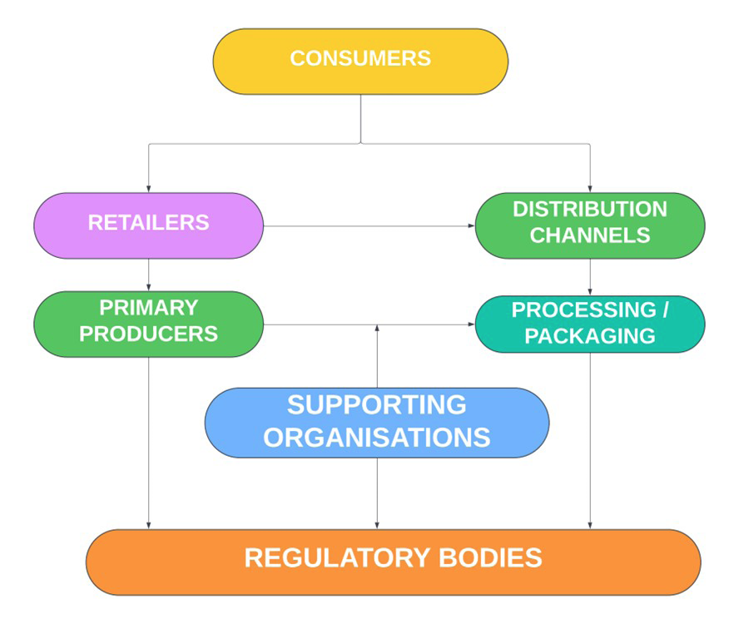
First, we explore Kosovo’s short food supply chain, emphasising the roles and interactions of various stakeholders, from local producers to final consumers. We created a diagram of the short food supply chain in Kosovo.
To analyse stakeholder interactions involved in SFSCs in Kosovo, we conducted a research study funded by the Ministry of Agriculture, Forestry, and Rural Development (MAFRD). The study employed a structured sampling approach based on the 2014 Agricultural Census compiled by the Kosovo Agency of Statistics (KAS) and the lists of beneficiaries for direct payments/subsidies and grants managed by the Agency for Agriculture Development (AAD). The dataset included (Table 1):
- 26,274 farmers receiving direct subsidies,
- 1,562 farmers benefiting from grants, and
- 1,081 non-beneficiaries of subsidies, identified through supplementary records.
| Category | Total observation (population) | Total chosen samples | Participation in a total sample of 2500 farms |
|---|---|---|---|
| Total Grants | 1,525 | 939 | 38% |
| Total Subsidies | 26,274 | 1,166 | 47% |
| Total Non-beneficiaries of Subsides | 1,081 | 195 | 7% |
| Snowball | – | 200 | 8% |
| Total | 28,880 | 2500 | 100% |
Source: own work.
To prevent data duplication, grant beneficiaries were excluded from the subsidy list. The sample was designed to ensure representativeness, with 40% of grant recipients (1,000 farms) and 44% of subsidy recipients (1,100 farms) included. Additionally, 16% of farms were selected from non-beneficiaries to provide a balanced analysis. Since no centralised list of non-beneficiaries was available, snowball sampling was employed identifying non-beneficiaries through referrals from surveyed farmers. While this method introduces potential biases, it allowed for the inclusion of a critical group often overlooked in agricultural policy assessments.
To ensure geographic representativeness, municipalities were weighted based on the total number of farms per region, ensuring a proportional selection of respondents. The final sample was stratified to maintain fairness and eliminate external influences, with selected farmers owning and actively managing agricultural land. Due to the aim and scope of the research for this paper, only survey questions related to SFSCs were analysed.
5. RESULTS
5.1. Diagram of the short food supply chain in Kosovo
Figure 1 illustrates the flow of the short food supply chain in Kosovo, highlighting the key stages from small-scale producers to final consumers. The process begins with the movement of goods from small-scale farmers, artisanal producers, and community gardens to local processing units, farmers’ markets, and cooperatives. These producers are the foundation of the supply chain, emphasising local and sustainable practices. Once the products reach local processing units and distribution points, they are further distributed to retailers, including farm shops, local grocery stores, and markets. These retailers play a crucial role in making locally produced goods accessible to consumers. The final step in the supply chain is the sale of products to consumers through direct sales, local markets, or online platforms. This stage marks the completion of the short food supply chain, ensuring that consumers have access to fresh, locally sourced products.
The key components of the short food supply chain in Kosovo are:
- Production
- Small-Scale Farmers: Growers of fruits, vegetables, grains, and livestock. Typically, they sell directly to local markets or consumers.
- Artisanal Producers: Small-scale processors like bakers, cheese makers, and butchers who use local raw materials.
- Community Gardens: Urban or rural plots where communities grow food for local consumption.
- Processing
- Local Processing Units: Small facilities that process raw agricultural products (e.g., dairy, meat, grains) into consumable goods.
- Cottage Industries: Home-based food processing, such as preserves, jams, or traditional foods.
- Distribution
- Farmers’ Markets: Direct sale points where farmers and producers sell their goods to consumers.
- Local Grocery Stores: Small, independent shops that stock locally produced goods.
- Cooperatives: Groups of producers who band together to sell their products, often to local shops or directly to consumers.
- Direct Sales: Sales from farm to consumer, possibly through on-site sales, home delivery, or online platforms.
- Community Supported Agriculture (CSA): A subscription model where consumers pay upfront for a share of the harvest, receiving periodic deliveries.
- Retail
- Farm Shops: On-site stores at farms where products are sold directly.
- Local Markets: Traditional markets where local producers bring their goods.
- Small Supermarkets: Independent supermarkets that focus on local products.
- Online Sales Platforms: Websites or social media channels used by producers to sell directly to consumers.
- Consumers
- Households: The end consumers who purchase and consume locally produced food.
- Local Restaurants: Restaurants that source ingredients from local producers, often focusing on traditional or seasonal dishes.
- Community Events: Local festivals, fairs, or events where food is sourced from local producers.
- Support Organisations
- Department of Advisory and Technical Services, producer organizations like: IADK, PePeKo, Mjedra e Kosoves, AgroDev, and other NGO services that provide technical assistance to small farmers.
- Local NGOs: Non-governmental organisations that support sustainable agriculture, food security, and local economic development.
- Regulatory bodies
- Government Initiatives: Programs and policies that promote local food production and distribution.
- Food and Veterinary Agency: Provides with regulatory and Inspections body.
- Educational Programs: Training and awareness programs about the benefits of short food supply chains and local consumption.
The flow of the food supply chain in Kosovo, as presented in Figure 1, significantly influences various aspects of the supply chain, including the roles of producers, the quality of products, and the traceability of product origins. Producers in Kosovo play a central role by directly supplying goods to distributors, retailers, and wholesalers, allowing them to maintain some control over product quality and traceability. However, the reliance on multiple channels, including distributors and importers, requires producers to adhere to diverse standards and meet varying market expectations, which can be challenging for small-scale producers facing intense competition and stringent quality requirements.
This diversity benefits consumers by providing more choices and promotes competition among producers to maintain high standards. Nevertheless, maintaining consistent quality and clear traceability of origin can be difficult, particularly when products come from both local and industrial sources. This complexity can lead to issues with product authenticity and potential consumer mistrust if origins are not clearly communicated.
Consumers increasingly demand transparency about the origins of their food, giving a competitive edge to producers who can certify and label their products accurately. However, producers unable to provide such transparency risk losing market share. Distributors segment their channels to effectively reach various market segments, including HORECA (hotels, restaurants, and cafés), retailers, wholesalers, and supermarkets. This segmentation allows for tailored marketing strategies and product offerings that meet specific needs, enabling producers to target niche markets and adapt their production accordingly. However, market fragmentation can make it difficult for producers to scale operations or achieve economies of scale.
The final delivery of products to consumers is the culmination of the short supply chain process, where ensuring high quality and traceable origins helps build consumer trust. Producers who engage in direct sales or have clear agreements with distributors can better communicate the value and origin of their products, fostering greater consumer confidence and potentially higher sales. Conversely, any disruptions or failures in the supply chain, such as delays or quality issues, can erode consumer trust and damage the reputations of both producers and distributors.
The collaborative efforts required among stakeholders, producers, and distributors are essential for maintaining product quality, ensuring fair pricing, and meeting regulatory standards necessary for consumer safety and satisfaction. However, such collaboration can be hampered by misaligned incentives, lack of trust, or inefficient communication channels, negatively impacting overall efficiency and effectiveness.
Last but not least, the short supply chain in Kosovo, with its multiple channels and segmented distribution, affects producers by necessitating diverse market standards while offering opportunities for market reach and product differentiation. The quality and origin of products are crucial in maintaining consumer trust and competitive advantage within this complex supply network. However, challenges such as consistent quality maintenance, managing fragmented markets, and ensuring transparent product origins highlight potential negative impacts within the supply chain.
Source: own work based on our findings.
Short Food Supply Chains (SFSCs) offer numerous economic, social, and environmental benefits, making them a key component of sustainable food systems. They contribute to strengthening local economies, reducing carbon footprints, enhancing food security, and supporting small-scale farmers (Renting et al., 2003; Kneafsey et al., 2013). The positive impact of SFSCs can be categorised as follows:
- Improved Negotiation Power: Farmers have greater leverage when dealing with retailers by eliminating intermediaries and selling directly to consumers.
- Enhanced Producer-Consumer Communication: SFSCs facilitate direct interaction, building trust and improving customer loyalty.
- Reduced Transportation Costs: Locally sourced products lower energy costs, transportation expenses, and CO2 emissions.
- Greater Transparency: Fewer intermediaries mean clearer traceability, enhancing consumer confidence in product quality and origin.
- Lower Risk: Shorter supply chains reduce the risk of product damage, contamination, and theft during transportation and storage.
- Higher Product Quality: Reduced need for freezing and preservatives ensures fresher food options and minimises food waste.
- Increased Profitability: By cutting out middlemen, SFSCs allow farmers to retain a larger share of the profits while maintaining competitive consumer prices.
5.2. Survey research results
This section presents the findings from our survey research. The discussion focuses on interpreting the data, identifying key trends, and examining the implications for various stakeholders, including producers, distributors, and consumers.
Table 2 presents the age distribution of the 2,500 surveyed farmers. The mean age is approximately 45 years, indicating that the average farmer falls into the middle-aged category. The mode of 50 suggests that the most common age among farmers is slightly higher than both the mean and median, indicating a concentration of farmers in their early 50s. The standard deviation of 14.17 years reflects considerable variation in age, highlighting the diversity within the farming community. This is further emphasized by the wide age range, with the youngest farmer being 19 years old and the oldest 98.
| Statistics | Value |
|---|---|
| Mean | 45 |
| Median | 45 |
| Mode | 50 |
| Standard Deviation | 14.17 |
| Min | 19 |
| Max | 98 |
Source: own work.
An analysis of demographic characteristics is important for assessing labour availability, generational transitions, and long-term sustainability of SFSCs. An ageing farming population may indicate challenges in workforce renewal, while the presence of younger farmers suggests opportunities for innovation and adaptation.
The educational attainment of the 2,500 surveyed farmers varies, with the majority having completed secondary education (Table 3). Among them, 375 farmers (15%), have attained only primary education, representing the small segment of the farming population. The largest segment consists of 1,364 farmers (55%) who have completed secondary education, suggesting that this is the most common level of attainment. Additionally, 761 farmers (30%) have attained higher education, representing a significant proportion. The higher level of education may contribute to an increased capacity for adopting advanced agricultural techniques, implementing better management practices, and engaging more effective participation in agricultural markets.
| Education Level | Count | Percentage (%) |
|---|---|---|
| Primary Education | 375 | 15 |
| Secondary Education | 1364 | 55 |
| Higher Education | 761 | 30 |
| Total | 2500 | 100 |
Source: own work.
Analysis of the distribution of education levels within the farming community helps identify potential gaps in knowledge and skills that could limit the growth and sustainability of SFSCs. The higher proportion of farmers with secondary or higher education suggests opportunities for targeted training programs that could further enhance the sector’s competitiveness. By analysing educational data, policymakers and stakeholders can better design interventions that support capacity-building efforts, ensuring that farmers are well-equipped to participate in and benefit from SFSCs, ultimately contributing to rural development and the sustainability of local food systems in Kosovo.
The average farm area among the 2,500 surveyed farmers is slightly over 5 hectares (Table 4). However, the large standard deviation of 8.718 and a range from 1 to 176 hectares suggest considerable variability in the data. The median value of 3 hectares and the mode of 1-hectare highlight that, while the average is around 5 hectares, many farmers manage smaller plots. The extreme values of kurtosis (105.925) and skewness (8.310) indicate a highly non-normal distribution. Positive skewness implies that the data is heavily skewed to the right, meaning there are a number of farms with much larger areas than the mean, thus pulling the average upwards. The standard deviation emphasises the variability in farm sizes, suggesting considerable differences in the land managed by different farmers. This variability is reinforced by the range of farm sizes, from the smallest at 1 hectare to the largest at 176 hectares. Such a wide range indicates a highly diverse farming community. The distribution of farm sizes reveals a predominance of smaller farms, as evidenced by the median and mode values being lower than the mean, with a few very large farms skewing the overall average. It has important implications for agricultural policies, resource allocation, and support programs, which may need to address the needs of both smallholders and large-scale farm operators.
| Statistics | Value |
|---|---|
| Mean | 5.066856 |
| Standard Error | 0.174353 |
| Median | 3 |
| Mode | 1 |
| Standard Deviation | 8.717654 |
| Sample Variance | 75.99749 |
| Kurtosis | 105.9247 |
| Skewness | 8.309817 |
| Range | 175 |
| Minimum | 1 |
| Maximum | 176 |
| Sum | 12,667.14 |
| Count | 2,500 |
Source: own work.
The analysis of farm size distribution, as presented in Table 4, is essential for understanding the structure and dynamics of short food supply chains (SFSCs) in Kosovo. Farm size directly influences production capacity, market participation, and the ability to adopt sustainable agricultural practices. The high variability in farm sizes indicates that a significant portion of the farming community consists of smallholders. This has an implication for SFSCs, as smaller farms are more likely to engage in direct-to-consumer sales, farmers’ markets, and local cooperatives, which are key components of SFSCs. The presence of a few very large farms, as reflected in the right-skewed distribution, suggests that while some producers may have the resources to scale operations and access broader markets, policies must ensure that smallholders remain competitive. Understanding this distribution can helps policymakers and stakeholders design targeted interventions, such as financial incentives, training programs, and infrastructure improvements, to enhance the efficiency and sustainability of SFSCs in Kosovo, ultimately supporting rural development and food security.
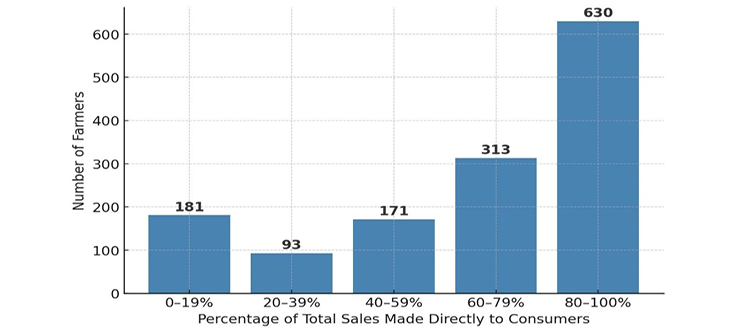
Out of the total respondents, 1,388 answered ‘yes’ to the question of whether they sell directly from the farm to consumers, while 1,112 indicated that they do not engage in direct sales. Figure 2 presents the percentage of total sales made directly to consumers. Among the 1,388 farmers who sell their products directly to consumers, 181 farmers report that only 0–19% of their total sales come from direct sales, while the remaining sales occur through other channels. In contrast, 630 farmers sell 80–100% of their products directly to consumers, indicating a strong reliance on direct marketing strategies.
Source: own work.
This data highlights the extent to which farmers engage in direct sales, a key component of SFSCs that fosters closer producer-consumer relationships, enhances transparency, and reduces reliance on intermediaries. The variation in direct sales percentages among farmers indicates differences in market access, production capacity, and consumer demand. The finding that a significant portion of farmers rely on direct sales suggests a well-established SFSC network in some areas, while the relatively lower engagement of others points to potential barriers such as limited market opportunities, logistical challenges, or lack of consumer awareness.
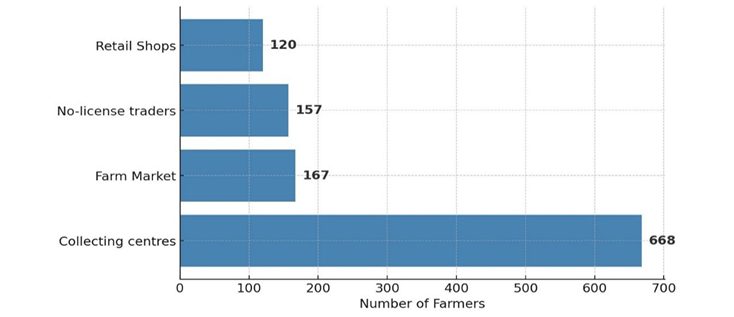
Figure 3 illustrates the various ways in which farmers connect with consumers. Among the 1,112 respondents who reported selling their products through indirect channels (rather than directly from the farm), the majority, i.e. 688 farmers, sold to collecting centres. This method was considered the easiest and most secure way to market their products, although it typically resulted in lower prices. Additionally, 167 farmers sold at farmers’ markets one to two days per week, where local municipalities provided tents to facilitate sales. Another common practice involved selling to unlicensed traders, where farmers conduct direct sales from their farms, often receiving only half the market price for their goods. The final sales channel was through retail shops and grocery stores, where farmers were responsible for covering delivery costs themselves.
Source: own work.
By examining how farmers sell their products whether through collecting centres, farmers’ markets, unlicensed traders, or retail stores this analysis provides valuable insights into market accessibility, pricing structures, and the challenges faced by agricultural producers. The dominance of collecting centres as a sales channel suggests that many farmers prioritise security and convenience, even at the cost of lower prices. In contrast, direct sales at farmers’ markets and through unlicensed traders indicate an alternative approach where farmers seek to maximise profits but may face logistical and regulatory challenges. The inclusion of retail stores highlights the need for more structured supply chain integration, where farmers must manage transportation and distribution costs.
The data in table 5 provides an overview of the different types of contractual agreements used by the farmers in the sample. Out of the 2,500 surveyed farmers, 657 (26.3%) did not engage in any form of contractual agreement, either formal or informal. This suggests that over a quarter of the farmers operated without binding agreements, potentially indicating a reliance on informal trade practices or a lack of access to formal contracting mechanisms. A total of 491 farmers (19.6%) utilized written contracts, which provide legal clarity and protection for the involved parties. Written agreements help ensure compliance and mitigate risks associated with disputes, breaches, or market fluctuations. The majority of farmers, i.e. 1,352 (54.1%), relied on oral contracts, indicating a strong preference for verbal agreements. While oral contracts may be easier and more flexible to establish, they pose risks related to misunderstandings, lack of enforceability, and potential conflicts due to the absence of formal documentation.
| Contract Type | Number of Farmers | Percentage (%) |
|---|---|---|
| No Contracts or Agreements | 657 | 26.3 |
| Written Contracts | 491 | 19.6 |
| Oral Contracts | 1,352 | 54.1 |
Source: own work.
The analysis of the types of contacts farmers used provides insights into the market structure, farmer behaviour, and transaction security. The predominance of oral contracts suggests that a large share of farmers engage in informal agreements, which are more common among small-scale producers selling perishable goods like fruits, vegetables, dairy, and eggs products that require quick transactions and frequent deliveries, with the small-scale amount of produce. In contrast, written contracts are likely more prevalent among larger, commercial farms or those producing high value or processed agricultural goods, such as milk for dairy processing, meat for retail, or specialty crops, mainly medicinal and aromatic herbs and non-wood forestry products exported through cooperatives. Farmers with higher education levels and younger farmers tend be more inclined to formalise contracts, as they often have greater awareness of legal frameworks and access to institutional markets, or government programs that require formal agreements. Conversely, farmers without contracts tend be engaged in direct, trust-based transactions within local markets, which is characteristic of traditional, smallholder farming systems.
6. DISCUSSION AND CONCLUSION
The short food supply chain in Kosovo plays a crucial role in enhancing local food production and distribution by fostering direct connections between producers and consumers. The efficiency of SFSCs, their socio-economic and environmental benefits, and the challenges faced by stakeholders collectively define their impact and potential in the country’s agricultural sector. A key advantage of SFSCs is their emphasis on local sourcing, which reduces geographical and logistical barriers between producers and consumers. By minimising intermediaries, SFSCs enhance product freshness, maintain higher quality control, and foster transparency in food sourcing. This direct interaction between farmers and consumers strengthens trust and loyalty while promoting sustainable consumption habits.
Direct sales through farm shops, local markets, and online platforms empower small-scale farmers and artisanal producers by providing better pricing opportunities and reducing dependency on large retailers (Paraušić et al., 2024). Community-supported agriculture (CSA) initiatives and farmer cooperatives further contribute to supply consistency and strengthen consumer-producer relationships.
The conducted in this paper research demonstrates that SFSCs in Kosovo predominantly rely on informal agreements, with most transactions occurring through oral contracts. While this flexibility allows for greater adaptability, it also exposes small farmers to financial risks due to the lack of formalized agreements. Strengthening contractual arrangements through cooperative models and legal support could enhance stability and predictability in the sector.
The fragmented nature of the agricultural sector in Kosovo, coupled with small farm sizes, limits economies of scale and makes it difficult for farmers to compete with larger, industrialized food chains. As stated by Krasniqi et al. (2023), larger farms with a higher share of other gainful activities (OGA) operate more efficiently. This highlights the importance of diversifying income streams and optimising direct market access for smaller farms to remain competitive. Short food supply chains (SFSCs) present a viable solution by enabling farmers to sell directly to consumers, thereby improving their financial stability and reducing inefficiencies linked to intermediaries. Additionally, infrastructure constraints, including inadequate storage and distribution networks, hinder the expansion of SFSCs (Bayir et al., 2022; Rucabado-Palmar et al., 2020). Addressing these issues through targeted policy interventions, investment in logistical improvements, and farmer training programs could significantly enhance the efficiency and sustainability of SFSCs.
One major issue is also the aging farming population. Ensuring generational transition in agriculture is critical for SFSC sustainability. Targeted educational programs, financial incentives, and technological integration could play a vital role in attracting younger farmers and ensuring long-term sector viability. Educational disparities among farmers also impact the efficiency of SFSCs. Addressing these gaps through tailored training in farm management, digital marketing, and quality assurance could significantly enhance productivity and operational effectiveness.
Policy implications arising from this study suggest the need for more structured governmental support to formalise and strengthen SFSCs. This could include financial incentives for direct-to-consumer sales, development of digital platforms to facilitate market access, and educational programs aimed at improving business management skills among small farmers. Aligning Kosovo’s agricultural policies with European Union frameworks on SFSCs would further enhance the sector’s integration into broader regional markets. Addressing existing challenges related to scalability, contract enforcement, and generational shifts is essential for long-term sustainability. Policy interventions, capacity-building programs, and regulatory improvements should focus on strengthening SFSCs by ensuring fair business practices, fostering innovation, and integrating youth participation in agriculture. By doing so, Kosovo can leverage SFSCs as a strategic tool for enhancing rural development and food security while promoting sustainable agricultural practices.
In conclusion, to enhance the efficiency and sustainable development of small and medium-sized enterprises in Kosovo, it is recommended to undertake the following actions:
- Strengthening Infrastructure and Logistics: Investment in cold storage facilities and efficient distribution networks can help mitigate logistical challenges and ensure product freshness.
- Educational and Training Programs: Introducing specialised training in farm management, digital sales, and marketing strategies can enhance farmers’ ability to compete in the market.
- Youth Engagement Initiatives: Implementing policies that incentivise young entrepreneurs to enter the agricultural sector through grants, mentorship programs, and business incubators.
- Regulatory Support and Certification: Establishing clearer guidelines for organic certification and traceability systems to ensure consumer confidence and market access.
- Digital Transformation: Encouraging the adoption of e-commerce platforms and digital marketing to improve direct sales channels and consumer reach.
SFSCs offer a viable strategy for enhancing Kosovo’s agricultural sector by promoting economic resilience, environmental sustainability, and rural development. However, realising their full potential requires a concerted effort from policymakers, farmers, and consumers to address existing barriers and leverage opportunities for growth. Future research should explore the long-term economic viability of SFSCs, their scalability, and their potential integration with digital supply chain innovations to further enhance their efficiency and impact.
Authors
Additional information
Funding information
Not applicable.
Conflicts of interests
None.
Ethical considerations
The Authors assure of no violations of publication ethics and take full responsibility for the content of the publication.
The percentage share of the author in the preparation of the work is
E.G. 30%, H.N. 20%, N.K. 25%, A.B.-N. 25%.
REFERENCES
AOUINAIT, C., CHANG, B., BRAUN, S. et al. (2022), ʽBarriers and facilitators of purchasing from short food supply chains in Europe: Insights from a stakeholder perspectiveʼ, International Journal of Food Studies, 11 (3), pp. 196–207. https://doi.org/10.7455/ijfs/11.SI.2022.a6
AUBRY, C. and KEBIR, L. (2013), ʽShortening food supply chains: A means for maintaining agriculture close to urban areas? The case of the French metropolitan area of Parisʼ, Food Policy, 41, pp. 85–93. https://doi.org/10.1016/j.foodpol.2013.04.006
AUGÈRE-GRANIER, M. L. (2016), Short food supply chains and local, Bruselss: EPRS | European Parliamentary Research Service, PE 586.650, https://www.europarl.europa.eu/RegData/etudes/BRIE/2016/586650/EPRS_BRI%282016%29586650_EN.pdf?utm_source=chatgpt.com
BARBOSA, M. W. (2021), ʽUncovering research streams on agri-food supply chain management: A bibliometric studyʼ, Global Food Security, 28, 100517. https://doi.org/10.1016/j.gfs.2021.100517
BAYIR, B., CHARLES, A., SEKHARI, A. and OUZROUT, Y. (2022), ʽIssues and Challenges in Short Food Supply Chains: A Systematic Literatureʼ, Sustainability, 14, 3029. https://doi.org/10.3390/su14053029
CANFORA, I. (2016), ʽIs the short food supply chain an efficient solution for sustainability in food market? Agriculture and Agricultural Science Procediaʼ, Agriculture and Agricultural Science Procedia, 8, pp. 402−407. https://doi.org/10.1016/j.aaspro.2016.02.036
CHARATSARI, C., LIOUTAS, E. D. and DE ROSA, M. (2024), ʽGoing Short and Going Digital: How Do Consumers View the Impacts of Digitalizing Short Food Supply Chains?ʼ Sustainability, 16, 11241. https://doi.org/10.3390/su162411241
DOVLEAC, L. and BĂLĂŞESCU, M. (2017), ʽBarriers to the development of the short supply chain for local food producers in Romaniaʼ, Bulletin of the Transilvania University of Brasov. Economic Sciences, Series V, 10*(1), pp. 35−44.
EC (2015), Innovative Short Food Supply Chain Management: Final Report, https://ec.europa.eu/eip/agriculture/sites/agri-eip/files/eip-agri_fg_innovative_food_supply_chain_management_final_report_2015_en.pdf. Brussels: European Commission.
EIP-AGRI FOCUS GROUP (30 November 2015), Innovative Short Food Supply Chain Management: Final Report, https://ec.europa.eu/eip/agriculture/sites/default/files/eip-agri_fg_innovative_food_supply_chain_management_final_report_2015_en.pdf. Brussels: European Commission.
EVOLA, R. S., PEIRA, G., VARESE, E., BONADONNA, A. and VESCE, E. (2022), ʽShort food supply chains in Europe: Scientific research directionsʼ, Sustainability, 14 (6), 3602. https://doi.org/10.3390/su14063602
FABBRIZZI, S., MENGHINI, S. and MARINELLI, N. (2014), ʽThe short food supply chain: A concrete example of sustainability. A literature reviewʼ, Rivista Di Studi Sulla Sostenibilità, 2, pp. 189−206. farmhopping. (n.d.). https://doi.org/10.3280/RISS2014-002012
GJOKAJ, E., HALIMI, K., XHABALI, V., IMAMI, D. and GJONBALAJ, M. (2017), ʽFruits value chain and distribution channels in Kosovoʼ, Bulgarian Journal of Agricultural Science, 23 (1), pp. 22–30.
GJOKAJ, E., KOPEVA, D., KRASNIQI, N. and NAGY, H. (2021), ʽFactors affecting the performance of agri small and medium enterprises, with Evidence from Kosovoʼ, European Countryside, 13 (2), pp. 297−313. https://doi.org/10.2478/euco-2021-0019
GJOKAJ, E., LEEDS, S. and HALIMI, K. (2018), ʽThe impact of financial support program in creation on farm jobs, Kosovo’s caseʼ, Bulgarian Journal of Agricultural Science, 24 (6), pp. 933–941.
GRAEUB, B. E., CHAPPELL, M. J., WITTMAN, H., LEDERMANN, S., KERR, R. B. and GEMMILL-HERREN, B. (2015), ʽThe state of family farms in the worldʼ, World Development, (June), pp. 0–15. https://doi.org/10.1016/j.worlddev.2015.05.012
JARZĘBOWSKI, S. and PIETRZYCK, K. (2018), ʽThe concept of short supply chains in the food economyʼ, [in:] WIGIER, M. and KOWALSKI, A. (eds), The Common Agricultural Policy of the European Union – the present and the future EU Member States point.
JIA, F., SHAHZADI, G., BOURLAKIS, M. and JOHN, A. (2024), ʽPromoting resilient and sustainable food systems: A systematic literature review on short food supply chainsʼ, Journal of Cleaner Production, 435, 140364. https://doi.org/10.1016/j.jclepro.2023.140364
KAPAŁA, A. (2022), ʽLegal Instruments to Support Short Food Supply Chains and Local Food Systems in Franceʼ, Laws, laws11020021 11 (21). https://doi.org/10.3390/laws11020021
KAPLA, A. (2020), ʽLegal Instruments to Support Local Food System in Italian Lawʼ, EU Agrarian Law, IX (1). https://doi.org/10.2478/eual-2020-0002
KNEAFSEY, M., VENN, L., SCHMUTZ, U., BALAZS, B., TRENCHARD, L., WOOD, T. E. and BLACKETT, M. (2013), Short food supply chains and local food systems in the EU. A state of play of their socio-economic characteristics, Luxembourg: European Commission.
KRASNIQI, N., BLANCARD, S., GJOKAJ, E. and OTTAVIANI AALMO, G. (2023), ʽModelling technical efficiency of horticulture farming in Kosovo: An application of data envelopment analysisʼ, Bio-Based and Applied Economics, 12 (3), pp. 183–195. https://doi.org/10.36253/bae-14693
KUMAR, V., WANG, M., KUMARI, A., AKKARANGGOON, S., GARZA-REYES, J., NEUTZLING, D. M. and TUPA, J. (2019), ʽExploring short food supply chains from triple bottom line lens: A comprehensive systematic reviewʼ, [in:] Proceedings of International Conference on Industrial Engineering and Operations Management, Bangkok, Thailand: IEOM Society International.
LUO, J., LIANG, Y. and BAI, Y. (2022), ʽMapping the intellectual structure of short food supply chains research: A bibliometric analysisʼ, British Food Journal, 124 (9), pp. 2833−2856. https://doi.org/10.1108/BFJ-05-2021-0465
MAFRD (2014), Agriculture and Rural Development Programme 2014−2020, Prishtina: Ministry of Agriculture, Forestry and Rural Development.
MAFRD (2021), Kosovo Agriculture in Numbers, Pristina: Ministry of Agriculture, Forestry and Rural Development.
MAFRD (2021), Strategy for Agriculture and Rural Development 2022−2028, Pristina: Ministry of Agriculture, Forestry and Rural Development.
MAFRD (2023), Kosovo Agriculture in Numbers, Pristina: Ministry of Agriculture, Forestry and Rural Development.
MAFRD (2024), Kosovo Green Report, Pristina: Ministry of Agriculture, Forestry and Rural Development.
MALAK-RAWLIKOWSKA, A., MAJEWSKI, E., WĄS, A., BORGEN, S. O., CSILLAG, P., DONATI, M., FREEMAN, R., HOÀNG, V., LECOEUR, J.-L., MANCINI, M. C., et al. (2019), ʽMeasuring the Economic, Environmental, and Social Sustainability of Short Food Supply Chainsʼ, Sustainability, 11 (15), 4004. https://doi.org/10.3390/su11154004
MARSDEN, T. K., BANKS, J. and BRISTOW, G. (2000), ʽFood supply chain approaches: Exploring their role in rural developmentʼ, Sociologia Ruralis, 40, pp. 424−438. https://doi.org/10.1111/1467-9523.00158
MUNDLER, P. and LAUGHREA, S. (2016), ʽThe contributions of short food supply chains to territorial development: A study of three Quebec territoriesʼ, Journal of Rural Studies, 45, pp. 218−229. https://doi.org/10.1016/j.jrurstud.2016.04.001
OLEKSIUK, A. and RULL QUESADA, K. (2023), ʽCo-creation of business and marketing models for SMEs in short food supply chains in Lithuania, Latvia and Polandʼ Central European Management Journal, 31 (3), pp. 374−389. https://doi.org/10.1108/CEMJ-12-2022-0254
PARAUŠIĆ, V., MUÇA DASHI, E., SUBIĆ, J., POMIANEK, I. and BEKIĆ ŠARIĆ, B. (2024), ʽResponse of Short Food Supply Chains in Western Balkan Countries to the Covid Crisis: A case Study in the Honey Sectorʼ, European Countryside, 16 (1), pp. 86−109. https://doi.org/10.2478/euco-2024-0006
RAFTOWICZ, M., SOLARZ, K. and DRADRACH, A. (2024), ʽShort Food Supply Chains as a Practical Implication of Sustainable Development Ideasʼ, Sustainability, 16, 2910. https://doi.org/10.3390/su16072910
RENTING, H., MARSDEN, T. K. and BANKS, J. (2003), ʽUnderstanding Alternative Food Networks: Exploring the Role of Short Food Supply Chains in Rural Developmentʼ, Environment and Planning A: Economy and Space, 35 (3), pp. 393−411. https://doi.org/10.1068/a3510
RICCIARDI, V., RAMANKUTTY, N., MEHRABI, Z., JARVIS, L. and CHOOKOLINGO, B. (2018), How much of the world’s food do smallholders produce?, Global Food Security, 17, pp. 64–72. https://doi.org/10.1016/j.gfs.2018.05.002
RUCABADO-PALOMAR, T. and CUÉLLAR-PADILLA, M. (2020), ʽShort food supply chains for local food: a difficult pathʼ, Renewable Agriculture and Food Systems, 35 (2), pp. 182−191. https://doi.org/10.1017/S174217051800039X
TOMA, I., REDMAN, M., CZEKAJ, M., TYRAN, E., GRIVINS, M. and SUMANE, S. (2021), ʽSmall-scale farming and food security – Policy perspectives from Central and Eastern Europeʼ, Global Food Security, 29 (2021), 100504. https://doi.org/10.1016/j.gfs.2021.100504
VITTERSØ, G., TORJUSEN, H., LAITALA, K., TOCCO, B., BIASINI, B., CSILLAG, P., DUBOYS DE LABARRE, M., LECOEUR, J. L., MAJ, A., MAJEWSKI, E., MALAK-RAWLIKOWSKA, A., MENOZZI, M., TÖRÖK, A. and WAVRESKY, P. (2019), ʽShort Food Supply Chains and Their Contributions to Sustainabilit; Participants’ Views and Perceptions from 12 European Casesʼ, Sustainability, 11, 4800. https://doi.org/10.3390/su11174800