Biological Anthropology in Poland: Its History and Short Scientific Biographies of the Contributing Professors
 https://orcid.org/0000-0003-1348-1037
Institute of Biology and Human Evolution, Adam Mickiewicz University, Poznań, Poland
Abstract. The year 2025 marks exactly one hundred years since the founding of the Polish Anthropological Society in Poznań (November 12, 1925), initiated by Professor Adam Wrzosek of the University of Poznań, who became its first president, as well as the 150th anniversary of Adam Wrzosek’s birth. This year also marks the 120th anniversary of the establishment, on the initiative of Kazimierz Stołyhwo, of the first institution devoted to physical anthropology in Poland and the first in Eastern Europe: The Anthropological Laboratory at the Museum of Industry and Agriculture in Warsaw (1905). Year 2026 will record the centenary of the publication of the first volume of the Polish Anthropological Society journal “Przegląd Antropologiczny”, now “Anthropological Review” (1926), and the 170th anniversary of the beginning of anthropology as a university discipline (1856), considered the year when the first anthropology lectures were given at the Jagiellonian University in Kraków by Professor Józef Majer. A number of works devoted to the history of physical/biological anthropology in Poland have been documented in the literature, especially the history of individual centers, published in the 1950s on the occasion of the 100th anniversary of the discipline in 1956, as well as studies on the history of Polish anthropology in a more comprehensive approach on other occasions. This article explores the history of biological anthropology in Poland, narrated mostly through short biographies of its founders – the professors whose work and achievements contributed to the development of the discipline, becoming part of the history of science. The biographical histories essentially cover the 19th and 20th centuries and include the professors who have either already made history or who have turned 75 on the date of publication of this article (born up to 1950).
Keywords: history of science, history of anthropology, Polish anthropologists, Polish scientists
Abstrakt W 2025 roku mija dokładnie sto lat od założenia w Poznaniu Polskiego Towarzystwa Antropologicznego (12.11.1925), zainicjowanego przez profesora Adama Wrzoska z Uniwersytetu Poznańskiego, który został pierwszym jego przewodniczącym, oraz 150-lecie urodzin Adama Wrzoska. W tym roku mija też 120-lecie utworzenia, z inicjatywy Kazimierza Stołyhwy, pierwszej na ziemiach polskich, i pierwszej w Europie Wschodniej, placówki zajmującej się antropologią fizyczną, jaką była Pracownia Antropologiczna przy Muzeum Przemysłu i Rolnictwa w Warszawie (1905). W 2026 roku minie setna rocznica wydania drukiem pierwszego tomu czasopisma PTA “Przegląd Antropologiczny”, obecnie “Anthropological Review” (1926), oraz 170-lecie początku antropologii jako dyscypliny uniwersyteckiej (1856), za który uznaje się rok wprowadzenia pierwszych wykładów z antropologii na Uniwersytecie Jagiellońskim w Krakowie przez profesora Józefa Majera. W literaturze można spotkać pewną liczbę prac poświęconych historii antropologii fizycznej/biologicznej na ziemiach polskich – szczególnie dziejom poszczególnych ośrodków, opublikowanych w latach 50. XX wieku z okazji jubileuszu 100-lecia dyscypliny przypadającej na rok 1956, jak również opracowań historii polskiej antropologii w ujęciu bardziej całościowym z innych okazji. Ten artykuł ujmuje historię antropologii biologicznej w Polsce, opowiedzianą między innymi za pomocą krótkich biogramów naukowych jej twórców – profesorów, których praca i dorobek przyczyniły się do rozwoju dyscypliny, stając się częścią historii nauki. Historie biograficzne obejmują zasadniczo wiek XIX i XX, a wśród nich tych profesorów, którzy albo już przeszli do historii, albo w dniu publikacji tego artykułu ukończyli 75 lat (urodzili się do 1950 roku).
The Dawn of Interest in Anthropology in Poland – the 19th Century
Historical Background
The origins of interest in anthropology in Poland date to the early 19th century. This was a period of political turmoil in Poland, which had ceased to exist as an independent state for over 120 years. The First Polish Republic, as a result of three successive partitions by its neighboring states, was finally dissolved at the end of the 18th century (1795). The Russian Empire annexed 62.8% of the lands of the Crown of the Kingdom of Poland and the Grand Duchy of Lithuania, the Kingdom of Prussia annexed 18.7%, and the Habsburg Monarchy, later the Austrian Empire, annexed 18.5%.
At the beginning of the 19th century, from part of the lands of the Prussian partition, the dependent on France Duchy of Warsaw was created (1807–15), with the King of Saxony as its ruler. However, shortly after Napoleon’s defeat in Russia, the Duchy of Warsaw legally ceased to exist, and from its lands, pursuant to the Russo-Austrian-Prussian Treaty of May 3rd, 1815, were created: (1) the Kingdom of Poland, joined by a personal union with the Russian Empire, initially with its own constitution (1815–32) until the complete abolition of the Kingdom’s autonomy in 1867 following the suppression of the January Uprising; (2) a province subordinate to Prussia – the Grand Duchy of Posen (1815–48), whose autonomy was abolished after the failure of the Greater Poland/Poznań Uprising of 1848; and (3) the Republic of Kraków with the Free City of Kraków (1815–46), annexed to the Austrian Empire after the downfall of the Kraków Uprising of 1846. In the following years, until the end of World War I (1918), Poland would no longer appear on the map of Europe.
At the beginning of the 19th century, three universities were operating in Poland: (1) the Jagiellonian University in Kraków, one of the oldest universities in the world, founded by King Casimir III the Great in 1364; (2) the University of Vilnius, founded by King Stephen Báthory in 1579; and (3) the University of Lvov, founded by King John II Casimir Vasa in 1661. In 1816, a fourth university, the University of Warsaw, was established by an edict issued by the Tsar of Russia and King of Poland Alexander I Romanov.
The development of science in Poland, including anthropology, and the activities of universities and departments/chairs, thus depended on what the partitioning powers permitted or prohibited. Polish universities existed within the Russian and Austrian partitions but were periodically closed – Russified in the Russian partition and Germanized in the Austrian partition. No higher education institution of a national character was ever established in the territory of the Prussian partition (Popiński 2018), later the German Empire.
First Publications and Emergence of a University Discipline
The pioneers of anthropological thought in Poland were naturalists, and above all, physicians, most of whom practiced medicine. The first naturalist of note here was Jędrzej Śniadecki (1768–1838), born in the village of Rydlewo, near Żnin (Kuyavian-Pomeranian Voivodeship), doctor of medicine and professor of chemistry at Vilnius University. Śniadecki, long-time president of the Vilnius Medical Society and full member of the Warsaw Society of Friends of Science[1], was a pioneer of physical education in Poland and a promoter of hygiene. His work, “O fizycznym wychowaniu dzieci”, first published in the “Dziennik Wileński” in 1805, and as a collected work in 1840, constituted the beginning of research on human biological development and the health-promoting education of society. He is also known for his two-volume work, “Teorya jestestw organicznych”, in which he defined (Śniadecki 1811: paragraph 222) and outlined the science of man, devoting Volume II to matters concerning human biology and physiology.
In 1818, also in Vilnius, the first Polish anthropology book was published, entitled “Antropologia. O własnościach człowieka fizycznych i moralnych”, by Józef Jasiński (17??–1833), born on the outskirts of Grodno, graduate of the Faculty of Medicine at Vilnius University, member of the Vilnius Medical Society, and a proponent of the Vilnius evolutionary school (Gronkiewicz 1989).
Elements of anthropology and ethnology can also be found in the 1824 work “Śledzenie początku narodów słowiańskich” by Wawrzyniec Surowiecki (1769–1827), economist, educator, educational activist, and historian (Slavic scholar) born in Imielenko (Greater Poland Voivodeship). This work, apart from topics in the field of linguistics, addressed the issue of human morphological diversity and provided an outline of the ethnogenesis of European nations, including Poles. Surowiecki, a member of the Warsaw Society of Friends of Science, was one of the main pioneers of research into the history and culture of the Slavs and a co-organizer of the first Royal University of Warsaw (founded in November 1816 by the Commission of Religious Denominations and Public Enlightenment).
The rise of Polish anthropology as a university discipline is considered the year 1856, when Professor Józef Majer delivered first lectures on anthropology from a university chair in Poland, during the partition period.
Józef Majer (1808–1899) – Kraków-born physiologist, professor of medical sciences, dean of the Faculty of Medicine and rector of the Jagiellonian University, doctor honoris causa of the Jagiellonian University and the University of Lvov, president of the Kraków Scientific Society, founding member of the Academy of Arts and Sciences[2] and its first president, as well as an initiator of the Anthropological Commission at the Academy of Arts and Sciences, which he chaired for many years (1874–1890), from its establishment in March 1874. The Anthropological Commission became an association of Polish anthropologists, something akin to the anthropological societies that were established in the years 1859–73 in various scientific centers of Europe at that time (Czekanowski 1948b).
Lectures in anthropology began, one might say, fortuitously during the partitions (Austrian partition) and the ruthless germanization of the Jagiellonian University, which imposed German as the language of instruction (1853). Although Majer could have, in fact, begun lecturing in German, he declared that he did not speak it sufficiently (Wrzosek 1957). After temporarily resigning from the Chair of Physiology at the Jagiellonian University (until 1860), he went on to lecture in Polish on subjects not required for students, including anthropology (1856–73). With these lectures, Majer paved the way for the development of anthropology in Poland and, eventually, the establishment of the first Chair of Anthropology at the Jagiellonian University (1908).
Associated with Galicia and Kraków from 1871 was Izydor Kopernicki (1825–1891), physician, anatomist, and anthropologist born in Czyżówka (present-day Ukraine). He was the first Polish professor educated in anthropology. While in exile, Kopernicki became acquainted with the world-leading French anthropology developed by Paul Broca in Paris, ultimately establishing the final direction of his scientific passions (Godycki 1956). Having come to Poland from the University of Bucharest, and unsuccessfully applying for a chair in anatomy in Kraków, he subsequently obtained a doctorate in medicine and a habilitation in anthropology (1878). From 1874, he volunteered to organize the Anthropological Commission at the Academy of Arts and Sciences, becoming its secretary without yet being a member. Until his death, he was the editor of the Commission’s publishing house “Zbiór Wiadomości do Antropologii Krajowej”, the first Polish anthropological and ethnographic scientific journal, published in the years 1877–95.
Izydor Kopernicki initiated field research. Collaborating scientifically with Józef Majer together, through surveys, they collected and processed material on the physical characteristics of the population of the Austrian partition (totalling approximately 7,000 surveys), publishing the work “Charakterystyka fizyczna ludności galicyjskiej…” in Volume I of the Commission (1877), and then Part II in Volume IX (1885). He was interested in the craniology of Slavs, Bulgarians, prehistoric skulls, the Roma, and the Ainu people (the latter obtained from the zoologist and physician, an anthropology enthusiast, Benedykt Dybowski [see The Lvov Center section]). He created a craniograph of his own design to improve skull measurement methods. In 1876, as a private associate professor[3], Kopernicki resumed his anthropology lectures at the Jagiellonian University, which had been interrupted by Józef Majer. Towards the end of his life, in 1886, he was appointed associate professor at the Jagiellonian University, but without obtaining a chair, despite his long-standing efforts and donation of an extensive collection of skulls and books to the university (Wrzosek 1929, Godycki 1956), which would become the germination of the Jagiellonian University Anthropological Museum.
After Kopernicki’s death in 1891, anthropology lectures at the Faculty of Medicine of the Jagiellonian University in Kraków were suspended and would be revived at the university’s Faculty of Philosophy only after 17 years, in 1908. Meanwhile, at the turn of the 20th century, the work in the field of anthropology was led by Ludwik Krzywicki (Stołyhwo 1938).
Ludwik Krzywicki (1859–1941) – born in Płock (Masovian Voivodeship) sociologist, ethnologist, anthropologist, demographer, and participant in the labor movement. He was a professor at the Flying University[4], the Free Polish University[5] (as well as its rector), and later at the University of Warsaw, where, in 1921, the Chair of the History of Social Systems was created for him (ad personam). He was a member of the Polish Academy of Arts and Sciences, and doctor honoris causa of Vytautas Magnus University in Kaunas (1940), the leading authority in Polish social sciences at the turn of the 20th century.
Krzywicki, characterized by an extraordinary versatility of his scholarly interests (Krzeczkowski 1938, Hołda Róziewicz 1969, Hrynkiewicz 2012), in the field of anthropology, then being understood holistically – as a collection of all sciences concerning the humanities, published, among others: “Ludy. Zarys antropologii etnicznej” (1893), and “Kurs systematyczny antropologii. 1. Rasy fizyczne” (1897), which served on one hand, as textbooks for anthropology, and on the other, to popularize the discipline. Of interest is that Krzywicki’s attitude towards “human races” diverged from the dominant views at the turn of the 20th century. He emphasized the continuity of morphological variation, calling racial types “somewhat artificial categories” (Krzywicki 1897: 9) and subject to change, and stated:
Pure types are abstractions, separated by analysis from the actual racial mixture.
(Krzywicki 1897: 44)
This part of Ludwik Krzywicki’s work is overlooked in contemporary sociological anthropology (Kubica 2015), and in biological anthropology – once, in the era of typology, underestimated, and today – completely forgotten.
The First Anthropological Centers – the 20th Century to World War II
The Warsaw Center
Resulting from the activities of Ludwik Krzywicki, Julian Talko-Hryncewicz (see The Kraków Center section) and a number of provincial physicians, the interest in anthropology sparked the establishment, on the initiative of Kazimierz Stołyhwo (see The Kraków Center section) in 1905, in the then Russian partition, of the Anthropological Laboratory at the Museum of Industry and Agriculture in Warsaw – the first center in Poland and the first in Eastern Europe dealing with physical anthropology. In 1911 this center, already a well-organized scientific institution, was transferred, together with all its equipment, to an academic and research institution – the Warsaw Scientific Society[6], where it existed until 1939. In 1920, in independent Poland, the Anthropological Laboratory was converted into a department, and then (1921) into the Institute of Anthropological Sciences of the Warsaw Scientific Society (comprising two departments and a museum), which was recognized as the Polish branch of the International Institute of Anthropology, bringing together all the most preeminent Polish anthropologists and ethnologists (apart from K. Stołyhwo, also including: B. Dybowski, L. Krzywicki, J. Talko-Hryncewicz, and J. Czekanowski).
The University of Warsaw, founded in 1816, was dissolved and revived several times under various names during the first hundred years of its existence[7]. When the Russian troops left Warsaw in 1915 and were replaced by German troops, they authorized the establishment of a Polish-language university (for nearly half a century, the language of instruction at the University of Warsaw had been Russian). In 1915, Edward Loth, one of the organizers of the new University of Warsaw, took over the Chair of Human Anatomy at the Faculty of Medicine.
Edward Loth (1884–1944) – Warsaw-born anthropologist, anatomist, and orthopedic surgeon, pioneer of the “anthropomorphology of soft parts”, from 1915 the chair in Human Anatomy at the University of Warsaw (professor from 1921), member of the Warsaw Scientific Society and the Polish Academy of Arts and Sciences, lecturer at the clandestine University of the Western Lands[8], and medical chief of the Polish Army Training Inspectorate (1917–18). Loth was imprisoned twice in Pawiak Prison – the largest German political prison in occupied Poland from 1939 to 1944. During the Warsaw Uprising, in which he would perish, Professor Loth, holding the rank of lieutenant colonel, served as medical chief officer of the Home Army’s Mokotów District.
Educated in Zurich (where he studied anatomy and anthropology), Bonn, Göttingen, and Heidelberg (medical studies), Loth, after returning to Poland, conducted comparative research on the soft parts (primarily muscles) of humans in relation to primates. He was a continuator of Carl Gegenbaur’s Heidelberg school of comparative anatomy and the founder of developmental anatomy in Poland. In 1927, he proposed the establishment of the International Committee for the Study of Soft Parts, whose chairman was the renowned British anthropologist and anatomist, Sir Arthur Keith (1866–1955) (Czekanowski 1946-47, Odrowąż-Szukiewicz 1975). In 1931, he published the world-renowned monograph “Anthropologie des parties molles”, which received a prestigious award from the International Institute of Anthropology. He was also a co-organizer and participant in a Polish research expedition to Uganda (1938/39), from which he brought back a large collection of primates and osteological material (human skulls). Jan Czekanowski (1948a), in listing the leading centers of Polish anthropology in the interwar period, called the center headed by Loth the “Warsaw morphological-comparative school.” Loth was considered an anatomy enthusiast (during whose time dissection rooms were “scientifically revived”), an excellent educator, and efficient organizer, and had many students who later became professors of anatomy and surgeons. However, his research area found few followers in Poland and, after his death, was not systematically continued. His most important book publication was “Człowiek przeszłości” (1938).
Meanwhile, in 1920, during the Polish-Soviet War[9], the Military Anthropology Department was established in the Ministry of Military Affairs (with the participation of Kazimierz Stołyhwo, who subsequently incorporated it into the Institute of Anthropological Sciences of the Warsaw Scientific Society under his direction). In 1924, a special department was established within the Ministry of Military Affairs – the anthropological section, entrusted to Jan Mydlarski (see The Wrocław Center section), who, from 1921 onwards, co-conducted mass anthropometric measurements of recruits and soldiers for the army – the so-called “military anthropological survey” (Stęślicka 1957).
In 1931, at the Central Institute of Physical Education in Warsaw, founded in 1929 on the initiative of the Head of State – Marshal Józef Piłsudski as an academic school with a sports and military character (later the Academy of Physical Education in Warsaw), the Department of Anthropology and Biometry was established, which was also headed by Jan Mydlarski until 1939 (and for two years after World War II).
The Kraków Center
Józef Majer and Izydor Kopernicki (see First Publications and Emergence of a University Discipline section) with their lectures on anthropology paved the way for the establishment of the first Chair of Anthropology at the Jagiellonian University in Kraków. In 1908, Julian Talko-Hryncewicz was appointed associate professor of anthropology at the Jagiellonian University (then in the Austrian partition), creating the first chair of anthropology at a university in Poland (simultaneously with the Czech University in Prague), which was the result of many years of efforts initiated by his mentor, Izydor Kopernicki (Jasicki 1957). In November 1911, at the Faculty of Philosophy in the Collegium Juridicum, Talko-Hryncewicz delivered the inaugural lecture at the opening of the new Department of Anthropology (Wrzosek 1926, 1951; Kaczanowski 2008).
Julian Talko-Hryncewicz (1850–1936) – born in Rukszany near Kaunas (present-day Lithuania) physician, ethnographer, and anthropologist who explored Siberia, professor and organizer of anthropology departments at the Jagiellonian University (1908–14 and 1918–30)[10] and at Stefan Batory University in Vilnius (1920), member of the Anthropological Commission of the Jagiellonian University (1887). He studied in St. Petersburg, Kiev, Paris, and Vienna. He founded a field he called “strict physical anthropology” (Jasicki 1957) and co-founded, together with Kazimierz Stolyhwo, the Kraków School of Anthropology. The first honorary member of the Polish Anthropological Society (1927) and doctor honoris causa from the Jagiellonian University (1926).
In the 1880s, in the Ukrainian steppes near Ryzhanivka, Talko-Hryncewicz discovered a Scythian burial mounds (kurgans). During his sojourn in Eastern Siberia (in the Transbaikal region), he organized natural, archaeological, and ethnographic expeditions, and studied graves and burial customs. After returning from Russia, as a professor at the Jagiellonian University, he began longitudinal studies of the development of children and adolescents in Kraków schools. His next important endeavors included collecting materials on Polish highlanders – publications: “Górale polscy jako grupa antropologiczna” (1916) and “Materiały do antropologii górali polskich” (1934), research on the 14th–16th-century skeletal cemetery at Łankiszki near Nacza in Lithuania, and collecting skeletal material from former Kraków residents from old cemeteries – publication: “Mieszkańcy Krakowa z X–XX wieku: studjum antropo-bio-socjologiczne” (1926) (Jasicki 1957). He also wrote the book “Człowiek na ziemiach naszych” (1913). His students included future professors Kazimierz Stołyhwo and Bronisław Jasicki.
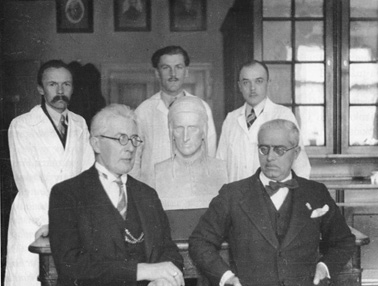
Following Talko-Hryncewicz’s retirement in 1930, Kazimierz Stołyhwo, the founder of the first Polish center for physical anthropology in Warsaw and an opponent of the Lvov School of Anthropology, was finally elected to fill the Chair of Anthropology at the Jagiellonian University after the chair had been vacant for several years[11].
Kazimierz Stolyhwo (1880–1966) – born in Brajłów (formerly Brahiłów) in Podolia (present-day Ukraine) anthropologist, founder of the Anthropological Laboratory at the Museum of Industry and Agriculture, then at the Warsaw Scientific Society (which he headed 1905–34), co-organizer of the Department of Military Anthropology (1920), lecturer at the Society for Scientific Courses[12], the Free Polish University, and the University of Warsaw (at the Faculty of Medicine), and professor at the Jagiellonian University. He studied at the Imperial University of Warsaw, then in Berlin, Munich, and Paris (at the Broca Laboratory of the École d’Anthropologie de Paris under the supervision of Léonce Manouvrier), and received his PhD from Charles University in Prague (1926). In 1933 he was appointed head of the Chair and Department of Anthropology at the Faculty of Philosophy, Jagiellonian University in Kraków (until 1960) and was dean of the Faculty of Mathematics and Natural Sciences of the Jagiellonian University (1946–47). In November 1939, Stołyhwo, sharing the fate of many professors at the Jagiellonian University, was imprisoned (until April 1940) in the German Nazi concentration camp in Sachsenhausen near Berlin. He was a member of the Polish Academy of Arts and Sciences, an honorary member of the Polish Eugenics Society (1937) and the Polish Anthropological Society (1959), and was awarded the Officer’s Cross of the Order of the Legion of Honor of the French Republic (1926) (Jasicki 1978, Musiał 2016).
Stołyhwo, while still in Warsaw, and before taking up the Chair of Anthropology in Kraków, engaged in polemics with German anthropologists – including Gustav Schwalbe – regarding the species status of Neanderthal man (so-called Homo primigenius), conducted research in Poland and abroad (including in museums in Vienna, Argentina, Padua, Bologna, and Florence), and collected anthropological materials in Siberia and among the Kashubians in Pomerania. Based on his lectures and thanks to the efforts of students of the Medical Club (Malinowski 1996), the textbook “Zarys antropologii. Podręcznik antropologii dla studentów medycyny” (1928) was published. After taking up the Chair of Anthropology in Kraków, Stołyhwo began to prepare an anthropological survey of the population of Polish Silesia, collecting material consisting of nearly 25,000 specimens in total (“Struktura antropologiczna polskiego Śląska” 1939) and in the 1930s, together with his wife – Eugenia Stołyhwo, developed an analytical method called the Stołyhwos’ “cross-sectional correlation method” for distinguishing racial types (Jasicki 1957). The second set of materials he collected consisted of studies on human ontogenetic development, mainly among school youth from Kraków. This field of research would later become one of the foremost research topics of Kraków anthropologists. Among his students were future professors: Paweł Sikora, Stanisław Panek, and Napoleon Wolański.
The Lvov Center
The establishment of an anthropology center in Lvov (then part of the Russian partition) was at the end of the 19th century, the subject of unsuccessful efforts by Benedykt Dybowski (Czekanowski 1956, Stołyhwo 1957) after he took over the Chair of Zoology at the University of Lvov.
Benedykt Dybowski (1833–1930) – born in Adamaryn (Minsk Governorate, present-day Belarus) physician, zoologist, traveler, explorer of Siberia, lecturer at the Main School of Warsaw, professor at the University of Lvov (1884–1906), member of the Academy of Arts and Sciences, and one of the best-known figures among Polish exiles, whose death sentence for active participation in organizing the January Uprising was commuted to 12 years of exile in Siberia. Dybowski, an anthropology enthusiast (and later a proponent of “anthropotechnics” – eugenics [Dybowski 1924–28]), collected anthropometric and osteological materials from the vanishing Kamchadal and Ainu tribes during his expedition to Kamchatka in 1879–83. The measurements were lost, but the skulls and skeletons were donated to Izydor Kopernicki (see First Publications and Emergence of a University Discipline section) for the future museum of the Jagiellonian University Anthropology Department in Kraków (Stołyhwo 1957). He constructed several anthropological instruments of his own design, including a profilotractor, which were later given to Julian Talko-Hryncewicz.
Coincidentally, in 1908, a Chair of Ethnology was established at the University of Lvov, however, it was vacated two years later. In 1911, Jan Czekanowski, who was then completing the publication of the first volume on the results of an African expedition, was offered the position. He was eventually appointed to the Chair of Anthropology and Ethnology in 1913 (Czekanowski 1956).
Jan Czekanowski (1882–1965) – born in Głuchów, near Grójec (Masovian Voivodeship) anthropologist, ethnologist/ethnographer, and statistician, professor at the University of Lvov[13] (1913–41 and its rector from 1934–36), and after World War II professor at the Catholic University of Lublin (1945–49) and the University of Poznań (1946–60), later the Adam Mickiewicz University. He was the creator of the so-called Lvov School of Anthropology (called by Czekanowski himself the “Synthetic Lvov School”), which for half a century (1913–65) set the tone for almost all anthropological research in Poland – hence the later term “Polish Anthropological School”. He was a member of almost all the most important ethnographic and anthropological organizations, including the Polish Ethnographic Society, the Polish Copernicus Society of Naturalists (president for many years), the Scientific Society of Lvov, the Warsaw Scientific Society, the Polish Academy of Arts and Sciences, and the Polish Academy of Sciences (in 1959–65 he chaired its Anthropological Committee). He was also honorary member of the Swiss Anthropological and Ethnological Society (1955), the Polish Anthropological Society (1959), and the Royal Anthropological Institute of Great Britain and Ireland (1961) and received honorary doctorates from the University of Wrocław (1959) and Adam Mickiewicz University in Poznań (1962).
Czekanowski studied in Zurich (doctoral degree under the Swiss anthropologist Rudolf Martin), and after completing his studies, in 1907, he obtained a position as an assistant in the African Studies Department at the Royal Museum of Ethnology (Königliches Museum für Völkerkunde) in Berlin, under the ethnologist Professor Felix von Luschan. From there, as an ethnographer and anthropologist, he took part in the German interdisciplinary scientific expedition led by Duke Adolf Frederick of Mecklenburg, to Central Africa (1907–08, where he remained a year longer), researching, among other things, the Bantu and Pygmy peoples, and acquiring rich ethnographic collections and anthropological materials (measurements of the indigenous population and over 1,000 skulls[14] [Czekanowski 1951, Bar and Tymowski 2023]). In 1911–13 he was curator of the African Department of the Ethnographic Museum of the Imperial Academy of Sciences in St. Petersburg, from where he moved to the University of Lvov.
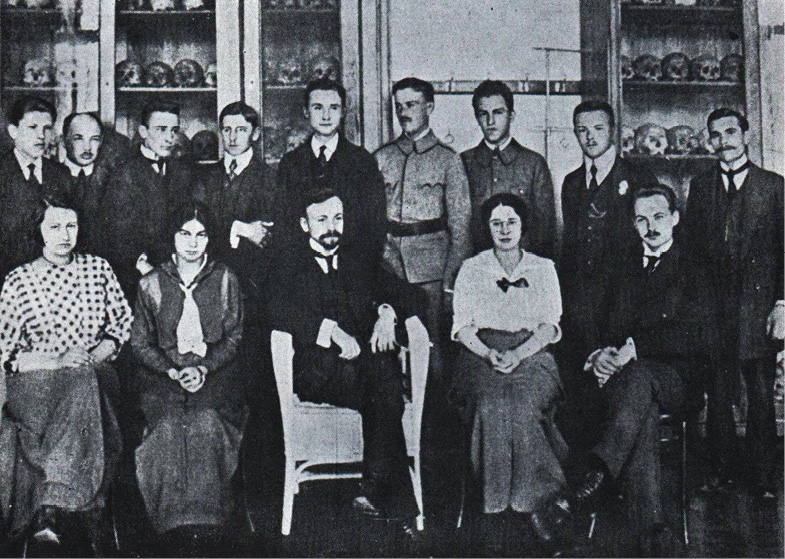
In the first half of the 20th century, Czekanowski elevated the meaning and importance of anthropology in Poland. He defined anthropology as a science “investigating the biological basis of social phenomena” (Czekanowski 1956: 39), and his primary goal was to transform Polish anthropology into an exact science, drawing inspiration from the English biometric school of Francis Galton and Karl Pearson. His ambition was to invent a mathematical method for classifying individuals based on multiple traits simultaneously (Bielicki 1959). Czekanowski’s methodological innovations included (Bielicki et al. 1985, 1989):
- the concept of “average difference” (DD statistic), the first measure of biological distance,
- the concept of a square matrix of these distances (the so-called Czekanowski table),
- a method for ordering this matrix (Czekanowski diagram) – a method of cluster analysis.
He introduced numerical taxonomy to racial classification, developing a sophisticated framework for anthropological typology based on his diagraphic method of differences and similarities (Czekanowski 1909, 1962). Historically, this was the first method of cluster analysis in the world (Krzyśko 2010). He was convinced that his method of calculating racial composition was groundbreaking and considered it his greatest achievement. The theory of distinguishing “racial types” and the method of calculating “racial compositions” of a population (the percentage of individual “racial elements” within it) seemed simple, coherent, and elegant, but it did not stand the test of time: simplicity proved to be a simplification and, therefore, the main weakness of the theory (Bielicki et al. 1985, 1989). This line of research is now considered historical and is no longer pursued in academic research. This is what Bielicki, Krupiński and Strzałko wrote about Professor Czekanowski:
Czekanowski was a scholar in the old, grandiose, professorial style, a Sage, adored by some, admired by many, and intensely disliked by a few.
(Bielicki et al. 1985: 21)
His major book publications include: “Zarys metod statystycznych w zastosowaniu do antropologii” (1913) – the first textbook on mathematical statistics in Polish; “Wstęp do historii Słowian: Perspektywy antropologiczne, etnograficzne, archeologiczne i językowe” (1927, 1957); and “Człowiek w czasie i przestrzeni” (1927, 1934, 1967). Jan Czekanowski’s students at various stages of their careers included later doctors and professors: Jan Mydlarski, Father Bolesław Rosiński, Karol Stojanowski, Stanisław Klimek (killed in the Battle of the Bzura River in 1939), Salomon Czortkower (died in the Lvov Ghetto in 1943), Tadeusz Henzel, Stanisław Żejmo-Żejmis (killed in Auschwitz in 1942), Adam Wanke, and Franciszek Wokroj (Czekanowski 1956).
To mark the 60th anniversary of Jan Czekanowski’s scientific work, the editors of “Materiały i Prace Antropologiczne” dedicated one issue of the publishing series to a commemorative book dedicated to him (Wanke 1964). On the centenary of Jan Czekanowski’s birth, a commemorative academic conference was organized at Adam Mickiewicz University in Poznań (September 9–10, 1982), titled “The Polish School of Anthropology on the 100th Anniversary of the Birth of its Founder, Jan Czekanowski”, and a collective volume “Teoria i empiria w Polskiej Szkole Antropologicznej”, was later published (1985).
In September 1939, resulting from the pact between Stalin’s Soviet Russia and Hitler’s Nazi Germany (the Molotov-Ribbentrop Pact), Lvov became part of the Soviet Empire. By late June 1941, it was under German occupation, and ultimately, following the Yalta Agreements (1945), Lvov became part of the Ukrainian Soviet Socialist Republic. Poland, therefore, lost its pre-war “capital” of anthropology.
The Vilnius Center
The pioneers of anthropological thought in the Vilnius region were the aforementioned physicians Jędrzej Śniadecki and Józef Jasiński (see First Publications and Emergence of a University Discipline section), whose anthropological works were published in the first two decades of the 19th century. In 1832, by decree of Tsar Nicholas I, as part of the repression following the November Uprising, Vilnius University was closed and only reactivated in the Second Polish Republic in 1919 as Stefan Batory University in Vilnius.
In 1919, the Department of Anthropology and Prehistory of the University of Vilnius was established, which took up a professor of anthropology at the Jagiellonian University – Julian Talko-Hryncewicz (1920), beginning the acquisition of collections (including those from the Vilnius Museum of Antiquities) and the organization of the department. However, the Polish-Soviet War interrupted Talko-Hryncewicz’s activities, and after a few months later that same year, he returned permanently to Kraków. The lectures on anthropology at the Faculty of Medicine were then taken over by Michał Reicher.
Michał Reicher (1888–1973) – born in Sosnowiec (Silesian Voivodeship) anthropologist and anatomist trained in Zurich (PhD 1912). He held a scholarship at the Carnegie Institution in Baltimore (1914), was a member of the Department of Anatomy at the University of Warsaw (1915–20), founder of the Collegium Anatomicum in Vilnius, which remains active today, and professor of anatomy at the Stefan Batory University in Vilnius (from 1920 until its closure by the Lithuanian authorities in 1939) and at the Medical Academy in Gdańsk from 1945. He co-authored and continued work on the comprehensive human anatomy textbook “Anatomia człowieka”, begun by the Kraków anatomist and anthropologist Professor Adam Bochenek (1875–1913), was an honorary Member of the Polish Anatomical Society (1964), and doctor honoris causa of the Medical Academy of Gdańsk (1965). Michał Reicher, like Edward Loth in Warsaw, conducted research on the intersection of anatomy and anthropology, known as “the anthropomorphology of soft parts”, studies on the growth and body proportions of human fetuses, typological studies on the constitutional structure of the human body, and studies on the Lithuanian ethnic minority – the Karaites of Trakai and Vilnius (Reicher and Sylwanowicz 1956). Reicher’s students included, among others, the anatomist and anthropologist Witold Sylwanowicz in Vilnius, and the anthropologist and paleopathologist Judyta Gładkowska-Rzeczycka in Gdańsk (see The Białystok Center section).
After World War II, Vilnius became the capital of the Lithuanian Soviet Socialist Republic, thus ending the short, barely twenty-year history of the Polish Vilnius anthropology center.
The Poznań Center
Anthropology in Poznań did not have the same long traditions as the four previously mentioned academic centers in Poland. Only after the end of World War I, in May 1919, was a university established in Poznań, thanks to the efforts of Professor Heliodor Święcicki (1854–1923) – a Poznań-born physician, social activist, philanthropist, and the university’s first rector. After the opening of the University of Poznań, work began to establish a Chair of Anthropology at the Faculty of Philosophy which, following the division of the faculty in 1925, was incorporated into the Faculty of Mathematics and Natural Sciences. However, despite these efforts, the chair remained vacant.
In 1920, the organization of a second Department of Anthropology at the Faculty of Medicine of the University of Poznań was initiated, with Professor Adam Wrzosek as its head.
The third anthropological institution, also at the Faculty of Medicine of this university, was the Physical Education Center, which was established on the basis of the Chair of School Hygiene and Theory of Physical Education at the University of Poznań, and headed by Eugeniusz Piasecki (1872–1947) – a Lvov-born physician, academic teacher, theoretician of physical education and school hygiene, and later patron of the Academy/University of Physical Education in Poznań (Godycki 1958).
Adam Wrzosek (1875–1965) – born in Zagórze (near Dąbrowa Górnicza) pathologist, anthropologist, and historian of medicine, founder of an academic center for anthropology in Poznań. He studied at the universities of Kiev, Zurich, and Berlin (where he attended lectures by eminent German professors Rudolf Virchow and Robert Koch), and after obtaining his doctorate in medicine and surgery in 1898, he continued his studies in Paris (attending lectures by Léonce Manouvrier), Zurich, Kraków, and Vienna. From 1901, he worked at the Jagiellonian University: in the Chair of General and Experimental Pathology (1901–13), and in the Department of Anthropology (1913–18, first under Professor Julian Talko-Hryncewicz, and then as his replacement).
In 1920, Wrzosek – by then former professor at the Jagiellonian University in Kraków and the University of Warsaw (1918) and former head of the Department of Science and Higher Education in the Ministry of Religious Denominations and Public Enlightenment (1919–20), was appointed organizer and first dean of the newly established Faculty of Medicine at the University of Poznań (1921–23), where he headed up two departments: the Department of History and Philosophy of Medicine and the Department of Anthropology (from 1921), focusing, following the example of the French school, on physiological anthropology, including body temperature, pulse, and visual acuity (Ćwirko-Godycki 1935, Godycki 1958). He introduced anthropology into medical studies, and on his initiative the Polish Anthropological Society was founded in Poznań in 1925, of which he was the first president (1925–48). He was also founder and first editor-in-chief of the scientific journal “Przegląd Antropologiczny” (Anthropological Review) (1926–48 and 1955–56)—the official organ of the Society and, from 1938, of Polish anthropology departments.
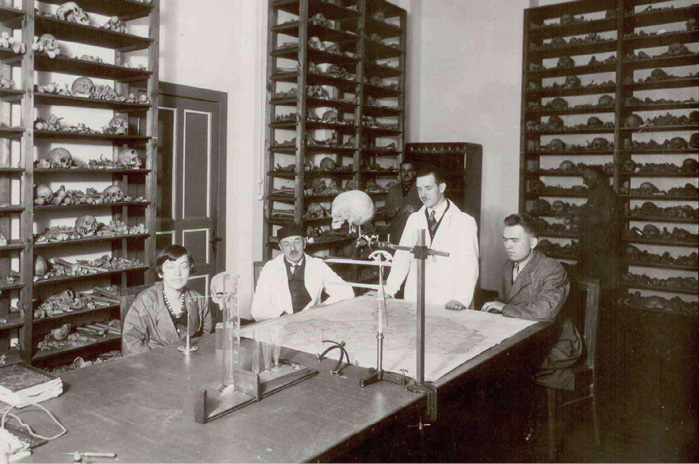
From 1935 to 1939, while working in Poznań, Adam Wrzosek commuted to Vilnius, where he lectured at the Stefan Batory University. During the war, he co-organized the Faculty of Medicine at the clandestine University of the Western Lands in Warsaw. After the defeat of the Warsaw Uprising, he settled in Grodzisk Mazowiecki (in the Chrzanów manor), where he continued his clandestine medical teaching. When, after the war, in 1945, the Department of Anthropology was reactivated and, resulting from Professor Wrzosek’s efforts, a Chair at the Faculty of Medicine of the Poznań University was created, he was reappointed as its head. Soon afterwards, however (in 1947), the communist authorities of the Stalinist era removed him from his position and forcibly retired him. In the years 1947–50, Wrzosek continued to work at the university but had to agree to accept the position of “contract junior assistant,” and then, renewable monthly, an “associate professor” without teaching duties (Musielak 2022). In January 1957, during the “Gomułka thaw” (a period of liberalization of the political system and limitation of communist repression in Poland), he was reinstated as professor of the Chair of the History of Medicine at the then Poznań Academy of Medicine[15], where he worked until 1959. Member of the Academy of Medical Sciences and the Polish Academy of Arts and Sciences; honorary member of the Poznań Society of Friends of Sciences (1912), distinguished member of the Polish Anthropological Society (1959), and doctor honoris causa of three universities: the Stefan Batory University in Vilnius (1929), the Poznań Academy of Medicine (1961), and the Jagiellonian University in Kraków (1964).
Adam Wrzosek compiled a bibliography of Polish anthropology “Bibliografia antropologii polskiej do roku 1955 włącznie” (1960), wrote numerous works on the history of anthropology (including profiles of Julian Talko-Hryncewicz and Józef Majer) and works on human physiological characteristics. Together with his student and later collaborator, Michał Ćwirko-Godycki, in the 1920s he conducted anthropological research on Kashubian school children (collecting material from 1,400 individuals), in the years 1925–29 he conducted research on the cemetery of the Lusatian culture (dated to the period from 1000 to 400 BC) in Laski (near Kępno, Poznań Voivodeship), collecting material from over 1,500 urns, and in 1932–35 conducted regular excavations at Ostrów Lednicki near Gniezno (10th–13th centuries; totalling over 1,400 skeletons), which remains the most valuable skeletal collection in Poland to this day (Godycki 1958).
Michał Ćwirko-Godycki (1901–1980) – born in Mińsk Litewski (present-day Belarus) physician and anthropologist. Participant in the Polish-Bolshevik War. He was associated with the Department of Anthropology at the Poznań University/Adam Mickiewicz University in Poznań from 1923 to 1971, initially as a volunteer assistant while still a student. After completing his medical studies, he studied at the École d’Anthropologie de Paris, a Parisian school of anthropology. In 1931, he assumed the position of school hygiene inspector at the Poznań District School Board (until 1952). During World War II, he lectured at the clandestine University of the Western Lands. He participated in organizing the Higher/University School of Physical Education in Poznań[16], established in 1950, where he organized and directed (1953–68) two departments: the Department of Biology and Anthropology, and the Department of Hygiene, while also serving as the Chair in Biological Sciences. From 1956 to 1965 he served as Rector of the Higher School of Physical Education for three terms; from 1960 to 1971 he was chairman of the Commission on Anthropometry of the Polish Academy of Sciences. Head of the Chair of Anthropology at Adam Mickiewicz University (1966–69) and of one of its two departments, the Department of General Anthropology (1967–69). President/vice-president of the Polish Anthropological Society (1948–56), editor-in-chief of “Przegląd Antropologiczny” (1957–77), distinguished member of the Polish Anthropological Society (1965). First doctor honoris causa of the Poznań Academy/University of Physical Education (1975; on the 25th anniversary of the university’s independence).
Ćwirko-Godycki (who in the People’s Republic of Poland usually used only the second part of his surname) contributed to the development of collaboration between anthropology and archaeology and promoted the application of anthropology to physical education and sport. He pursued multifaceted research, with a particular interest in child development. Interestingly, his first research, while still a student, was conducted on the population of Kleck in the Nieśwież district, former Nowogródek Voivodeship (Dzierżykray-Rogalski 1973, Malinowski 1981) – the birthplace of his later student and professor of anthropology at Adam Mickiewicz University in Poznań – Jan Strzałko. One of Michał Ćwirko-Godycki’s most important scientific achievements (Godycki 1958) was a longitudinal study of the developmental dynamics of school children from Poznań (1930s, the results of which were lost during World War II) and children from the Poznań Voivodeship (1940s–1950s; N=180,000) – this material was summarized in Chapter I of the monograph “Dziecko poznańskie” (1976). Together with Adam Wrzosek, he also studied Kashubian children and conducted research on the Lusatian culture cemetery from the Bronze Age/Halstatt period in Laski (a cremation site) and an early medieval cemetery in Ostrów Lednicki (a skeletal site). He also participated in the 2nd Arab-Polish Anthropological Expedition to Egypt (1962). In addition to the biology of human development and historical anthropology, he was interested in the development of the skeleton under the influence of muscles (the influence of the masticatory muscles on the shape of the skull), the history of medicine, and anthropometric techniques (he published the first textbook in Polish entitled “Zarys antropometrii” [1933, 1952, 1956]). He compiled four parts of the bibliography of Polish anthropology covering the years 1956–1980 (“Bibliografia antropologii polskiej”), and was also the author of several academic textbooks, including: “Antropologia. Dla studiujących wychowanie fizyczne” (1955).
Ćwirko-Godycki’s students, who later became professors (see Poznań section), included Andrzej Malinowski, Zbigniew Drozdowski, Jan Strzałko, and Maria Danuta Kaliszewska-Drozdowska. On the twentieth anniversary of his death – in 2000 – a study room was opened at the Museum of the First Piasts in Lednica to commemorate the participation of professors Adam Wrzosek and Michał Ćwirko-Godycki in the work related to the excavation of the Ostrów Lednicki cemetery in the 1930s.
The third active employee of the interwar Poznań center was Karol Stojanowski, a student of Jan Czekanowski, who arrived there from Lvov in 1926.
Karol Stojanowski (1895–1947) – born in Kobyłowłoki (western Ukraine) anthropologist, eugenicist[17], social activist (Scouting) and political activist (National Camp). Participant in the Polish-Bolshevik War. He began working as a teacher in 1919, moving to the university in Lvov in 1921 (PhD in 1924), simultaneously serving as an assistant at the Chair of Prehistoric Archaeology, and then on to Poznań. He was head of the Laboratory of Applied Anthropometry at the Physical Education Center at the Faculty of Medicine, University of Poznań (1926–39) headed by Eugeniusz Piasecki, and head of the anthropological branch of the Department of Prehistory, University of Poznań (1934–39). He lectured at the clandestine University of the Western Lands. After World War II, in 1945, due to political issues (as a leading activist of the National Party he was under surveillance by the Security Office), he moved to the newly established Polish University of Wrocław, where he became the first head of the Department of Anthropology at the Faculty of Mathematics and Natural Sciences (Patalas 2010).
Stojanowski undertook research on physical fitness depending on body type and racial type and addressed German racism, outlining the threat of German racism directed against Poland and Slavic countries. He attempted to demonstrate that Poland was on a par with Germany in terms of racial composition (particularly the frequency of Nordic elements). In his book “Rasowe podstawy eugeniki” (1927), he presented the thesis that “Eugenics is a science and movement aimed solely at the good of the nation as a whole” (1927: 50) and made openly anti-Semitic statements, including that about the physical “degeneration” of the Jewish population and their racial components, which were alien to the Polish population. Stojanowski concluded one section of this publication by stating:
To summarize my arguments, I state that the assimilation of Jews is undesirable for eugenic reasons. They must either emigrate or, having limited their birthrate, simply die out. (Stojanowski 1927: 69)
Centers Established After World War II (in 1940s–1950s)
In the postwar years, almost all anthropology departments at Polish universities (with the exception of Kraków) were staffed by Jan Czekanowski’s students (Lublin – Jan Mydlarski, later replaced by Tadeusz Henzel; Wrocław – Karol Stojanowski, later replaced by Jan Mydlarski; Warsaw – father Bolesław Rosiński; Toruń – Franciszek Wokroj) or students of his students (Łódź – Ireneusz Michalski; Białystok – Tadeusz Dzierżykray-Rogalski). After World War II, Jan Czekanowski himself found employment briefly at the Catholic University of Lublin and for longer at the University of Poznań.
The Lublin Center
Lublin was a city with a long academic tradition, dating back to the 16th and 17th centuries, when religious schools—the seeds of higher education—were established there: a Talmudic academy and a Jesuit college, followed by a studium generale at the Dominican monastery. During the interwar period, Lublin hosted a Catholic university, founded in 1918 under the name of the University of Lublin (renamed the Catholic University of Lublin in 1928), which resumed its activities as the first Polish university after the German occupation already in August 1944.
In October 1944, in Lublin, which for several months served as the capital of the People’s Republic of Poland, by decision of the Polish Committee of National Liberation (PKWN)[18], the first secular, state university was established – the Maria Curie-Skłodowska University. It was intended to educate a new intelligentsia from among the working and peasant classes (Kruszyński 2015). Its first rector was Professor Henryk Raabe, a zoologist (and political activist of the Polish Socialist Party). This new university in Lublin, the first in liberated Poland, offered professors, particularly those from the Eastern Borderlands, the opportunity to quickly return to professional work – the first official inauguration of the academic year took place in January 1945.
Departments of Anthropology were established in early 1945 at both universities – the Catholic University of Lublin and Maria Curie-Skłodowska University (UMCS) (Czekanowski and Wiązowski 1959), employing faculty from Lvov in managerial positions. At the end of 1949, a third institution was established – the Department of Anthropology at the Faculty of Medicine at UMCS. However, none survived for long, and by 1950, many academics had abandoned Lublin and UMCS, seeing little prospect for academic development due to unfulfilled ambitions and expectations, and the marginalization of the university (Kruszyński 2015).
The first institution – the Chair of Anthropology at the Faculty of Humanities at the Catholic University of Lublin, with its Department of Ethnology and Sociology organized by ethnologist Józef Gajek, operated from 1945 to 1949. Its head was the founder of the Lvov School of Anthropology himself, Jan Czekanowski (from 1946 onwards, working concurrently at the University of Poznań, to which he eventually transferred).
The second institution, the Department of Anthropology at the Faculty of Natural Sciences of Maria Curie-Skłodowska University, was established in February 1945. Its first heads were Jan Czekanowski’s students, Jan Mydlarski (1945–49) (see The Wrocław Center section) and Tadeusz Henzel (1949–55), followed by J. Mydlarski’s students – Kazimierz Wiązowski (1955–63) and Krystyna Modrzewska (1964–69), who was its last head. As Mydlarski (1949) reported, the department initially had nothing – neither books, research materials, measuring instruments, nor even furniture (except for a borrowed table and chair). Over time, he acquired a series of African skulls from Uganda (previously brought over by Edward Loth), a series of skulls from devastated old cemeteries, casts of a series of skulls from Ngandong in Java (the analysis of which was entrusted to Wanda Stęślicka [see The Wrocław Center section]) and stuffed exhibits of monkeys and prosimians (Czekanowski and Wiązowski 1959). Wanda Stęślicka and Krystyna Modrzewska studied and later worked at the Maria Curie-Skłodowska University in Lublin, while Halina Milicer (see Warsaw section) and Tadeusz Dzierżykray-Rogalski (see The Białystok Center section) worked there briefly as assistants.
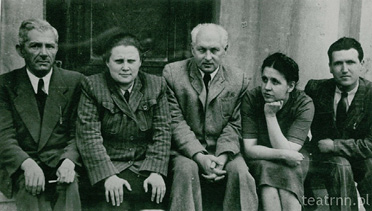
Tadeusz Henzel (1905–1955) – an anthropologist born in the village of Wygnanka near Chortkiv (present-day Ukraine). He worked at the Central Institute of Physical Education in Warsaw before World War II, and after the war, as an associate professor at Maria Curie-Skłodowska University. His works included so-called ethnic anthropology/typology, particularly of African peoples (“Pigmeje centralno-afrykańscy. Studium antropologiczne” 1934), as well as research methodology.
Krystyna Modrzewska (Mandelbaum, Frenkiel) (1919–2008) – Warsaw-born anthropologist, physician, and writer. Before the Second World War, she studied in Bologna (1937–39 under Professor Frassetto), and after the war, at Maria Curie-Skłodowska University. A student of Jan Mydlarski (PhD 1948), she was a researcher at UMCS in Lublin (1947–49 and 1956–69 – with breaks for medical practice), the University of Poznań (1949–50), the Medical Academy/University of Białystok (1950–55), and Uppsala University (1971–85). Her scientific interests focused on human genetics and demography, and she also studied PTC (phenylthiocarbamide) sensitivity. In the 1950s, she led excavations at an early medieval cemetery in the village of Czarna Wielka. After the events of March 1968, “Due to growing conflicts at the university, repression by the authorities, intrusive surveillance, and deepening anti-Semitic sentiment”, K. Modrzewska decided to leave Poland in 1970 and emigrate to Sweden (Wejman and Zachariewicz 2025). She was an honorary member of the Polish Anthropological Society (1987). She co-authored the textbook “Zarys antropologii dla medyków” (1955), authored fiction under the pseudonym Adam Struś, as well as memoirs under her own name, including “Trzy razy Lublin” (1991), and “Z Bolonii do Uppsali” (2002).
The third institution, the Department of Anthropology at the Faculty of Medicine of Maria Curie-Skłodowska University, was established in 1949 under the direction of the recently promoted doctor, Tadeusz Dzierżykray-Rogalski. In 1950, the department gained autonomy, transforming itself into the Lublin Medical Academy. Owing to the removal of anthropology lectures from medical faculties, the department was renamed the Paleoanthropology Laboratory. However, this, like the Department of Anthropology at the Catholic University of Lublin, did not last for long: in 1952, after only three years in existence, it was liquidated.
The Wrocław Center
Poland lost Wrocław in 1335 and regained it only after over 600 years. With the surrender of Festung Breslau (Wrocław Fortress) in May 1945, the history of German higher education in these areas ended, and in August of that year, the former German universities in Wrocław were transformed into Polish state academic schools. Under German rule, Wrocław had a rich tradition in the field of anthropology, where renowned professors worked in the institutes of anatomy and anthropology of the University of Wrocław (then Königliche Universität Breslau): anthropologist and anatomist Hermann Klaatch (1863–1916), and anthropologist and ethnologist Egon von Eickstedt (1892–1965), author of the book “Rassenkunde und Rassengeschichte der Menschheit” (1934).
In 1946, at the Polish University of Wrocław, Karol Stojanowski (see The Poznań Center section) took over the Chair in Anthropology and began organizing the department and recovering the hidden collections of the German university – literature, instruments, and osteological materials, including the famous craniological collections of Klaatch brought back from his expedition to Australia in 1904–07. Stojanowski died in 1947, and two years later, in 1949, another student of Jan Czekanowski, Jan Mydlarski, was appointed head of the department, transferring here from Maria Curie-Skłodowska University in Lublin. Under Mydlarski’s leadership, the Wrocław center would soon become the second “capital” of Polish anthropology, after the pre-war one in Lvov. From 1951, for several years, it also offered the only specialized master’s degree program in anthropology in Poland (Bielicki 1959).
Jan Mydlarski (1892–1956) – born in Pilzno (Subcarpathian Voivodeship) anthropologist whose scientific activity encompassed the genetics of blood groups, human growth and development and standards of motor fitness, the relationship between body structure and physiological properties, human typological differentiation, anthropogenesis and evolutionism. He was a lecturer at the Higher School of Intendenture in Warsaw (1923–24), at the Jan Kazimierz University in Lvov (1926–27), at the University of Warsaw (1927–39), head of the Department of Anthropology and Biometry/Anthropobiology at the Central Institute for Physical Education in Warsaw (1931–39 and 1947–49), lecturer at the clandestine University of the Western Lands (1940–41), professor of anthropology at the Maria Curie-Skłodowska University in Lublin (1945–49) and dean of its Faculty of Natural Sciences, and later professor at the University of Wrocław, of which he was rector from 1951 to 1953. He was also the founder and first director of the Department of Anthropology of the Polish Academy of Sciences in Wrocław (1953–56). He was a member of the Anthropological Commission of the Polish Academy of Arts and Sciences and a member of the Warsaw Scientific Society, a corresponding member of the Polish Academy of Sciences and chairman of its Anthropological Committee (1952–56), head of the Anthropometrics Commission at the Presidium of the Polish Academy of Sciences (from 1955). Upon the establishment of the Polish United Workers’ Party (PZPR) in 1948, its activist (Śródka 1983).
During the First World War, Mydlarski was drafted into the army of the Austro-Hungarian Monarchy; in years 1918–21 he served in the Polish Army, where, as an officer, in 1921 he began, and for 18 years continued, anthropometric measurements of recruits and soldiers for army purposes, the so-called military anthropological photograph (Mydlarski 1925), thanks to which Poland, from an anthropological perspective, was the best-studied country (Czekanowski 1956)[19]. In 1922 he made an important discovery regarding the mode of inheritance of the ABO blood group system (one tri-allelic locus instead of two pairs of independently inherited alleles), which, however, he did not publish (Stęślicka 1957, Bielicki et al. 1985, 1989). In the 1920s, he collaborated in the field of serology with Ludwik Hirszfeld (1884–1954 – physician, immunologist, and bacteriologist whose most important scientific achievement was his work on blood groups). In the 1930s, he initiated research on physical motor fitness, developing a “motor fitness measurer” (Mydlarski 1934/35) as a tool for objectively assessing the level of motor fitness in children and adolescents.
Jan Mydlarski had unprecedented achievements in organizing post-war anthropology in Poland, occupying “the number one position in the official hierarchy of the discipline” (Bielicki et al. 1985: 13). He led the establishment (1946) of the Maria Curie-Skłodowska University’s scientific journal “Rocznik Uniwersytetu Marii Curie-Skłodowskiej” (from 1949 “Annales Universitatis Mariae Curie-Skłodowska”), of which he was the first editor-in-chief. From 1951, he was chairman of the Polish Anthropological Society, editor-in-chief of “Przegląd Antropologiczny” (1953–54)[20], and editor-in-chief of the Polish Anthropological Society’s publications (1955–56). He founded and edited “Materiały i Prace Antropologiczne” (Anthropological Materials and Works) – the publication of the Department of Anthropology of the Polish Academy of Sciences. He is also credited with introducing anthropology as a specialization within biological studies. He educated a large group of independent academics, including: Wojciech Kóčka, Ireneusz Michalski, Wanda Stęślicka, Krystyna Modrzewska, Halina Milicer, Adam Wanke. Mydlarski’s major book publications include: “Pochodzenie człowieka” (1948), textbook “Antropologia ogólna” (1949), “Drogi i bezdroża rozwoju człowieka” (1951).
A student, colleague, and later wife of Jan Mydlarski was Wanda Stęślicka.
Wanda Stęślicka-Mydlarska (1907–2001) – born in Siemianowice Śląskie anthropologist and popularizer of science. She began her scientific career after World War II at the Department of Anthropology, Maria Curie-Skłodowska University in Lublin (1946–49). She later headed the Department of Anthropology at the Faculty of Physical Education in Wrocław (1957–61), the Chair of Anthropology, Nicolaus Copernicus University (UMK) in Toruń (1962–71), and the Department of Anthropology, University of Wrocław (1971–75); an honorary member of the Polish Anthropological Society (1975). Her scientific work focused on comparative anatomy, primatology, anthropogenesis (including “Stanowisko systematyczne człowieka z Ngandong” [1947]), evolutionism, and the application of anthropology to physical education. She corresponded with Robert Broom (1866–1951), a paleontologist at the Transvaal Museum in Pretoria, South Africa (now the Ditsong National Museum of Natural History), who sent her several casts of the Australopith fossils, including skull fragments of Paranthropus from Kromdraai. She wrote popular science books, including “O pochodzeniu człowieka” (1954) and “Rodowód człowieka uzupełniony” (1964). She also authored a textbook for grade 8 in primary schools – “Nauka o człowieku”, which was in circulation for more than a decade.
After World War II, Poland found itself in the Soviet sphere of influence, and in science – of Lysenkoism (see e.g., Sigmon 1993) (a pseudoscientific interpretation of the Michurinism theory in biology, based on the thesis of inheritance of acquired characteristics and rejecting the achievements of genetics) – an ideological trend that was officially announced in Poland in 1949. At the congress of zoologists and anthropologists in Łódź in December 1950, as a result of criticism of the state of Polish anthropology (including from the then head of the Science Department of the Central Committee of the Polish United Workers’ Party) and before the planned First Congress of Polish Science in 1951, which was intended to subordinate science to political and ideological goals[21], Jan Mydlarski presented the “shortcomings” of Polish anthropology and a program for reforming and ideologically restructuring the discipline (Mydlarski 1951). In his December 1950 paper, Mydlarski also conducted self-criticism, stating:
Bound by habits of thought to my old worldview, I announced in 1946 a phylogenetic concept based on the chromosomal theory of heredity. At that time I was not sufficiently armed to understand the ideological meaning of these assumptions. Between the old accretions and the growing new ideology arose a contradiction that I did not understand at the time. Today, after breaking the old habits of thought, I assess my work in retrospect as outdated. (Mydlarski 1951: 24)
After World War II, the anthropology curriculum was also restructured. Contrary to the pre-war concept, in which anthropology represented a more humanistic field[22] (and anthropologists were often also ethnographers), the idea of closely linking physical anthropology with biology, particularly zoology, prevailed. From then on, Polish anthropology, from a discipline combining biological and cultural sciences, became part of the exact sciences, with an increasingly weaker connection between the two disciplines.
According to Stęślicka-Mydlarska (1985), the 1950s witnessed a true “golden age” in the history of Polish anthropology. Between 1951 and 1954, three national anthropological conferences were organized, focusing on taxonomic methods, ethnogenetic research, and anthropological typology. Chairs of anthropology operated at all universities, and departments and laboratories were being established in medical academies/universities, in higher schools/academies of physical education, and in pedagogical studies. Anthropological institutions of the Polish Academy of Sciences also began to be established (like Mydlarski’s in Wrocław).
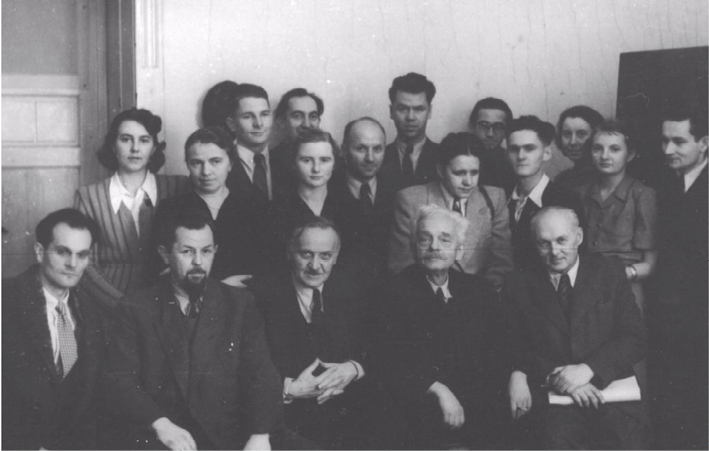
The Wrocław center, although based on the traditions of Jan Czekanowski’s Lvov school, abandoned the program of transforming anthropological typology into an exact science based on mathematical statistics, rejecting the “law of cardinality of types”, yet at the same time distanced itself from the “methodological primitivism” of the Łódź “morphologists,” who denied the usefulness of mathematical methods in anthropology in general (Bielicki 1959; Bielicki et al. 1985, 1989). After the death of Mydlarski in 1956, the third head of the Department of Anthropology in Wrocław was another alumnus of the former Lvov school – Adam Wanke.
Adam Wanke (1906–1971) – anthropologist born in Lvov. He worked in various professions until 1946, and from 1946 onwards at the Physical Education Center[23] of the University of Wrocław as an assistant. He also directed the anthropology laboratory at the Psychiatric Hospital in Wrocław for four years. During the Stalinist repressions in Poland, he was sentenced in 1950 to three years in prison and forced to resign from the university (he was released after nine months owing to the intercession of Professor Mydlarski, then rector of the University of Wrocław). In 1954, he became an assistant professor at the Department of Anthropology of the Polish Academy of Sciences. After Mydlarski’s death, he was director of the Department of Anthropology of the Polish Academy of Sciences in Wrocław (1956–65), and head of the Department of Anthropology at the University of Wrocław (1956–71), chairman of the Committee on Anthropology of the Polish Academy of Sciences (1965–71), president of the Polish Biometric Society (from 1963), editor-in-chief of the journal “Materiały i Prace Antropologiczne” (1956–71). He also edited “Mały słownik antropologiczny” (1969).
Wanke developed new taxonomic methods for typological analyses (Bielicki 1959): the stochastic multiple correlation method (Wanke 1953a), also known as the cube method, or the surplus method (cluster analysis method), and the so-called reference point method (Wanke 1953b), also known as “Wanke approximation”—an indicator of similarity for multiple comparisons. He also studied male body types, describing them with letters resembling their silhouettes: I, A, V, H, creating a system of human somatic typology. His students included Tadeusz Krupiński, Antoni Janusz, Tadeusz Bielicki, Zygmunt Welon, Zofia Szczotkowa, and Ewa Kolasa, who later became professors at Wrocław universities and research institutions.
From the time of Wrocław’s incorporation into Poland, and throughout the 20th century, Wrocław anthropology was systematically developed in three units: (1) the Department of Anthropology at the University of Wrocław (subsequent directors: Karol Stojanowski, Adam Wanke, Wanda Stęślicka-Mydlarska, Tadeusz Krupiński), (2) the Anthropology Laboratory at the Physical Education Center (subsequent directors: Adam Wanke, Wojciech Kóčka) / the Department of Anthropology at the Higher School of Physical Education (subsequent directors: Wanda Stęślicka-Mydlarska, Aleksander L. Godlewski) / the Department of Anthropology and Biometry at the University of Physical Education (director: Antoni Janusz), and (3) the Department of Anthropology at the Polish Academy of Sciences (subsequent directors: Jan Mydlarski, Adam Wanke, Halina Milicer, Tadeusz Bielicki). This third department soon became the largest anthropological research center in Poland.
Following the breakup of the school of anthropological typology and the death of its main proponents (Jan Czekanowski and Ireneusz Michalski, both in 1965), research themes in the late 1960s and early 1970s underwent significant modifications. In Wrocław, the focus shifted to various auxological studies, developmental genetics and longitudinal twin studies, the variability and genetics of anthroposcopic traits, human evolution, applied anthropometry, and, above all, “large-scale research on the relationship between social stratification and anthropometric measures became a specialty of Polish anthropology” (Kopczyński 2006: 34).
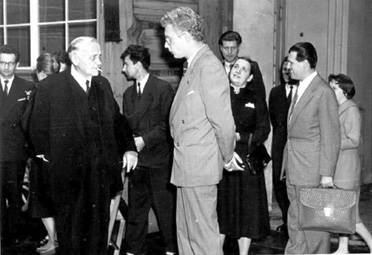
Leading figures in Wrocław anthropology at the Polish Academy of Sciences in the second half of the 20th century were:
Tadeusz Bielicki (1932–2022) – Warsaw-born anthropologist, founder of a scientific school combining human biology and social sciences—factorial analyses of social stratification. He was a researcher at the Department of Anthropology of the Polish Academy of Sciences in Wrocław (1956–2014) and its long-time director (1970–2001). He was deputy chairman of the Department of Biological Sciences of the Polish Academy of Sciences (1990–97), then its chairman (1999–2002), a corresponding member (1983), and then a full member of the Polish Academy of Sciences (1996), a corresponding member of the Polish Academy of Arts and Sciences (1997), and a member of the Presidium of the Polish Academy of Sciences (1999–2006). He was an honorary member of the Polish Anthropological Society (1999); and doctor honoris causa of the Józef Piłsudski University of Physical Education in Warsaw (2002).
As a 21-year-old student, in 1953, Bielicki was expelled from the University of Warsaw and spent six months in detention/in prison on Rakowiecka Street in Warsaw’s Mokotów district on political charges. Barred from returning to the University of Warsaw, his academic career was linked to Wrocław. A student of Adam Wanke (PhD 1959), he began his scientific career by addressing a controversial issue in Polish anthropology at the time: the justification of the racial typology system formulated by the Lvov School of Anthropology, conducting a thorough critique of the typological concept of race (Bielicki 1961). A year-long Rockefeller Foundation postdoctoral fellowship (1959/60) at the University of California, Los Angeles (UCLA) with Professor Joseph B. Birdsell focused Bielicki’s interests on population genetics (action of natural selection on head shape). The next direction of his research interests were issues related to human evolution (“Niektóre związki zwrotne w procesie ewolucji Hominidae” 1969), but he is best known for his anthropological studies of social stratification (biological effects of social stratification, secular changes depending on the standard of living of given social groups and indicators of biological well-being of the contemporary Polish population) (Kaszycka et al. 2022).
Tadeusz Bielicki was one of the co-authors of the UNESCO Statement on Race and Racial Prejudice (Moscow, 1964). He taught as a visiting professor at Washington State University (1967–68), at the Free University of Brussels (1989), and at the University of Texas at Austin (1991). He was an undisputed academic authority. He initiated and participated in numerous research programs, including longitudinal studies of Wrocław schoolchildren, longitudinal studies of Wrocław twins, genetic studies of families, studies of conscripts, cohort studies of child and youth development (the so-called anthropological photographs of the Polish population), and studies assessing the biological condition of the Wrocław population of working age. He was also founder and editor-in-chief of the Polish journal published in English “Studies in Physical Anthropology” (1975–90).
Zygmunt Welon (1924–2005) – born in Chita, Siberia, mathematician and anthropologist who worked at the Department of Anthropology of the Polish Academy of Sciences in Wrocław (1957–2003). He was a student of Adam Wanke (PhD 1964). As a soldier in the Home Army, at the age of 20 (1944) he was arrested by the NKVD[24] and, after a year in prison, sent to work in Soviet and Georgian labor camps, from where he returned in 1948. He researched anthropometrics and ergonomics, the application of mathematics in anthropology, and the relationship between body type constitution and physical development. He is the author of the monograph: “Normy do oceny rozwoju fizycznego dziecka” (1984).
Barbara Hulanicka (1936–2022) – Vilnius-born anthropologist, researcher at the Department of Anthropology of the Polish Academy of Sciences in Wrocław (since 1961, acting director in 2005–06), and academic staff member at the Institute of Sociology of the University of Wrocław. She spent her childhood in Siberia and then, with other refugees, in Tehran. Honorary member of the Polish Anthropological Society (2013). Her research focused on the relationship between environmental factors and the course of ontogenetic development. Her research included the influence of upbringing in dysfunctional families on the age of menarche and the process of puberty in girls depending on different urban environments. She was also a pioneer of Polish knemometric[25] research. She co-authored the monograph: “Dziewczęta z Górnego Śląska: społeczne i ekologiczne uwarunkowania dojrzewania” (1994).
Paweł Bergman – born in Łódź in 1936, retired professor of anthropology. He was a researcher at the Department of Anthropology of the Polish Academy of Sciences in Wrocław (1959–2005, and its director from 2002 to 2005) and at the Faculty of Physiotherapy at the Academy/University School of Physical Education in Wrocław (head of the Department of Human Biology from 1995 to 2003). He served as chairman of the Polish Anthropological Society (1987–99) and its honorary member (1999). He focused on clinical anthropology, the biology of human populations, and the genetics of human morphological traits. He conducted longitudinal studies of twins, anthropometric studies of rural and urban populations, and sports groups. He was co-author and editor of the monograph “Bliźnięta wrocławskie” (Vol. I, 1988 and Vol. II, 1995).
Leading figures in Wrocław anthropology at the Academy of Physical Education and the University of Wrocław in the second half of the 20th century were:
Antoni Janusz (1929–2019) born in the village of Ptaszkowa (near Nowy Sącz, Lesser Poland Voivodeship), sports anthropologist. A student of Adam Wanke (PhD 1962). An academic at the Higher School/Academy of Physical Education in Wrocław (1954–2002), from 1969 to 2002 he headed the Department of Functional Morphology and then the Department of Anthropology and Biometry. Rector of the Academy of Physical Education (1981–82; removed from office by decision of the state authorities during martial law). From 2004–10 he was associated with the Polish-Czech College of Business and Sport “Collegium Glacense” in Nowa Ruda. Honorary member of the Polish Anthropological Society (2003). He explored the relationships between the anthropomorphology of the muscular system and body composition, the ontogenetic development of adolescents, and the morphological, physiological, and motor determinants of children’s and adolescents’ selection for sports. The editor and co-author of the monograph: “Populacja dzieci wiejskich w badaniach longitudinalnych” (three parts).
Tadeusz Krupiński (1930–2007) – anthropologist born in Łańcut (Subcarpathian Voivodeship). A student of Adam Wanke (PhD 1962). Academic teacher at the University of Wrocław (1956–2000), long-time head of the Department of Anthropology, University of Wrocław (1971–99) and Dean of the Faculty of Natural Sciences, University of Wrocław (four terms), member of the Primate’s Social Council, chairman of the Committee on Anthropology, Polish Academy of Sciences (1990–93), head of the Department of Human Biology, University of Opole (1999–2002). Honorary member of the Polish Anthropological Society (2001). His research interests included morphology and human genetics (including racial differentiation in the Younger Paleolithic, and the variability and inheritance of auricle characteristics), the biology of prehistoric populations, ontogeny, and ergonomics. Along with an anatomist Zbigniew Rajchel, he was also a co-founder of the Wrocław school of reconstruction (Rajchel 1990), endeavoring to create anatomical reconstructions of the skulls of extinct hominids and primates (Paranthropus, Oreopithecus, and Gigantopithecus) based on fragments of skulls. He continued this work many years later with his daughter, Barbara Kwiatkowska, also an anthropologist, reconstructing, based on preserved skulls, the appearance during life of famous figures, including Duchess St. Hedwig of Silesia and Blessed Czesław. He was scientific editor of the University of Wrocław’s publication, “Studia antropologiczne” (Antropological Studies) (1994–2001). His students who later became professors were Ewa Nowak and Bogusław Pawłowski.
Ewa Kolasa – born in Warsaw in 1937, retired professor of anthropology. A student of Adam Wanke (PhD 1966). She was an academic at the Department of Anthropology at the University of Wrocław (1963–2002). She researched human ontogenetic development and somatotypology. She is the author/co-author of the monographs: “Wiek menarchy a budowa fizyczna studentek wrocławskich w zależności od warunków środowiskowych” (1980) and “Dziewczęta z Górnego Śląska: społeczne i ekologiczne uwarunkowania dojrzewania” (1994).
Danuta Kornafel – born in Wrocław in 1949 anthropologist, and retired university professor. A student of Tadeusz Krupiński (PhD 1978). Academic staff member at: the Department of Anthropology, University of Wrocław (1972–2014), the Faculty of Physiotherapy, Academy of Physical Education in Wrocław (Head of the Department of Human Biology and Ecology 2000–05), and the University of Lower Silesia in Wrocław (2010–19). Chairperson of the Polish Anthropological Society (1999–2007) and its honorary member (2017). Her research interests included early human ontogeny – assessing the influence of factors modifying and stimulating the course of human development in the prenatal period and the role of parental, sociocultural, ecological, and ethnic factors differentiating the biological state (health) of newborns, as well as clinical anthropology – characterizing the psychophysical health of adults in terms of birth characteristics.
Krzysztof Borysławski – born in 1949 in Ostrowiec Świętokrzyski (Lesser Poland) anthropologist and retired professor at the University of Environmental and Life Sciences in Wrocław. A student at Tadeusz Krupiński (PhD 1978). An academic at the Department of Anthropology, University of Wrocław (1972–2009 and its head from 1999–2009), the Department of Anthropology, Wrocław University of Environmental and Life Sciences (2009–19 and its head from 2009–17), and since 2019 a lecturer at the Angelus Silesius Academy of Applied Sciences in Wałbrzych. His main scientific interests include human ontogenetic development (from the fetal period to late old age), the physiological basis of physical activity, issues of physical attractiveness, the demography of historical populations, and forensic anthropology.
The Łódź Center
The University of Łódź was established in May 1945, and in September of that year, the Department of Anthropology was established at the then Faculty of Mathematics and Natural Sciences, with Dr. Ireneusz Michalski, a student of Jan Mydlarski, appointed as its head. For a year, the department did not have its own premises, being then housed in the head’s private apartment until 1950, when it obtained university facilities (Michalski 1959). Between 1945 and 1949, the newly established university saw rapid growth in its teaching and research staff and students, until the communists took over full power and the Ministry of Education’s plan to divide the then Polish universities into three groups (1949). The Universities of Łódź, Lublin (UMCS), and Toruń (UMK) were included in the last, third group, the so-called small universities, which were to run only basic fields of study. As a result, the University of Łódź entered a period of deep crisis in the years 1949–52 – with the liquidation of faculties and the exodus of the cardinal; in addition, the ministry introduced strict limits on student admissions. The university’s crisis lasted until 1956, when its scientific and teaching status was restored (Puś 2015).
In 1951, the Faculty of Biology and Earth Sciences was established at the University of Łódź, and in 1953, the Department of Anthropology was established within the faculty, with Professor Michalski appointed as its head. In 1957, the department was granted the right to specialize in anthropology within the biology program.
Ireneusz Michalski (1908–1965) – anthropologist born in Sosnowiec (Silesia), professor at the University of Łódź, specializing in human racial typology. He participated in work on the military anthropological photograph under the supervision of Jan Mydlarski. During World War II, he informally headed the anthropology unit at the State Archaeological Museum in Warsaw (1941–44) and lectured at the clandestine University of the Western Lands (1943–44). He organized and headed the Department of Anthropology at the University of Łódź (1945–65) and the Łódź Anthropological Expedition to Mongolia (1959). He compiled a table for determining eye color, consisting of 80 shades—several times more than the classic Martin scale. He founded the school of Łódź “morphologists,” who opposed the “anthropostatisticians” (the school of Jan Czekanowski), with both sides of the dispute being contested by the “populationists” (Bielicki 1961, Bielicki et al. 1985, 1989). He authored the monograph “Struktura antropologiczna Polski” (1949). Michalski’s students included the future professors Andrzej Wierciński and Zdzisław Kapica.
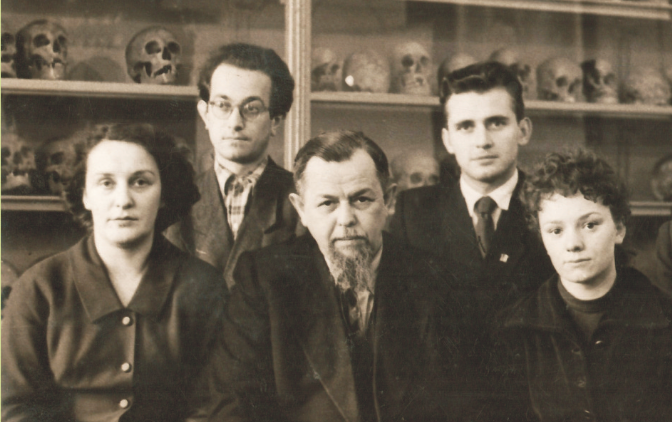
Following the death of Ireneusz Michalski (1965–67), Franciszek Wokroj – a professor at Adam Mickiewicz University in Poznań and a student of Jan Czekanowski (see Poznań section) – was the curator of the Department of Anthropology at the University of Łódź for two years. After a few years of discontinuation of the department’s activities, and following Zdzisław Kapica’s habilitation, he subsequently assumed the position of it head.
Zdzisław Kapica (1928–2013) – born in Łódź anthropologist specializing in human typological/racial diversity, head of the Department of Anthropology at the University of Łódź (1974–86 and 1987–89), organizer and participant in excavations of cemeteries in the Brześć Kujawski region and Przeczyce. Co-author of the monograph “Cmentarzysko kultury łużyckiej w Przeczycach, pow. Zawiercie, w świetle badań antropologicznych” (1971).
In 1990, the Łódź department was headed by another professor from Poznań University – Andrzej Malinowski (1990–98) (see Poznań section) – a student of Michał Ćwirko-Godycki and Franciszek Wokroj (preventing the closure of the Łódź center), and later a student of Ireneusz Michalski and Paweł Sikora – Henryk Stolarczyk.
Henryk Stolarczyk – born in 1935 in Widawa (Łódź Voivodeship) anthropologist, retired professor at the University of Łódź. An employee of the Department of Anthropology (1958–2005), participant of scientific expeditions of the University of Łódź to Equatorial Africa (1975, 1989), supervisor and participant of the Student Scientific Expedition to Peru (1978), head of the Chair of Anthropology at the University of Łódź (1998–2005), author of the monograph “Społeczne uwarunkowania rozwoju fizycznego dzieci i młodzieży szkolnej Łodzi” (1995).
The Białystok Center
Until 1949, Białystok had no scientific or academic traditions. The first university to be established there was the Private Evening Engineering School, followed shortly thereafter by the Medical Academy, established in February 1950. Anthropology in Białystok was established in 1950 at the Chair and Department of Human Anatomy of the Medical Academy, whose organization and management were entrusted to Tadeusz Dzierżykray-Rogalski from the Lublin center. Already in the 1950s, the department’s team organized excavations related to the Białystok region, including an early medieval cemetery in the village of Czarna Wielka (director: Krystyna Modrzewska [see The Lublin Center section]) and a barrow burial ground of the Yotvingian people in the Suwałki region. The center’s second research focus was anthropological and serological studies of the Kashubian population. At that time, Judyta Gładkowska and Irena Szewko (Dzierżykray-Rogalski 1959), later academics, worked as assistants in the department.
Tadeusz Dzierżykray-Rogalski (1918–1998) – Warsaw-born anthropologist, physician, and paleopathologist, associated with universities and research institutions in Lublin, Białystok, and Warsaw. He was a member of the Grey Ranks and the Union of Armed Struggle/Home Army. During the war, he was involved in helping the Jewish population, and was awarded the Righteous Among the Nations medal. He was the chairman of the Polish Anthropological Society (1956–84), initiator and editor of the society’s quarterly “Człowiek w Czasie i Przestrzeni” (Man in Time and Space) (published 1958–64), editor-in-chief of “Przegląd Antropologiczny” (1978–84), and honorary member of the Société ďAnthropologie de Paris and the Polish Anthropological Society (1968).
He began his academic career at the Faculty of Natural Sciences, Maria Curie-Skłodowska University, in the department headed by Jan Mydlarski (1947–49). He then headed the Paleoanthropology Laboratory at the Medical Academy/University of Lublin (1949–52). From 1950–62, he organized and headed the Department of Human Anatomy at the Medical Academy/University of Białystok. From the 1950s, he was closely associated with the Polish archaeological community. He co-organized the excavations of Neolithic cemeteries in Stok and Las Stocki (Lublin Voivodeship, 1951) and the Comprehensive Yotvingian Expedition, whose work contributed to understanding the prehistory of the Balts (the Baltic Yotvingian tribe). He was also a member of the leadership of both Arab-Polish Anthropological Expeditions to Egypt (January 1958/59 and February 1962), researching the contemporary population of Egypt (over 2,000 people were measured) and skeletons from the cemetery on the Mountain of the Dead – Jebel el-Mauta, dated to ca. 1100–400 BC.
After leaving the Białystok University, Dzierżykray-Rogalski headed the Human Ecology Laboratory at the Department of Mediterranean Archaeology of the Polish Academy of Sciences (1962–82) and the Department of Anthropology at the Academy of Physical Education in Warsaw (1963–71). In 1982, he moved to the Department of Non-European Countries of the Polish Academy of Sciences. On behalf of the Polish Academy of Sciences, he undertook research on skeletal materials from a cemetery in Alexandria, Egypt, and, in collaboration with archaeologists (under Professor Kazimierz Michałowski), participated in an excavation expedition in Sudan. He identified the bones of medieval bishops from Faras, the present-day Pachoras (6th–14th centuries, Sudan, former kingdom of Nubia), which he brought to Poland in the 1960s for anthropological research (Dzierżykray-Rogalski 1985)[26], with their images from paintings that were removed from the cathedral walls as part of the International Campaign to Save the Monuments of Nubia (due to the construction of the Aswan Dam). His major publications: “Polska antropologia w Afryce” (1981), “The Bishops of Faras” (1985), co-author of the textbook “Zarys antropologii dla medyków” (1955). His students, later professors: Tamara Jelisiejew and Janusz Charzewski.
Judyta Gładkowska-Rzeczycka – born in Toruń in 1928 anthropologist and paleopathologist, and professor emeritus at the Academy/University of Physical Education and Sport in Gdańsk. A student of Jan Czekanowski (MA 1952) and Michał Reicher (MD 1964). She began her academic career at the Medical University of Białystok (1950s) and then moved to the Academy of Physical Education in Gdańsk, where she headed the Chair/Department of Anatomy and Anthropology. For years, she collaborated with archaeologists from the Archaeological Museum in Gdańsk. She organized the paleopathological exhibition at the Medical Academy of Białystok (1978) and at the Archaeological Museum in Gdańsk (1989). An honorary member of the Polish Anthropological Society (1999), and author of the monograph “Schorzenia ludności prahistorycznej na ziemiach polskich” (1988).
The Toruń Center
In August 1945, a decree was issued establishing Nicolaus Copernicus University in Toruń, ending over 500 years of efforts to establish a university in the Pomeranian region. Its staff was largely composed of professors and academics from Stefan Batory University in Vilnius and Jan Kazimierz University in Lvov, who had come to Toruń after the resettlements. Initially, Nicolaus Copernicus University in Toruń had three faculties: the Faculty of Humanities, the Faculty of Mathematics and Natural Sciences, and the Faculty of Law and Economics. The period 1949–56 was a period of crisis for the Toruń university, as well as for the universities in Łódź and Lublin (UMCS), due to the imposition of the Soviet model on higher education institutions in Poland, but subsequent periods brought the university development.
The beginnings of anthropology in Toruń were associated with the Department of Human Anatomy and School Hygiene of the Faculty of Mathematics and Natural Sciences, whose head (1945–47) was Michał Reicher’s student (see The Vilinus Center section) – anatomist and anthropologist Witold Sylwanowicz (1901–1975). However, Sylwanowicz soon left Toruń, being appointed head of the Department of Anatomy at the Medical Academy in Gdańsk.
In 1952, the Department of Human Anatomy was renamed the Department of Anthropology – for a period of several years (1951–55), upon request, Bronisław Jasicki from Kraków (see Kraków section) lectured there, and after his resignation in 1955, Franciszek Wokroj (Wokroj 1959) (see Poznań section), a student of Jan Czekanowski from the University of Poznań/Adam Mickiewicz University, was invited to organize the department, and who became the head of the Department of Anthropology at the Nicolaus Copernicus University in Toruń in the years 1956–61. For the following year, the Toruń department remained vacant until Wanda Stęślicka-Mydlarska from Wrocław (see The Wrocław Center section) was appointed to this position, heading the department in the years 1962–71, until Dr. Guido Kriesel completed his habilitation (Stęślicka-Mydlarska 1972).
Guido Kriesel – born in 1937 in Ugoszcz (a Kashubian village in the Pomeranian Voivodeship), retired professor of anthropology. An academic at the Nicolaus Copernicus University in Toruń since 1960, he served as head of the Department of Anthropology for over 35 years (1972–2007). Student of Jan Czekanowski at the University of Poznań (MA 1960) and of Wanda Stęślicka-Mydlarska at the Nicolaus Copernicus University (PhD 1965). He participated in and directed excavations at numerous cemeteries in Pomerania, Kuyavia, and Greater Poland, including the early medieval skeletal cemetery in Gruczno (Eastern Pomerania). He is an honorary member of the Polish Anthropological Society (2007). His primary interests were studies on skeletal series of prehistoric and historical populations, as well as on living populations, including children and adolescents from Toruń.
Professor Kriesel’s successor at the Department of Anthropology at Nicolaus Copernicus University was Wiesław Buchwald, an anthropologist born in 1948 in Ząbkowice Śląskie, a student of Kriesel (PhD 1980), and department head from 2007–14. He focused on morphological anthropology, human genetics, and living humans, particularly dermatoglyph studies. He is co-author of the monograph “Tablice asocjacji cech dermatoskopijnych rąk” (2013).
Postwar Activities of Pre-War Centers
Warsaw
The University of Warsaw reopened in December 1945, with a staff decimated by World War II and in a capital devastated by the Germans. The Chair of Anthropology was established at the then Faculty of Mathematics and Natural Sciences (later the Faculty of Biology and Earth Sciences). Initially vacant, with guest lectures by Jan Mydlarski, it would last only a dozen or so years. In 1946, Jan Czekanowski’s student, Father Professor Bolesław Rosiński, was appointed assistant professor at the University of Warsaw and began its work.
Bolesław Rosiński (1884–1964) – priest and anthropologist born in Warsaw. He studied at the Universities of Munich and Lvov. He collaborated with Kazimierz Stołyhwo in the Society for Scientific Courses (from 1911), served as a lecturer at the University of Lvov (1921–39), and during World War II (1939–46) at the State Medical Institute in Lvov. He was a professor at the University of Warsaw (1946–53, and between 1948–53, head of the Chair of Anthropology), and, after retirement by the authorities, a professor at the Academy of Catholic Theology in Warsaw (1954–64), where he headed the Chair of Anthropology. His main research areas were human racial differentiation and population genetics—the influence of morphological traits on marital selection and research on Polish emigration in Texas.
In 1950, Dr. Aleksander Lech Godlewski and a student, Andrzej Wierciński, were employed at the Chair of Anthropology at the University of Warsaw. Following the retirement of Father Rosiński, Godlewski served as an associate professor at the Chair of Anthropology at the University of Warsaw from 1954 to 1958, and then as its acting head. However, when Godlewski moved to Wrocław in 1961, the authorities of the then Faculty of Biology and Earth Sciences dissolved the department, and its two-member young staff moved to the Chair of Prehistoric and Early Medieval Archaeology in the Faculty of History (Sołtysiak and Jaskulski 2000).
Aleksander Lech Godlewski (1905–1975) – Warsaw-born anthropologist and ethnographer. He began his career as a biology teacher, joined the Institute of Anthropological and Ethnological Sciences of the Warsaw Scientific Society in 1931, and embarked on an expedition to the Pacific Islands in 1938. During World War II, he lectured to clandestine classes. From 1950–61 he was an academic at the Department of Anthropology, University of Warsaw, and simultaneously (1955–61) at the Department of Anthropology, Academy of Physical Education in Warsaw, afterwards at the Chair of Ethnography, University of Wrocław (1961–75, its head from 1965), and at the Chair of Biological Sciences, Higher School/University of Physical Education in Wrocław (1961–69). He also lectured at the Academy of Catholic Theology in Warsaw, and in 1962–68, at the invitation of Adam Mickiewicz University in Poznań, he lectured on regional and ethnic anthropology. Honorary member of the Polish Anthropological Society (1975). His research focused on human racial diversity, the anthropological structure of Polynesians, the ethnogenesis of the peoples of Australia and Oceania, and the ethnography of religion. He authored several popular science books about his travels through the Polynesian islands.
Andrzej Wierciński (1930–2003) – born in Chorzów anthropologist, religious scholar, and cabalist. An employee and later professor at the University of Warsaw (he was employed as a student in 1950–52). Student of Father Bolesław Rosiński (MA 1951) and Ireneusz Michalski (PhD 1957). From 1976 to 2000, he headed the Department of Historical Anthropology at the Institute of Archaeology, University of Warsaw. He lectured (and from 1993, headed the Chair of General Anthropology) at the Jan Kochanowski Pedagogical University in Kielce, at the Institute of Religious Studies of the Jagiellonian University in Kraków (from 1983), and, as a visiting professor, at many universities abroad, including Turin, Paris, and the United States. Honorary member of the Polish Anthropological Society (1999).
While on a scholarship at Cairo University (1957–59), Wierciński co-organized the First Arab-Polish Anthropological Expedition to Egypt, and conducted fieldwork in Mexico (craniological studies of pre-Columbian Olemek people) and Poland, including at the medieval cemetery in Wiślica. In search of the “essence of humanity”, in 1983 he established (together with his wife, Professor Alina Wiercińska [1931–2019]) the Multidisciplinary Team at the University of Warsaw and the State Archaeological Museum for the Study of the Peculiarities of the Human Species. For 20 years, this team’s papers and discussion meetings, held as half-day conferences, brought together scientists from various disciplines. In 1996, he founded the annual “The Peculiarity of Man” (Kielce). Andrzej Wierciński was a colorful, exceptional man, with broad interests—from the exact sciences to the humanities. He focused on human racial diversity (PhD and habilitation), microevolutionary changes in Poland from the Neolithic to the Middle Ages, the ethnogenesis of the Slavs, predynastic Egypt, and pre-Columbian Mexico, the anthropology of religion, the theory of symbolization, and the theory of culture. His most important publications include “Magia i religia. Szkice z antropologii religii” (1994). His student, later professor was Mariusz Ziółkowski.
The second post-war anthropology department in Warsaw was the Department of Anthropobiology at the Academy/University of Physical Education (in 1954 divided into two independent departments), which was headed in 1947–49 by Jan Mydlarski (see The Wrocław Center section), and then by biologist Stanisław Bilewicz. Assistants in this department included: in the 1940s – Halina Milicer, a graduate of the Central Institute of Physical Education and the University of Warsaw and a student of Jan Mydlarski, and in the 1950s – Napoleon Wolański, a graduate of the University of Warsaw and a student of Father Rosiński (Pastuszak and Charzewska 2010).
Halina Milicer/ Milicerowa (1907–1995) – born in Szwarszowice (Kielce-Sandomierz region) anthropologist. She worked in various scientific institutions: at the Central Institute of Physical Education/Academy of Physical Education in Warsaw (employed four times for several years between 1931 and 1976; during the period of political repression in 1951 she had to leave the university), the State Office of Physical Education and Military Training (1935–37), at the Maria Curie-Skłodowska University in Lublin (1945–47), at an institution operating under the auspices of the Ministry of Culture and Art called the Directorate for Research on the Origins of the Polish State (1951–53), at the Scientific Institute of Physical Culture in Warsaw (1953–71) – later incorporated into the Department of Anthropology of the Academy of Physical Education, and, as director, at the Department of Anthropology of the Polish Academy of Sciences in Wrocław (1965–68). Editor-in-chief of “Materiały i Prace Antropologiczne”, honorary member of the Polish Anthropological Society (1975), doctor honoris causa of the Józef Piłsudski University of Physical Education in Warsaw (1992).
Her passion was working for the benefit of sport (Strojna 2023). Her research interests included the human body’s response to physical exertion, the relationship between body composition and athletic performance, developmental norms, the genetic basis of physical fitness, and the impact of training on the human body. While working at the Polish Academy of Sciences, she conducted pioneering anthropological research on the social stratification of the Wrocław population (including studies on the relationship between the age of puberty in girls and sociocultural factors). In 1967, she initiated a longitudinal genetic study of Wrocław twins (the “Wrocław Twin Study”). She was also a pioneer of long-term research in sport and a proponent of interdisciplinary research, advocating for close collaboration between anthropologists and archaeologists. Her major publications include: “Crania Australica” (1955), a study of a series of early 20th-century skulls and skeletons from the collection of Herman Klaatch, and “Wiek menarchy dziewcząt wrocławskich w 1966 r. w świetle czynników środowiska zewnętrznego” (1968). Her students, later professors included: Anna Skibińska, Maciej Skład, Teresa Łaska-Mierzejewska, and Elżbieta Rogucka.
Teresa Łaska-Mierzejewska (1931–2016) – born in Łódź sports anthropologist, associated with the Academy/University of Physical Education in Warsaw from 1958 to 2001, where she started working in the Department of Anthropology of Biology and Medicine Chair. Student of Halina Milicer (PhD 1966). From 1962 to 1964, she conducted anthropological research on children and adolescents in Cuba (descendants of European settlers and African slaves). She lectured at the University of Havana (1962–64), at the Universities of Alcalá de Henares and Complutense in Madrid (1983–89), and at Mexican universities (1992). She focused on sports anthropology, examining somatic predispositions to the practicing of various sports, as well as the biological effects (particularly at menarche) of diverse living environments. Honorary member of the Polish Anthropological Society (2003). Author of the monographs: “Antropologia w sporcie i wychowaniu fizycznym” (1999) and “Antropologiczna ocena zmian rozwarstwienia społecznego populacji wiejskiej w Polsce, w okresie 1967–2001: badania dziewcząt” (2003).
Janusz Charzewski (1938–2003) – born in Rejowiec (Lublin Voivodeship, Chełm Land) anthropologist professionally associated with the Academy/University of Physical Education in Warsaw (1963–2003), serving as Head of the Department of Anthropology (1981–2003), as well as Director of the Institute of Biological Sciences (1983–91) and Chair of Biology and Medicine (1991–2003). Student of Tadeusz Dzierżykray-Rogalski (PhD 1967). Chairman of the Committee on Anthropology at the Polish Academy of Sciences (1993–2003), and corresponding member of the Warsaw Scientific Society (since 1994). He worked on topics of human development and the anthropology of sport, including aspects of social differentiation in the physical activity of children and adults. Author of the monograph “Społeczne uwarunkowania rozwoju fizycznego dzieci warszawskich” (1981), and co-author of textbooks: “Zarys antropologii dla studiujących wychowanie fizyczne” (1986), “Aktywność sportowa Polaków” (1997), and “Antropologia” (ed. 1999). Since 1998, as chairman of Committee of Anthropology of the Polish Academy of Sciences, he organized annual, cyclical workshop meetings at the Academy/University of Physical Education in Warsaw, which, after his death, were reconstituted as Anthropological Workshops named after him.
Anthropology in Warsaw was also developed in scientific and research institutes belonging to the Ministry of Health, such as the Institute of Mother and Child (IMD) (with which later professors – Napoleon Wolański and Jadwiga Charzewska – were associated), the Children’s Health Centre (CZD), the Institute of Food and Nutrition (IŻŻ), and units of the Polish Academy of Sciences.
Napoleon Wolański (1929–2022) – born in Zapusta (Sandomierz Region) anthropologist, auxologist, and human ecologist. An employee of the Department of Anthropobiology at the Academy/University of Physical Education in Warsaw (1951–54) and then Head of the Department of Anthropology at this university for a year. He then headed the Department of Developmental Morphophysiology at the Institute of Mother and Child in Warsaw (1958–68), the Department of Human Ecology at the Institute of Ecology of the Polish Academy of Sciences (1969–99), and the Section/Department of Human Ecology at the governmental Center for Scientific Research and Postgraduate Studies CINVESTAV in Mérida, Mexico (1992–2005) (Wolański and Siniarska 2003). He was also associated with the Cardinal Stefan Wyszyński University in Warsaw, where, together with Anna Siniarska-Wolańska, he co-organized the establishment of the Institute of Ecology and Bioethics (2002).
Operating somewhat outside the mainstream of anthropology, Wolański was founder of Polish auxology. The author of the first post-war standards for the physical development of children and adolescents (1960–62), co-author of a method for assessing the psychomotor development of infants and a method for assessing nutritional status. He patented a device for measuring infants (liberometer) and developed two devices for spatial measurements of the spine. Honorary member of the Slovak (1965), Croatian (1978), and Polish (2001) Anthropological Societies, as well as the American Society for Human Ecology (1987). Full member of the Mexican Academy of Sciences (1994), President of the International Commission on Human Ecology of the IUAES and UNESCO (1985–2004). Organizer (since 1967) of the national seminars on morphology and developmental physiology in relation to motor activity and environmental influence. Founder and editor-in-chief of “Prace i Materiały Naukowe IMD” (Works and Scientific Materials of the Institute of Mother and Child) (1963–68) and “Studies in Human Ecology” (1973–99). Author/co-author of numerous books and monographs, including: “Metody kontroli i normy rozwoju dzieci i młodzieży” (1965, 1975), “Rozwój biologiczny człowieka” (8 editions, 1970–2012), “Czynniki rozwoju człowieka” (1972, 1981, 1987), “Biomedyczne podstawy rozwoju i wychowania” (1979, 1983), “Metody badań w biologii człowieka” (1988), “Ekologia człowieka”– 2 volumes (2006–2013).
A student, colleague, and later wife of Napoleon Wolański was Anna Siniarska (1952–2022), anthropologist and human ecologist born in Wolbórz (Łódź Voivodeship). She worked at the Institute of Ecology of the Polish Academy of Sciences (since 1980), the Center for Scientific Research and Postgraduate Studies in Mérida, Mexico (1992–2003), and the Cardinal Stefan Wyszyński University in Warsaw (2002–2022), serving as head of the Department of Human Ecology at the Faculty of Christian Philosophy, and then (from 2009) as head of the Department of Human Biology at the Faculty of Biology and Environmental Sciences at that university. Her research interests include assessment of changes in body size in the context of secular trends and socioeconomic inequalities, the relationships between neonatal birth parameters and maternal and environmental factors, and changes in the biological status and dynamics of the inhabitants of the Yucatan Peninsula.
Jadwiga Charzewska – born in 1937 in Warsaw, retired professor of anthropology at the Institute of Food and Nutrition. She began her scientific career as an employee of the Department of Developmental Morphophysiology at the Institute of Mother and Child (1960–68), and was then head of the Department of Epidemiology and Nutritional Standards at the Institute of Food and Nutrition (1968–2020). She also served as head of the Chair of Biology and Medicine and the Department of Anthropology at the Academy/University of Physical Education in Warsaw (2003–08), working at that university until 2017. Student of Bronisław Jasicki (PhD 1967). Recipient of a WHO scholarship at Cornell University, USA (1972). Expert in nutritional anthropology, focusing on the relationships between nutrition and physical activity on health and physical development, and has implemented grants from the European Commission and the National Institutes of Health, USA. Honorary member of the Polish Anthropological Society (2019). Author of the monograph “Społeczne uwarunkowania nadwagi i otyłości u mężczyzn zawodowo czynnych z Warszawy” (1985), co-author of book publications, including: “Społeczne uwarunkowania żywienia młodzieży w latach 1982–1991” and “Normy żywienia dla populacji Polski i ich zastosowanie” (ed. 2020).
Kraków
The liberation of Kraków from German occupation, as part of the Vistula-Oder Operation, took place in January 1945, and shortly thereafter, the staff of the Department of Anthropology Jagiellonian University reported to the university to take up their pre-war positions. The composition of the department’s staff remained essentially unchanged: Kazimierz Stołyhwo remained head of the department and chair (see The Kraków Center section), Eugenia Stołyhwo became a full-time associate professor, Bronisław Jasicki became an adjunct professor, and Paweł Sikora became an assistant professor. One of the leading topics studied at the department became human ontogenetic development, and another was the methodology of material analysis.
Eugenia Stołyhwo/Stołyhwowa (1894–1965) – Warsaw-born anthropologist, professor at the Jagiellonian University and the Higher/University School of Physical Education in Kraków (its first rector from 1950 to 1955). She began working in 1921 at the Institute of Anthropological Sciences of the Warsaw Scientific Society, collected data at the Musée d’Histoire Naturelle in Paris (in 1930) and at the United States National Museum in Washington[27] with Aleš Hrdlička, the famous Czech-American anthropologist (in 1933), and was the director of anthropological research on the First Arab-Polish Anthropological Expedition to Egypt (1958/59). In the postwar period, she worked at the Jagiellonian University and the Higher School of Physical Education in Kraków, and after Kazimierz Stołyhwo’s retirement, she headed the Department of Anthropology at the Jagiellonian University (1960–64). She was an activist in the Polish Socialist Party (PPS), then the Polish United Workers’ Party (PZPR), from which she left in 1956.
She researched anatomical and morphological topics (including hyoid bone dimorphism), racial issues (including facial prognathism in the context of racial differentiation), the relationship between constitution, racial characteristics, and the location of cancer processes, the impact of sport on the human body, the influence of maternal age on the development of daughters, and the influence of environmental factors on the personal development of children and adolescents. In the 1930s, together with her husband – Professor Kazimierz Stołyhwo, she developed the “correlation cross-section method” for distinguishing racial types (Jasicki 1957). Author of the book “Nasi prarodzice” (1948), initiator, co-author and scientific editor of the textbook “Zarys antropologii” (1962).
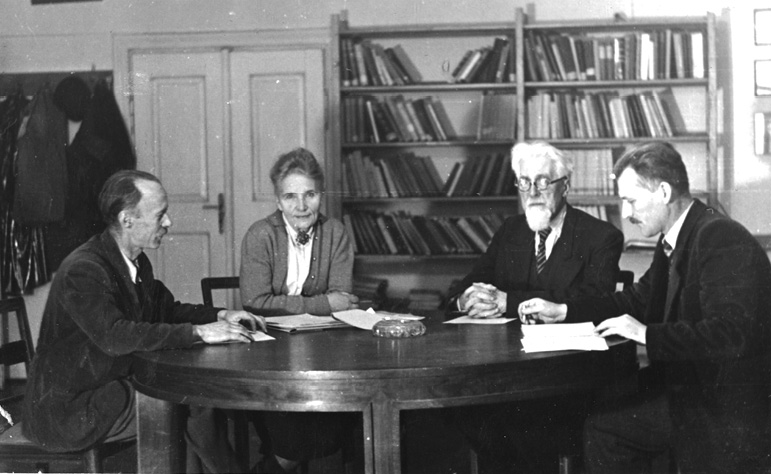
Bronisław Jasicki (1907–1992) – born in Sporysz (now a district of Żywiec) anthropologist, professor at the Jagiellonian University and the Higher/University School of Physical Education in Kraków (WSWF). From 1951 to 1955 he lectured at the Nicolaus Copernicus University in Toruń. Student of Julian Talko-Hryncewicz (PhD 1931). He began his academic career at the Jagiellonian University in Kraków, from 1954 to 1965 was the first head of the Chair of Biology and Anthropology at the Higher School of Physical Education in Kraków, and in 1959, was elected rector of the university. After the death of Eugenia Stołyhwo, he resigned from the WSWF and took up the headship of the Department of Anthropology at the Jagiellonian University (1965–76). Honorary member of the Slovenian and Polish Anthropological Societies (1971).
Most of Jasicki’s scientific work was devoted to human ontogenetic research – primarily on Kraków youth, as well as the morphological diversity of modern humans. He was particularly interested in changes in body proportions and weight associated with the pre-pubertal period and the phenomenon of secular trend. He participated in two Arab-Polish Anthropological Expeditions to Egypt (1958/59 and 1962), where he studied Egyptian youth and adults. He directed the anthropological survey of Silesia and organized (from 1962) periodic – every 10 years – studies of children and youth in the Żywiec region, which later led to the publication of a monograph dedicated to him, “Dziecko żywieckie” (2005), presenting the results of 40 years of research at the institute. His achievements also include works on the dynamics of boys’ growth, and he co-authored the textbook “Zarys antropologii” (1962). Students, later professors, included Jadwiga Charzewska.
Paweł Sikora (1912–2002) – born in the village of Nawsie in Cieszyn Silesia (known as Zaolzie, now the Czech Republic) anthropologist and professor at the Jagiellonian University. Student of Kazimierz Stołyhwo (PhD 1949). After graduating from the Jagiellonian University, during World War II and the occupation he worked in the serum and vaccine production plant of the Polish bacteriologist, Professor Odo Bujwid in Kraków. From 1946 he was an academic teacher at the Jagiellonian University, and from 1976–82 was head of the Chair of Anthropology at the Jagiellonian University. Honorary member of the Polish Anthropological Society (1975). He researched human ontogeny, including the variation of head size with age and the age of menarche in girls depending on the socioeconomic situation, as well as historical anthropology. Based on his research conducted in 1957–58 in the village of Żmiąca in the Beskid Wyspowy Mountains, he was the first to draw attention to social stratification (Kaczanowski 2008). Participant of the 2nd Arab-Polish Anthropological Expedition to Egypt, author of the publication “Zdjęcie antropologiczne Śląska. Powiat Tarnowskie Góry” (1956), co-author of the textbook “Zarys antropologii” (1962). His students, later professors, included Jan Szopa and Henryk Stolarczyk.
In addition to the Department of Anthropology at the Jagiellonian University, the second anthropological institution in Kraków was the aforementioned Department of Anthropology of the Chair of Biology and Anthropology at the Higher School of Physical Education (now the Academy/University of Physical Culture in Kraków), established in the 1953/54 academic year. The first head of that chair was Bronisław Jasicki of the Jagiellonian University (1954–65), followed by Stanisław Panek. Following structural changes in the 1970s and the establishment of institutes, Zofia Bocheńska was entrusted with the management of the Department of Human Morphology, and subsequently of the Department of Anthropology and Anatomy.
Stanisław Panek (1916–1999) – born in the village of Lutcza in the Rzeszów Region, sports anthropologist and professor at the Kraków Academy/University of Physical Education. Student of Eugenia Stołyhwo (PhD 1965). An officer of the Home Army, he was arrested by the NKVD and imprisoned in Siberian labor camps (1944–47). From 1949, he was an academic teacher at the Physical Education Center at the Faculty of Medicine of the Jagiellonian University, which in 1950 was transformed into an independent Higher/University School of Physical Education. Head of the Chair of Biology and Anthropology at this university (1965–71), dean of the Faculty of Physical Education (1960–61), rector of the Kraków Academy/University of Physical Education (1968–79). Honorary member of the Polish Anthropological Society (1990), and doctor honoris causa of the Academy of Physical Education in Kraków (1996). Co-founder of the science of physical culture. His primary research interests were human development, taking into account the influence of socio-economic factors, and the biological foundations of physical education and sport. He co-authored the textbook “Zarys antropologii” (1962) and the monograph “Nowa Huta. Integracja ludności w świetle badań antropologicznych” (1971). His students, who later became professors, included Stanisław Gołąb and Maria Chrzanowska.
Zofia Bocheńska (1922–1994) – born in Krzemieniec, Volhynia (present-day Ukraine) anthropologist, professor at the Academy/University of Physical Education in Kraków. Student of Adam Wanke (PhD 1963). In the years 1948–51 she was an assistant at the Kraków Physical Education Center at the Jagiellonian University, and then an academic teacher at the Academy of Physical Education in Kraków (1954–92), head of the Department of Anthropology and Anatomy (1971–81), and director of the Institute of Biological Sciences (1981–84). She researched human ontogeny, the inheritance and differentiation of dermatoglyphic features of the hand, and the influence of athletic activity on body build (Budkiewicz and Chrzanowska 1995). Author of the monograph: “Zmiany w rozwoju osobniczym człowieka w świetle trendów sekularnych i różnic społecznych” (1972).
Following the retirement of the founders of the Kraków School of Anthropology: Julian Talko-Hryncewicz, Kazimierz Stołyhwo, and then their students and successors: Eugenia Stołyhwo, Bronisław Jasicki, and Paweł Sikora – from generations born before Poland regained independence, in 1982 the Chair of Anthropology at the Jagiellonian University was taken up by Krzysztof Kaczanowski, a student of Bronisław Jasicki and Paweł Sikora. Stanisław Panek’s successors at the Kraków Academy/University of Physical Education were Stanisław Gołąb and Maria Chrzanowska.
Krzysztof Kaczanowski (1938–2016) – Warsaw-born anthropologist, academic teacher at the Jagiellonian University in Kraków (since 1962), long-time head of the Department of Anthropology at the Jagiellonian University (1982–2008), head of the Department of Anthropology and Anatomy at the Academy of Physical Education in Katowice (1992–2001), chairman of the Committee on Anthropology of the Polish Academy of Sciences (2004–10) and of the Anthropological Commission of the Polish Academy of Arts and Sciences (2011–16). Honorary member of the Polish Anthropological Society (2007).
He studied contemporary and historical populations. His research focused on paleodemography and the anthropological structure of historical populations in Kraków and southern Poland. He conducted research on cremation and skeletal cemeteries, including: The Upper Paleolithic Baczo Kiro Cave, the Bronze Age necropolis (Iwanowice) to 17th-century necropolises, as well as the anthropological structure of Greek settlers from the 6th–4th centuries BC on the Black Sea in Ukraine. He also dealt with ontogeny, taking into account environmental factors, conducting research on children, adolescents and adults from Żywiec and the Żywiec region, and the population of the Polish Spiš (a small ethnographic and geographical region located in the Western Carpathians). He also initiated and organized research on children and adolescents in the vicinity of the Katowice Steelworks. Major works include: “Dziecko żywieckie” (ed. 2005), “Ludność polskiego Spiszu w świetle badań antropologicznych” (2015). His student, later professor, was Krzysztof Szostek.
Stanisław Gołąb (1936–2019) – Kraków-born anthropologist, academic teacher at the Higher School of Physical Education/Academy of Physical Education in Kraków (since 1958). Student of Stanisław Panek (PhD 1965). Head of the Department of Anthropology (1981–99) and head of the Chair of Anthropology and Anatomy at the Academy/University of Physical Education (1985–2006). Between 1981 and 1984 he was dean of the Faculty of Physical Education, and between 1984 and 1987 and 1993–96 he was vice-rector for science. He focused on the biological and social determinants of the physical development of children, adolescents, and adults. Co-author of the monographs: “Dziecko krakowskie” (1988), “Biologiczne i społeczne uwarunkowania zmienności przebiegu rozwoju fizycznego dzieci i młodzieży z Nowej Huty (wyniki badań ciągłych)” (1993), and “Dziecko krakowskie 2000” (2007).
Maria Chrzanowska (1938–2021) – born in Lipusz (a Kashubian village in the Pomeranian Voivodeship) anthropologist, since 1966 an academic teacher at the Higher School/Academy of Physical Education in Kraków. From 1999 to 2008, she headed the Department of Anthropology at the Academy of Physical Education in Kraków, and was professor and head of the Department of Biomedical Sciences at the Institute of Physical Culture at the State Higher Vocational School in Nowy Sącz (2004–2021). She researched body posture, the biological consequences of urbanization and industrialization on individual development, and the biological development of children and adolescents with varying levels of physical fitness, and developmental changes and determinants of body fat levels. Author of the monograph “Biologiczne i społeczno-ekonomiczne determinanty rozwoju podskórnej tkanki tłuszczowej u dzieci i młodzieży” (1992), and co-author of: “Dziecko krakowskie” (1988), “Dziecko krakowskie 2000” (2007).
Poznań
The University of Poznań resumed its activities in April 1945, immediately after the city’s liberation. Later that same year, the Chair of Anthropology was established at the Faculty of Medicine (at Professor Adam Wrzosek’s reactivated Department of Anthropology), with Professor Jan Czekanowski appointed as its head in 1946, and Franciszek Wokroj, a student of Czekanowski, as an assistant professor in 1945. In 1947, after Wrzosek’s forced retirement, Czekanowski transferred the Chair (along with its staff and assets) from the Faculty of Medicine to the Faculty of Mathematics and Natural Sciences. The founders of the Poznań Chair of Anthropology deeply regretted the decision to transfer the department from one faculty to another. As Professor Michał Ćwirko-Godycki (1958) wrote:
In 1947, the Faculty of Medicine lost its chair and its wonderfully organized department, while the Faculty of Mathematics and Natural Sciences, without any effort, gained a chair and a department that it had never been able to organize on its own. (Godycki 1958: 18)[28]
Jan Czekanowski (1948a), in turn, spoke rather harshly of the Poznań center in the interwar period, accusing it of having a very broad, and, in his opinion, uncrystallized, scope of interest, which, in his opinion, did not deserve to be called a separate school. On another occasion, however, Czekanowski (1948b) praised the Poznań center for its strong organization and focus on research on children and work at the intersection of anthropology and medicine. In 1960 Professor Czekanowski retired, and from that year, at Czekanowski’s request, Franciszek Wokroj became the head of the chair.
Franciszek Wokroj (1906–1991) – Lvov-born anthropologist, student of Jan Czekanowski (PhD 1946), and follower of the Lvov school of anthropology. He worked briefly at the University of Lvov (1937–41), and was associated with the Department of Anthropology of the Poznań University/Adam Mickiewicz University from 1945 to 1972. In 1956, he was promoted to the rank of associate professor without having completed the habilitation procedure[29]. He participated in the First Arab-Polish Anthropological Expedition to Egypt (1958/59). He served as head of the Chair of Anthropology at Adam Mickiewicz University (1960–66), and subsequently as head of one of its two departments – the Department of Regional and Ethnic Anthropology (1967–69). He organized the Department of Anthropology at the Nicolaus Copernicus University in Toruń (1956–61), and for two years after the death of Ireneusz Michalski (1965–67) he served as curator of the Department of Anthropology at the University of Łódź. A life and honorary member of the Polish Anthropological Society (1984).
In 1946, Wokroj became a delegate of the Ministry of Education, representing the Department of Restitution and Compensation, and transported the collections of the University of Lvov, including most of Professor Czekanowski’s book collection, from the then Ukrainian city of Lvov to Poznań. Collaborating with archaeologists, he participated in excavations in Kruszwica, Gniezno, and Biskupin. He subsequently organized numerous excavations himself: Młynówka, Góra Chełmska, Łowyń, Kołobrzeg–collegiate church, and Cedynia (Malinowski 1993, 2008). He analyzed early medieval craniological materials from Ostrów Lednicki (Wokroj 1953), including those from the excavations of Adam Wrzosek and Michał Ćwirko-Godycki. His students, later professors were: Andrzej Malinowski, Janusz Piontek, and Czesław Grzeszyk.
The 1920s to the 1970s saw a time of “ups and downs” for Poznań’s university anthropology. Over its 50 years of operation, it changed headquarters four times, from a department to a chair, then to a section, only to return to department status (in 1987, it would become an institute). In 1965, professors emeritus Adam Wrzosek and Jan Czekanowski died—two outstanding figures in the world of anthropology. In 1969, the Adam Mickiewicz University faculty authorities did not extend Michał Ćwirko-Godycki’s right to continue to head the chair due to his age (he was over 65), and they did not want to rehire Wokroj in that position. Therefore, the Chair of Anthropology and both departments were dissolved, and the Section of Anthropology was established in their place, even though Professor Ćwirko-Godycki retired only in 1971 (remaining at the faculty as a private employee).
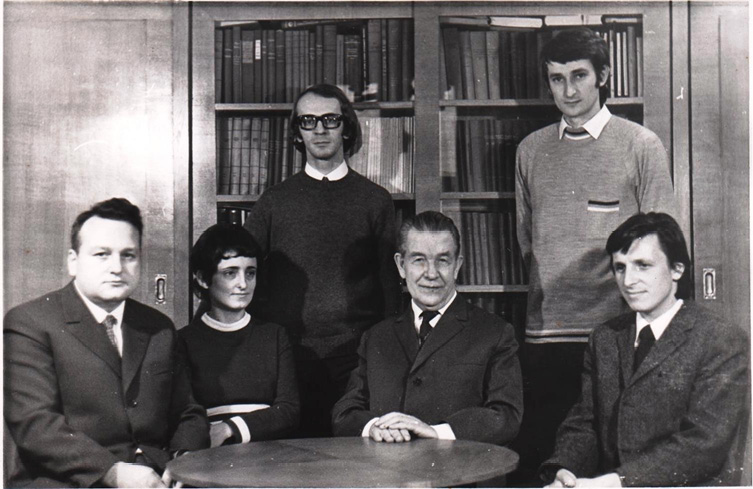
Despite these turmoils, beginning in the 1970s, anthropology in Poznań entered a period of very dynamic development. Its energetic, enthusiastic, and innovative young graduates undertook research on various aspects of the so-called New Physical Anthropology or continued the work initiated by Professor Michał Ćwirko-Godycki. These included: (1) Research on skeletal populations, including paleodemography and microevolution (Jan Strzałko, Janusz Piontek, Maciej Henneberg); (2) Research on human ontogeny (children’s growth and physical development), including the construction of “developmental norms” (Andrzej Malinowski, Maria Danuta Kaliszewska-Drozdowska, Joachim Cieślik [Maria Kaczmarek would later join the team of “ontogeneticists”]); (3) Applications of anthropology in forensic medicine (A. Malinowski, J. Strzałko, J. Piontek) and (4) Studies on the morphogenesis of the skull and the influence of the masticatory muscles on its shape (A. Malinowski, J. Strzałko) (Malinowski 1973).
Soon, the Department of Anthropology at Adam Mickiewicz University in Poznań would become the largest anthropological academic center in Poland – the next “capital” of anthropology, after Wrocław. Professor Ćwirko-Godycki’s work at the Poznań University of Physical Education was continued by Zbigniew Drozdowski.
Zbigniew Drozdowski (1930–2004) – born in Sieraków (Greater Poland Voivodeship) anthropologist, academic teacher at the Higher School/Academy of Physical Education in Poznań (1952–2001) and the University of Szczecin (1985–93). As a student of both Jan Czekanowski (MA 1952) and Michał Ćwirko-Godycki (PhD 1960), he attempted to combine the concepts of Czekanowski’s Lvov School with the assumptions of the Poznań center presented by Wrzosek and Ćwirko-Godycki (Drozdowski 1985), linking anthropology with physical culture. He focused on the anthropology of sport, including physical culture methodology, the theory of athletic performance, human motor skills and their measurement, the chronobiological foundations of physical activity, and the determinants and effects of human athletic and professional activity. From 1953, he was a member/activist of the Polish United Workers’ Party.
For 34 years (from 1967) he was head of the Department of Anthropology/Sport Anthropology, then (from 1991) head of the Chair of Anthropology and Biometry at the Faculty of Physical Education, Academy/University of Physical Education in Poznań; vice-dean, dean, vice-rector, and rector of the Academy of Physical Education in Poznań (1975–98). Organizer and head of the Laboratory of Anthropology and Biometry at the Faculty of Physical Education in Gorzów Wielkopolski, head of the Department of Anthropology at the Faculty of Natural Sciences, University of Szczecin. Member of: the Committee on Anthropology of the Polish Academy of Sciences (its chairman from 1975 to 1987), the Main Council for Science and Higher Education (including its vice-chairman), the Committee on Physical Culture Sciences of the Polish Academy of Sciences (including its chairman), and the Central Commission for Academic Titles and Academic Degrees. Honorary member of the Polish Anthropological Society (1979), and doctor honoris causa of the Academy/University of Physical Education in Wrocław (1998) and the Academy/University of Physical Education in Poznań (2003). He published numerous monographs and textbooks for students, including: “Antropologia sportowa” (1984), “Antropologia a kultura fizyczna” (1996), and “Antropometria w wychowaniu fizycznym” (1998).
Leading figures in the Poznań University Department / Institute of Anthropology were:
Andrzej Malinowski (1934–2023) – Poznań-born anthropologist, academic teacher at the Adam Mickiewicz University in Poznań (1962–65 and 1972–92), the Department of Anatomy at the Poznań Medical Academy (1965–72), the Independent Laboratory of Anthropology at the Academy of Physical Education in Gdańsk (1985–87), the University of Łódź (1990–98), the Chair of Physical Education at the Higher Pedagogical School/University of Zielona Góra (1998–2005), and the Chair of Physical Culture at the Radom University of Technology (2009–11). Student of Michał Ćwirko-Godycki (MA 1962) and Franciszek Wokroj (PhD 1967). Head of departments of: Anthropology at Adam Mickiewicz University and the University of Łódź, Ergonomics and Applied Anthropology at Adam Mickiewicz University, and Physical and Health Education at the University of Łódź. Dean of the Faculty of Biology and Earth Sciences at Adam Mickiewicz University (1981–84), Director of the Institute of Anthropology at Adam Mickiewicz University (1987–89). Chairman of the Polish Anthropological Society (1984–87), and its honorary member (2003), honorary member of the Yugoslav Anthropological Society (1996).
His research interests included human ontogeny (prenatal development, child and adolescent development, and developmental norms), morphological and historical anthropology (including studies of bones from cremation graves), anatomy, applied anthropology in medicine, ergonomics (standardized foot and hand measurements), and physical education, as well as the history of anthropology in Poland. He participated in excavations (Góra Chełmska, Kołobrzeg Collegiate Church, Posada Rybotycka) and in exhumation and identification studies of victims of German crimes from World War II in the Palędzie forests near Poznań. He held research internships and conducted research and lectures in Bulgaria, the republics of the then USSR (Russian, Ukrainian, Lithuanian and Belarusian), and in Yugoslavia, and Czechoslovakia. He strived to establish the position of Polish biological anthropology among the academic scientific disciplines. Author/co-author/scientific editor of numerous books, monographs, and textbooks, including: “Antropologia fizyczna” (1980), “Antropologia” (1985, 1989), “Metody badań w biologii człowieka” (1988), “Wstęp do antropologii i ekologii człowieka” (1994, 1999), “Auksologia: Rozwój osobniczy człowieka w ujęciu biomedycznym” (2004, 2007, 2009), and the series of monographs: “Dziecko poznańskie” (1976), “Dziecko wielkopolskie” (1978), “Dziecko konińskie” (1989), “Dziecko łódzkie” (1998), “Dziecko lubuskie” (2005). His students, later professors included Joachim Cieślik, Maria Kaczmarek, and Elżbieta Żądzińska.
Jan Strzałko (1943–2016) – born in the Eastern Borderlands in Kleck, Nieśwież County (now Belarus) anthropologist and human ecologist, academic teacher at Adam Mickiewicz University in Poznań (1965–2016). A student of Michał Ćwirko-Godycki (PhD 1968). Participant in the Poznań scientific expedition to the Rwenzori Mountains and Mt. Kenya (1974). First dean of the newly established Faculty of Biology at Adam Mickiewicz University (1984–85; his term of office was interrupted due to the political vetting of academic staff), head of the Department of Anthropology at the Faculty of Biology at Adam Mickiewicz University (1984–87), creator and head of the Department of Human Population Ecology at the Institute of Anthropology (1987–2012), vice-rector for research at Adam Mickiewicz University (1990–96). Editor-in-chief of “Przegląd Antropologiczny – Anthropological Review” (1987–2011). An award granted by the Polish Society for Human and Evolution Studies is named after him (the Professor Jan Strzałko Award for an outstanding young scientist).
In the early years of his scientific career, Jan Strzałko was primarily interested in the morphology and morphogenesis of the human skeleton, including factors influencing skeletal variability, and muscle function. His second research focus (primarily in the 1970s and 1980s) was the methodology of research on so-called prehistoric populations—bone materials from excavations at various anthropological and archaeological sites in Poland (both cremated and skeletal). His third research interest was human population ecology, focused on determining the influence of natural and social factors on human populations and the relationships between biological and cultural evolution. His fourth research project (1980s and 1990s) was focused on the biological foundations of human social behavior—physical attractiveness and sexual selection, demonstrating that the most beautiful is the “average”. Finally, his last research topic (starting from the 2000s) was the problem of human “races”, racial stereotypes and xenophobia (Kaszycka 2016a, 2016b).
Professor Strzałko had a wide range of interests (from biology and statistics to literature) and vast knowledge. His scientific accomplishments include authorships of manuals, textbooks, dictionaries, and encyclopedias, of which he was a co-author and often an editor, including: “Wstęp do ekologii populacyjnej człowieka” (1976), “Antropologia fizyczna” (1980), “Populacje ludzkie jako systemy biologiczne” (1980), “Antropologia” (1985, 1989), “Ekologia populacji pradziejowych” (1990), “Ekologia populacji ludzkich. Środowisko człowieka w pradziejach” (1995), “Kompendium wiedzy o ekologii” (1999, 2005), “Słownik terminów biologicznych” (2006). He was also the managing and scientific editor of the first Polish translation of the American textbook “Campbell’s Biology” (2012).
Maria Danuta Kaliszewska-Drozdowska (1941–2003) – born in the village of Lipa (on the border of the Lublin and Subcarpathian Voivodeships, where her family was relocated from Września) anthropologist, academic teacher at Adam Mickiewicz University in Poznań (1964–2001). Student of Michał Ćwirko-Godycki (PhD 1970). Deputy director of the Institute of Anthropology at Adam Mickiewicz University (1987–93). She specialized in human ontogeny, with particular emphasis on the prenatal, perinatal, and neonatal periods. She compiled “developmental norms” for newborns and small children based on Polish material and was a co-author of several monographs in this field: “Dziecko poznańskie” (1976 and 1994) and “Dziecko wielkopolskie” (1978), author of “Stan biologiczny i akceleracja rozwoju noworodków” (1980), and co-author of the textbooks “Antropologia fizyczna” (1980) and “Antropologia” (1985, 1989).
Janusz Piontek – born in 1945 in Dąbrowa (near Poznań), professor emeritus of anthropology at Adam Mickiewicz University in Poznań (1967–2019), lecturer in the Department of Human Biology at the University of Wrocław (2009–12), visiting professor at the Universidade de Santiago de Compostela, Spain (1987–89). Student of Franciszek Wokroj (PhD 1970). Founder and head of the Department of Human Evolutionary Biology (1987–2017), long-time director of the Institute of Anthropology at Adam Mickiewicz University (1990–2016), dean of the Faculty of Biology at Adam Mickiewicz University (1992–96). Honorary member of the Croatian Anthropological Society (2016) and the Polish Anthropological Society (2019). He has studied microevolutionary processes, the biology and ecology of prehistoric and early historical populations, changes in the human skeletal system following the transition to agricultural farming, morphological responses to living conditions in populations from archaeological sites, and the methodology of research on human skeletal remains. He is co-author of monographs and textbooks: “Wstęp do ekologii populacyjnej człowieka” (1976), “Procesy mikroewolucyjne w europejskich populacjach ludzkich” (1979), “Antropologia fizyczna” (1980), “Populacje ludzkie jako systemy biologiczne” (1980), “Antropologia” (1985, 1989), and “Biologia populacji pradziejowych” (1996).
Joachim Cieślik – born in 1942 in Piekary Śląskie, professor emeritus of anthropology at Adam Mickiewicz University in Poznań (1969–2016), lecturer at the Academy/University of Physical Education and Sport in Gdańsk (1987–97), visiting professor at the Université de Batna, Algeria (1982) and the Université de Renes, France (1990). Student of Andrzej Malinowski (PhD 1973). He completed a postdoctoral fellowship at the University of Paris VII (1974/75). Founder and head of the Department of Human Biological Development (1987–2012), vice-dean of the Faculty of Biology, vice-rector of Adam Mickiewicz University for student affairs (1996–2002). Chairman of the Committee on Anthropology of the Polish Academy of Sciences (2012–15). Honorary member of the Polish Anthropological Society (2019). He has studied human ontogenetic development, norms and normality as a “biological frame of reference”, and auxology in its broadest sense. Author of the monograph “Wielopoziomowy rozwój fenotypowy populacji i osobnika w ontogenezie” (1980), co-author of the monographs “Dziecko poznańskie” (1976 and 1994) and “Dziecko wielkopolskie” (1978), as well as the textbooks “Antropologia fizyczna” (1980) and “Antropologia” (1985, 1989).
Maciej Henneberg – born in Poznań in 1949 anthropologist, academic teacher at Adam Mickiewicz University in Poznań (1973–84), professor emeritus at the University of Adelaide. He received his doctorate (1976) under Jan Strzałko. Chairman of the NSZZ “Solidarność” of Adam Mickiewicz University Trade Union Committee (1980–81). On December 13th, 1981, following the imposition of martial law in Poland, the aim of which was to suppress the Solidarity movement, he was placed in an internment center for opposition activists. In 1984 he emigrated from Poland, traveling successively across three continents: from North America (University of Texas at Austin, USA, 1984–86), through Africa (University of Cape Town, 1986–90, and the University of the Witwatersrand in Johannesburg, 1990–95), to Australia (University of Adelaide, 1996–2021). Honorary member of the Polish Anthropological Society (2001), doctor honoris causa of the University of Łódź (2023).
Expert in paleodemography, paleopathology, auxology, forensic science, and human anatomy and evolution, science popularizer. He has conducted excavations in Poland, Texas, South Africa, and Italy (Metaponto), as well as longitudinal studies of child development in South Africa and Australia. Formerly, editor of the journal “Homo–Journal of Comparative Human Biology.” He is the co-author of numerous books and monographs, including “Wstęp do ekologii populacyjnej człowieka” (1976), “Populacje ludzkie jako systemy biologiczne” (1980), “Antropologia” (1985 [under his wife’s maiden name] and 1989), and the popular science book “The Hobbit trap” (2008, 2012).
Polish Anthropological Society and Przegląd Antropologiczny/Anthropological Review
Professor Adam Wrzosek, recognizing the enormous importance of scientific publishing for the development of every scientific discipline, in the early 1920s raised the issue of publishing an anthropological periodical and creating an organization that could both coordinate the work of existing anthropological institutions and promote and disseminate knowledge in the field of anthropology among specialists in other scientific fields and broader segments of society in Poland. After the initial failure (owing to financial reasons) to publish only a single issue of “Wiadomości Antropologiczne” (Anthropological News), Professor Wrzosek decided to establish the Anthropological Society, whose primary statutory goal would be to “contribute to the development of anthropology” by, among other things, “supporting anthropological publications.” He put his resolve into action, and the Polish Anthropological Society was thus established (Dzierżykray-Rogalski 1973, Godycki 1976).
The Polish Anthropological Society (PAS) was founded at a meeting on November 12, 1925, in the presence of a dozen or so founding members, all academics from the University of Poznań. A statute (modeled on the statute of the Polish Prehistoric Society) was adopted and a board elected, consisting of Professor Adam Wrzosek (chairman), Professor Adam Wodziczko (vice-chairman), Doctor Włodzimierz Missiuro (secretary and treasurer), and Doctor Michał Ćwirko-Godycki (deputy secretary and treasurer). In the following years, the Society’s membership grew quite rapidly: by the end of 1926, it numbered 42, in 1929 – 73, and in 1931 – 131 (Wrzosek 1951); all Polish anthropologists and those interested in anthropology became members of the Society. Annual general meetings of the Society were held in Poznań (with reporting and scientific parts), the scientific part of which (lectures, papers) largely reflecting the activities of the Department of Anthropology of the University of Poznań.
As Professor Ćwirko-Godycki emphasized (Godycki 1958), the Poznań center’s major achievement was the establishment of the journal “Przegląd Antropologiczny”, which, as a body of the Polish Anthropological Society, was published by Professor Wrzosek starting in 1926. However, “Przegląd Antropologiczny”, from its inception until 1937, struggled with financial difficulties and was published largely thanks to the private initiative of the Society’s president and editor-in-chief. With the establishment of the Anthropological Committee of the Council of Natural and Applied Sciences in 1936, a reform of the journal’s content, and a resolution to make “Przegląd Antropologiczny” the main body of all anthropological centers in Poland, in 1938 it received a significant subsidy from the National Culture Fund, and volume 12 of the journal, with its four issues, was impressive in terms of the page count. However, World War II interrupted its further publication for several years.
In December 1948, a year after Professor Adam Wrzosek was retired by the communist authorities, at the general meeting of the Polish Anthropological Society, its first president resigned from the office he had held since 1925, and Michał Ćwirko-Godycki was elected as the new president of the PAS. The next significant date in the history of the Society (which then consisted of 135 members) came two years later – the general meeting of December 10, 1950 (the so-called “Łódź Coup”) and the election of a new board on February 3, 1951. Jan Mydlarski became the new president of the Society (Wrzosek 1951). In 1953 (from volume 19), Professor Mydlarski also assumed the position of editor-in-chief of “Przegląd Antropologiczny” (although A. Wrzosek remained as the scientific and technical editor), and in 1955 he took over the position of Editor of the PAS Publishing House (Professor Wrzosek subsequently returned to the journal as its editor-in-chief for two years). In 1957 (from volume 23), Michał Ćwirko-Godycki became editor-in-chief of “Przegląd Antropologiczny.” At that time, Polish anthropology already had two other scientific publishing houses: “Materiały i Prace Antropologiczne” (1953–90, edited by Jan Mydlarski, and then by Adam Wanke, Halina Milicer and Edmund Piasecki), and the second organ of the Polish Antropological Society – the quarterly “Człowiek w Czasie i Przestrzeni” (1956–64, edited by Tadeusz Dzierżykray-Rogalski).
The first Congress of Polish Anthropologists, organized by Professor Adam Wrzosek, took place in Poznań in September 1933, as part of the then 14th Congress of Polish Physicians and Naturalists. Thirty-three speakers registered to participate, representing all of the academic anthropological centers in Poland at the time (Warsaw, Kraków, Lvov, Vilnius, and Poznań) (Musielak 2022). Another important congress was the joint congress of the Polish Zoological Society and the Polish Anthropological Society (the so-called Łódź Congress) in December 1950, featuring Jan Mydlarski’s famous paper on the shortcomings and need for a retooling and ideological reconstruction of Polish anthropology (Mydlarski 1951). As a result, in the first half of the 1950s three national anthropological conferences were organized: two in Wrocław (December 1951 and February 1954) – concerning taxonomic methods and anthropological typology, and one in Osieczna (December 1952) – pertaining to ethnogenetic research.
In November 1956, the celebratory Jubilee Congress of the 100th Anniversary of Polish Anthropology took place at the Jagiellonian University in Kraków, marking the centenary of Professor Józef Majer’s beginning of anthropology lectures at the Jagiellonian University. The congress was attended by the French anthropologist and paleontologist Professor Henri Victor Vallois (later an honorary member of the Polish Anthropological Society) and delegations from the then Eastern Bloc countries (the so-called people’s democracies): East Germany, Yugoslavia, and Czechoslovakia (see Przegląd Antropologiczny, vol. 24, 1958).
In October 1975, the Poznań Academy/University of Physical Education hosted the Jubilee Congress, which began with a ceremonial gathering to celebrate the 50th anniversary of the Polish Anthropological Society and the 100th birthday of its founder, Professor Adam Wrzosek. The Society was formally acknowledged by being awarded the Medal of the Commission of National Education (see Przegląd Antropologiczny, vol. 42, 1976). Beginning with the Society’s 50th anniversary, the Poznań center has organized PAS jubilee conferences every ten years, thus celebrating subsequent 10-year anniversaries of the Society’s founding: the 60th anniversary of the PAS (1985), the 70th anniversary (1995), the 80th anniversary (2005), the 90th anniversary (2015), and the 100th anniversary (2025) – this year.
Presently, the Polish Anthropological Society has approximately 120 active (due-paying) members, organized in 10 branches (Poznań, Kraków, Warsaw, Wrocław, Łódź, Gdańsk, Szczecin, Bydgoszcz, Świętokrzyskie, and Rzeszów), as well as 10 honorary members (out of a total of 67 appointed between 1927 and 2023: 39 from Poland and 28 from abroad).
The history of the Society, including its organ – “Przegląd Anthropologiczny” (currently “Anthropological Review”), was addressed by the presidents/chairpersons of the PAS and/or editors-in-chief of the journal on the occasion of subsequent anniversaries: on the quarter-century of the PAS – Adam Wrzosek (1951), on the half-century of the PAS – Tadeusz Dzierżykray-Rogalski (1976), on the 60th anniversary of the PAS – Andrzej Malinowski (1986), on the 75th anniversary of “Przegląd Anthropologiczny” – Jan Strzałko (2001) and on the 90th anniversary of the PAS and “Anthropological Review” – Maria Kaczmarek (2016).
The PAS chairpersons (1925–2025) were as follows:
| 1. Adam Wrzosek | (1925–1948) – 7 terms |
| 2. Michał Ćwirko-Godycki | (1948–1951) – 1 term |
| 3. Jan Mydlarski | (1951–1956) – 2 terms |
| 4. Tadeusz Dzierżykray-Rogalski | (1956–1984) – 8 terms |
| 5. Andrzej Malinowski | (1984–1987) – 1 term |
| 6. Paweł Bergman | (1987–1999) – 4 terms |
| 7. Danuta Kornafel | (1999–2007) – 2 terms |
| 8. Maria Kaczmarek | (2007–2015) – 2 terms |
| 9. Krzysztof Szostek | (2015–2019) – 1 term |
| 10. Jacek Tomczyk | (2019–) – currently serving his second term |
The list of editors-in-chief of “Przegląd Antropologiczny”/”Anthropological Review” and the volumes of the journal published during their tenure (1926–2025) is as follows:
| 1. Adam Wrzosek | (1926–1948 and 1955–1956) – vol. 1–15 & 21–22 |
| – Editorial Board | (1949–1952) – vol. 16–18 (volumes editor A. Wrzosek) |
| 2. Jan Mydlarski | (1953–1954) – vol. 19–20 |
| 3. Michał Ćwirko-Godycki | (1957–1977) – vol. 23–43 |
| 4. Tadeusz Dzierżykray-Rogalski | (1978–1984) – vol. 44–50 |
| 5. Zbigniew Drozdowski | (1985–1986) – vol. 51 (volume editor J. Strzałko) |
| 6. Jan Strzałko | (1987–2011) – vol. 52–74 |
| – Board of Editors | (2012) – vol. 75 |
| 7. Maria Kaczmarek | (2013–2019) – vol. 76–82 |
| 8. Sławomir Kozieł | (2020–2024) – vol. 83–87 |
| 9. Justyna Miszkiewicz | (2025–) – vol. 88 |
Anthropological Institutions in Poland – Current Status
In the 21st century, the traditional departments/chairs of physical/biological anthropology, both at universities and other institutions of higher education, began to undergo transformations to their structure (partly as a result of the 2018 “Constitution for Science – Act 2.0” reform of the higher education and science system in Poland), and to their nomenclature, often replacing the word “anthropology” with “human biology.” Some anthropological departments from centers established after World War II have not survived to this day, some have been reorganized, and still others were established at universities where biological anthropology had not previously existed – some of which remain operational, and others have failed, becoming departments under a single head, such as the Chair and Department of Anthropology at the L. Rydygier Collegium Medium of Nicolaus Copernicus University in Bydgoszcz.
Three historical departments were liquidated: (1) the Department of Human Ecology at the Institute of Ecology of the Polish Academy of Sciences in Warsaw (in 2002), founded and long-time headed (1969–99) until his retirement by Napoleon Wolański. (2) the Department of Anthropology at the Faculty of Biology and Environmental Protection, Nicolaus Copernicus University in Toruń (in 2018), for years (1972–2007) headed by Guido Kriesel (most recently: 2014–18 by Tomasz Kozłowski). (3) the Department of Physical Anthropology at the Academy/University of Physical Education in Wrocław, originating from the Chair of Anthropology and Biometry (in 2020), for years (1969–2002) headed by Antoni Janusz (and between 2002–19 by Anna Burdukiewicz) – the department was subsequently merged with other departments and transformed into the Department of Biological Basis of Physical Activity.
In 2016, the Department of Anthropology in Wrocław, an independent scientific unit of the Polish Academy of Sciences, underwent transformation. It was established by Jan Mydlarski in 1952 and for years (1970–2001) was headed by Tadeusz Bielicki (most recently: 2010–16 by Sławomir Kozieł). The Department of Anthropology has been incorporated into the Ludwik Hirszfeld Institute of Immunology and Experimental Therapy of the Polish Academy of Sciences in Wrocław, subordinate to the Faculty of Medical Sciences V.
In 1999, the Academy of Catholic Theology in Warsaw was transformed into Cardinal Stefan Wyszyński University. In 2002, the Institute of Ecology and Bioethics of the Faculty of Christian Philosophy at that university (currently the Center for Ecology and Ecophilosophy) established the Department of Human Ecology (headed by Anna Siniarska-Wolańska), which later was transformed into the Chair of Anthropology (headed by Father Bernard Hałaczek). In 2009, a second department dedicated to anthropological matters was established at the newly founded Faculty of Biology and Environmental Sciences at Cardinal Stefan Wyszyński University, namely the Department of Human Biology (first head: Anna Siniarska-Wolańska). In 2019, owing to the reform, the Institute of Biological Sciences was established, which presently includes two departments whose staff conduct research in biological anthropology (the director of the institute and the head of the center: Jacek Tomczyk).
In 2020, the Institute of Anthropology at the Faculty of Biology of Adam Mickiewicz University in Poznań underwent a structural reorganization, changing its name to the Institute of Human Biology and Evolution. Three departments that were established in 1987 within the institute: the Department of Human Evolutionary Biology (first head: Janusz Piontek, then Marta Krenz-Niedbała), the Department of Human Biological Development (first head: Joachim Cieślik, then Maria Kaczmarek), and the Department of Human Population/ Evolutionary Ecology (first head: Jan Strzałko, then Katarzyna A. Kaszycka) ceased to exist, and the institute now comprises of research teams. In addition to anthropological topics, the unit’s core research focus has also shifted to bioinformatics, genomics, and molecular research.
In 2009, at the Wrocław University of Environmental and Life Sciences, which in 1951, as the Higher Agricultural School was established as an independent university, a department, then a Chair of Anthropology, was established, currently located within the Faculty of Biology and Animal Science (first headed by Krzysztof Borysławski).
Currently, units of biological anthropology exist at seven Polish universities: the Jagiellonian University in Kraków, Adam Mickiewicz University in Poznań, the University of Wrocław, the University of Environmental and Life Sciences in Wrocław, the University of Łódź, Cardinal Stefan Wyszyński University in Warsaw, and the University of Szczecin (a combined department of ecology and anthropology); at four academies/universities of physical education in: Kraków, Poznań, Warsaw, and Gdańsk (a combined department of anatomy and anthropology); and at three research institutions unrelated to higher education: the Polish Academy of Sciences in Wrocław, the Children’s Memorial Health Institute in Warsaw, and the Archaeological Museum in Gdańsk[30].
Universities:
-
Jagiellonian University in Kraków:
- Laboratory of Anthropology, Institute of Zoology and Biomedical Research, Faculty of Biology (head: Iwona Wronka).
- Department of Health and Environment, Faculty of Health Sciences, Medical College (head: Grażyna Jasieńska).
- Adam Mickiewicz University in Poznań – Institute of Biology and Human Evolution, Faculty of Biology (head: Izabela Makałowska – anthropologist and bioinformatician).
- University of Wrocław – Department of Human Biology, Faculty of Biological Sciences (head: Bogusław Pawłowski).
- Wrocław University of Environmental and Life Sciences – Chair of Anthropology, Faculty of Biology and Animal Breeding (head: Anna Lipowicz).
- University of Łódź – Chair of Anthropology, Institute of Ecology and Environmental Protection, Faculty of Biology and Environmental Protection (head: Elżbieta Żądzińska).
-
Cardinal Stefan Wyszyński University in Warsaw:
- Department of Human Biology, Chair of Biology, Institute of Biological Sciences, Faculty of Biology and Environmental Sciences (last head: Alicja Budnik, currently vacant).
- Department of Environmental Anthropology and Toxicology, Chair of Environmental Protection, Institute of Biological Sciences (head: Krzysztof Szostek).
- University of Szczecin – Chair of Ecology and Anthropology, Institute of Biology, Faculty of Exact and Natural Sciences (head: bird ecologist).
Academies/Universities of Physical Education:
- Bronisław Czech Academy of Physical Culture in Kraków – Department of Anthropology, Institute of Biomedical Sciences, Faculty of Physical Education and Sport (head: Łukasz Kryst).
- Eugeniusz Piasecki Academy of Physical Education in Poznań – Department of Biological Human Development, Chair of Sports Kinesiology, Faculty of Physical Culture Sciences (head: Dariusz Wieliński).
- Józef Piłsudski Academy of Physical Education in Warsaw – Chair of Human Biology, Faculty of Physical Education (head: Monika Łopuszańska-Dawid).
- Jędrzej Śniadecki Academy of Physical Education and Sport in Gdańsk – Department of Anatomy and Anthropology, Faculty of Physical Education (head: Ewa Wójtowicz – biologist, M.D.).
Research institutions of the Polish Academy of Sciences:
- Ludwik Hirszfeld Institute of Immunology and Experimental Therapy of the Polish Academy of Sciences in Wrocław – Department of Anthropology (head: Sławomir Kozieł).
Other research institutions:
- Children’s Memorial Health Institute in Warsaw (a research institute under the Ministry of Health) – Anthropology Laboratory (head: Agnieszka Różdżyńska-Świątkowska).
- Archaeological Museum in Gdańsk – Anthropology Laboratory (head: Aleksandra Pudło).
References
Bar J, Tymowski M. 2023. Jan Czekanowski, a Polish anthropologist between two eras of European cultural history, Encyclopédie Bérose des histoires de l’anthropologie.
Bielicki T. 1959. Ośrodek wrocławski. In: T. Bielicki et al., Sto lat antropologii polskiej 1856–1956. Ośrodki powstałe po drugiej wojnie światowej. Mater i Prace Antropol 40: 20–53.
Bielicki T. 1961. Typologiczna i populacyjna koncepcja rasy w antropologii. Mater i Prace Antropol 53, ss. 89.
Bielicki T, Czekanowski J, Dzierżykraj-Rogalski T, Michalski I, Wiązowski K, Wokroj F. 1959. Sto lat antropologii polskiej 1856–1956. Ośrodki powstałe po drugiej wojnie światowej. Mater i Prace Antropol 40, ss.83.
Bielicki T, Krupiński T, Strzałko J. 1985. History of physical anthropology in Poland. D.F. Roberts, editor. Occasional Papers 1: 6. Newcastle upon Tyne: International Association of Human Biologists.
Bielicki T, Krupiński T, Strzałko J. 1989. Historia antropologii w Polsce. Przegl Antropol 53: 3–28.
Budkiewicz E, Chrzanowska M. 1995. Prof. dr hab. Zofia Bocheńska (1922–1994). Wspomnienie o Zosi. Przegl Antropol 58: 3–6.
Czekanowski J. 1909. Zur Differentialdiagnose der Neandertalgruppe. Korrespondenz-Blatt der Deutschen Gesellschaft für Anthropologie, Ethnologie und Urgeschichte 44 (6/7): 44–47.
Czekanowski J. 1946–47. Życiorysy zmarłych antropologów polskich: Edward Loth (1884–1944). Przegl Antropol 14: 164–178.
Czekanowski J. 1948a. Antropologia polska w międzywojennym dwudziestoleciu 1919–1939. Warszawa: Towarzystwo Naukowe Warszawskie.
Czekanowski J. 1948b. Zarys historii antropologii polskiej, Kraków: Polska Akademia Umiejętności, ss. 39.
Czekanowski J. 1951. Badania antropologiczne w międzyrzeczu Nilu i Kongo. Crania Africana. Przegl Antropol 17: 34–188.
Czekanowski J. 1956. Sto lat antropologii polskiej 1856–1956. Ośrodek lwowski. Mater i Prace Antropol 34, ss. 69.
Czekanowski J. 1962. The theoretical assumptions of Polish anthropology and the morphological facts. Curr Anthropol3: 481–494.
Czekanowski J, Wiązowski K. 1959. Ośrodek lubelski. In: T. Bielicki et al., Sto lat antropologii polskiej 1856–1956. Ośrodki powstałe po drugiej wojnie światowej. Mater i Prace Antropol 40: 5–19.
Ćwirko-Godycki M. 1935. Piętnastolecie Zakładu Antropologii Wydziału Lekarskiego na Uniwersytecie Poznańskim (1921–1935). Przegl Antropol 9: 1–33.
Drozdowski Z. 1985. Wkład Polskiej Szkoły Antropologicznej w rozwój nauk o kulturze fizycznej. In: J. Piontek and A. Malinowski, editors. Teoria i empiria w Polskiej Szkoły Antropologicznej. Poznań: Wyd. UAM, 111–122.
Drozdowski Z, Krupiński T, Strzałko J. 1983. Antropologia polska 82. Przegl Antropol 49: 241–261.
DW (Deutsche Welle). 09/06/2023. Germany DNA study links colonial skulls from Africa to living relatives. Available at: https://www.dw.com/en/germany-dna-study-links-colonial-skulls-from-africa-to-living-relatives/a-66730112
Dybowski B. 1924–1928. Kilka uwag dotyczących stanowiska antropologji i jej przyszłej działalności. Światowit 12(3): 11–16.
Dzierżykraj-Rogalski T. 1959. Ośrodek białostocki. In: T. Bielicki et al., Sto lat antropologii polskiej 1856–1956. Ośrodki powstałe po drugiej wojnie światowej. Mater i Prace Antropol 40: 67–78.
Dzierżykray-Rogalski T. 1973. Zasługi prof. dra Michała Ćwirko-Godyckiego dla antropologii. Przegl Antropol 39: 239–242.
Dzierżykray-Rogalski T. 1976. Polskie Towarzystwo Antropologiczne – jego wkład do nauk o człowieku w minionym półwieczu. Przegl Antropol 42: 152–158.
Dzierżykray-Rogalski T. 1985. Faras VIII. The Bishops of Faras. An Anthropological-Medical Study, Warszawa: PWN.
Godycki M. 1956. Sto lat antropologii polskiej 1856–1956. Izydor Kopernicki. Mater i Prace Antropol 32, ss. 40.
Godycki M. 1958. Sto lat antropologii polskiej 1856–1956. Ośrodek poznański. Mater i Prace Antropol 39, ss. 59.
Godycki M. 1976. Adam Wrzosek 1875–1975 (w setną rocznicę urodzin). Przegl Antropol 42: 159–165.
Gronkiewicz S. 1987. Pierwsza polska „Antropologia” i jej autor Józef Jasiński. Przegl Antropol 53: 29–34.
Guardian, 6 Oct 2017. Germany to investigate 1,000 skulls taken from African colonies for ‘racial research’. Available at: https://www.theguardian.com/world/2017/oct/06/germany-to-investigate-1000-skulls-taken-from-african-colonies-for-racial-research
Hołda-Róziewicz H. 1969. Prace antropologiczne Ludwika Krzywickiego na tle początków antropologii polskiej. Kwart Hist Nauki Tech 14: 649–659.
Hrynkiewicz J editor. 2012. Wizjoner i realista. Szkice o Ludwiku Krzywickim. Warszawa: Wyd. Uniwersytetu Warszawskiego.
Jasicki B. 1957. Sto lat antropologii polskiej 1856–1956. Ośrodek krakowski w latach 1908–1956. Mater i Prace Antropol 33, ss. 61.
Jasicki B. 1978. Działalność naukowa Eugenii i Kazimierza Stołyhwów na polu antropologii. Przegl Antropol 44: 3–13.
Kaczanowski K. 2008. Dzieje Zakładu Antropologii Uniwersytetu Jagiellońskiego 1908–2008. Alma Mater, miesięcznik UJ, nr specjalny 106: 14–39.
Kaczmarek M. 2016. 90 years of the Polish Anthropological Society and Anthropological Review: A success story. Anthropol Rev 79: 97–113. https://doi.org/10.1515/anre-2016-0009
Kaszycka KA. 2016a. Jan Strzałko (1943–2016). Nauka 4/2016: 167–174.
Kaszycka KA. 2016b. Professor Jan Strzałko (1943–2016). Anthropol Rev 79: 371–373. https://doi.org/10.1515/anre-2016-0027
Kaszycka KA, Łopuszańska-Dawid M, Szklarska A, Lipowicz A, Kołodziej H. 2022. Profesor Tadeusz Bielicki (1932–2022). Nauka 3/2022: 185–192. Available at: https://doi.org/10.24425/nauka.2022.142916
Kopczyński M. 2006. Wielka transformacja. Badania nad uwarstwieniem społecznym i standardem życia w Królestwie Polskim 1866–1913 w świetle pomiarów antropometrycznych poborowych. Warszawa: Oficyna Wyd. „Mówią Wieki”.
Krupiński T. 1988. Informacja o osobach pracujących w zawodzie antropologa w Polsce. Przegl Antropol 54: 201–229.
Kruszyński M. 2015. Uniwersytet Marii Curie-Skłodowskiej w latach 1944–1989. Zarys dziejów uczelni w warunkach PRL. Lublin: Instytut Pamięci Narodowej.
Krzeczkowski K. 1938. Zarys życia i pracy Ludwika Krzywickiego. Warszawa: Instytut Gospodarstwa Społecznego.
Krzyśko M. 2010. Jan Czekanowski – antropolog i statystyk. Kwar Stat 12: 31–37.
Krzywicki L. 1897. Kurs systematyczny antropologii. 1. Rasy fizyczne. Warszawa: K. Kowalewski.
Kubica G. 2015. Antropologiczny dyskurs rasowy: jego twórcy i dekonstruktorzy. In: J. Barański, M. Golonka-Czajkowska and A. Niedźwiedź, editors. W krainie metarefleksji. Księga poświęcona Profesorowi Czesławowi Robotyckiemu, Kraków: Wyd. UJ, 94–117.
Malinowski A. 1973. Zasługi i działalność naukowa prof. dra Michała Ćwirko-Godyckiego dla Zakładu Antropologii Wydziału Biologii i Nauk o Ziemi Uniwersytetu im. Adama Mickiewicza w Poznaniu. Przegl Antropol 39: 242–244.
Malinowski A. 1981. Profesor Michał Ćwirko-Godycki (1901–1980). Życie i działalność naukowa. Przegl Antropol 47: 3–19.
Malinowski A. 1986. Sześćdziesięciolecie działalności Polskiego Towarzystwa Antropologicznego. Przegl Antropol 52: 7–14.
Malinowski A. 1993. Profesor Franciszek Wokroj (1906–1991). Przegl Antropol 56: 3–4.
Malinowski A. 1996. Refleksje na temat wykładów antropologii w Polsce w okresie międzywojennym. Przegl Antropol 59: 155–159.
Malinowski A. 2008. Antropologia poznańska XX wieku. Homines Hominibus 1(4): 33–74.
Malinowski A, Wolański N. 1985. Anthropology in Poland. In: J. Piontek and A. Malinowski, editors. Teoria i empiria w Polskiej Szkole Antropologicznej, Poznań: Wyd. Naukowe UAM, 35–69.
Michalski I. 1959. Ośrodek łódzki. In: T. Bielicki et al., Sto lat antropologii polskiej 1856–1956. Ośrodki powstałe po drugiej wojnie światowej. Mater i Prace Antropol 40: 54–66.
Musiał A. 2016. Kazimierz Stołyhwo 1880–1966. In: Monumenta Universitatis Varsoviensis 1816–2016, e-Monumenta WUW, 223–229.
Musielak M. 2022. Profesor Adam Wrzosek (1875–1965) – Historyk i filozof medycyny. Zarys biografii intelektualnej. Poznań: Wyd. Naukowe Uniwersytetu Medycznego.
Mydlarski J. 1925. Sprawozdanie z wojskowego zdjęcia antropologicznego Polski. Kosmos 50: 530–583.
Mydlarski J. 1934/35. Sprawność fizyczna młodzieży w Polsce. Przegląd Fizjologii Ruchu 6(4): 403–486.
Mydlarski J. 1949. Sprawozdanie z działalności Zakładu Antropologii za pierwsze pięciolecie istnienia Uniwersytetu Marii Curie-Skłodowskiej w Lublinie od r. ak. 1944/45 do 1948/49. Przegl Antropol 16: 199–206.
Mydlarski J. 1951. Niedomagania w rozwoju antropologii polskiej w międzywojennym dwudziestoleciu – stan jej obecny – i perspektywy na przyszłość. Przegl Antropol 17: 1–33.
Odrowąż-Szukiewicz H. 1975. Prof. dr Edward Loth – twórca anatomii rozwojowej w Polsce. Przegl Antropol 41: 203–212.
Pastuszak A, Charzewska J. 2010. Katedra Antropologii i Biologii. Zakład Antropologii. In: K. Hądzelka and K. Zuchowy, editors. Akademia Wychowania Fizycznego Józefa Piłsudskiego w Warszawie 1929/30–2009/2010. Księga pamiątkowa. Warszawa: Wyd. Estrella, 183–190.
Patalas J. 2010. Społeczno-medyczne aspekty działalności Karola Stojanowskiego (1895–1947) – antropologa, eugenika oraz działacza społeczno-politycznego. Doctoral thesis. Uniwersytet Medyczny im. Karola Marcinkowskiego w Poznaniu.
Popiński K. 2018. System szkolnictwa wyższego w II Rzeczypospolitej i jego wpływ na funkcjonowanie uczelni polskich po 1945 roku. Społeczeństwo i Ekonomia 1(9): 25–53.
Puś W. 2015. Zarys historii Uniwersytetu Łódzkiego 1945–2015. Łódź: Wyd. Uniwersytetu Łódzkiego.
Rajchel Z. 1990. General remarks on anthropological reconstructions and the practice of skull and head reconstructions in Poland. Stud Phys Anthropol 10: 3–67.
Reicher M., Sylwanowicz W. 1956. Sto lat antropologii polskiej 1856–1956. Ośrodek wileński. Mater i Prace Antropol 38, ss. 19.
Sigmon BA. 1993. Physical anthropology in socialist Europe. Am Sci 81: 130–139.
Sołtysiak A, Jaskulski P. 2000. Antropologia na Uniwersytecie Warszawskim 1946–2000. Warszawa: Instytut Archeologii UW.
Stęślicka W. 1957. Jan Mydlarski 1892–1956. Przegl Antropol 23: 54–98.
Stęślicka-Mydlarska W. 1972. Zakład Antropologii UMK w Toruniu (od założenia [maj 1952] do końca września 1971). Przegl Antropol 38: 149–154.
Stęślicka-Mydlarska W. 1985. Działalność naukowa i organizacyjna Jana Mydlarskiego (14 X 1892 – 1 IV 1956). Przegl Antropol 51: 3–10.
Stojanowski K. 1927. Rasowe podstawy eugeniki. Poznań: Księgarnia M. Arcta.
Stołyhwo K. 1938. Działalność Ludwika Krzywickiego na polu antropologii. In: Ludwik Krzywicki. Praca zbiorowa poświęcona jego życiu i twórczości. Warszawa: Instytut Gospodarstwa Społecznego, 177–182.
Stołyhwo K. 1957. Sto lat antropologii polskiej 1856–1956. Benedykt Dybowski. Mater i Prace Antropol 35, ss. 39.
Strojna E. 2023. Halina Milicer – antropolog w służbie kultury fizycznej. In: absolwenci.awf, Kwartalnik Stowarzyszenia Absolwentów AWF Warszawa 3(47): 7–9.
Strzałko JD. 2001. 75 Years of Przegląd Antropologiczny. Przegl Antropol—Anthropol Rev 64: 3–8.
Śniadecki J. 1811. Teorya jestestw organicznych tom II (wyd. 1). Wilno: J. Zawadzki.
Śródka A. 1983. Jan Mydlarski (1892–1956). Rocznik Towarzystwa Naukowego Warszawskiego 46: 244–251.
Teler M. 6/12/2024. W Warszawie spoczywają średniowieczni biskupi z Nubii. Tajemnica “grobu kapłańskiego”. National Geographic. Available at: https://www.national-geographic.pl/historia/w-warszawie-spoczywaja-sredniowieczni-biskupi-z-nubii-tajemnica-grobu-kaplanskiego/
Wanke A. 1953a. Metoda badań częstości występowania zespołów cech, czyli metoda stochastycznej korelacji wielorakiej. Przegl Antropol 19: 106–166.
Wanke A. 1953b. A new taxonomic method in anthropology and its application. Bulletin de L’Académie Polonaise des Sciences, Cl. II, 1: 19–22.
Wanke A. 1964. Sześćdziesiąt lat pracy naukowej Jana Czekanowskiego. In: Księga pamiątkowa dla uczczenia 60 lat pracy naukowej Jana Czekanowskiego. Mater i Prace Antropol 70: 7–27.
Wejman W, Zachariewicz A. 2025. Krystyna Modrzewska (1919–2008). Leksykon Ośrodka “Brama Grodzka – Teatr NN” https://teatrnn.pl/leksykon/artykuly/krystyna-modrzewska-19192008/
Wokroj F. 1959. Ośrodek toruński. In: T. Bielicki et al., Sto lat antropologii polskiej 1856–1956. Ośrodki powstałe po drugiej wojnie światowej. Mater i Prace Antropol 40: 79–83.
Wolański N, Siniarska A. 2003. Dzieje placówek ekologii człowieka w Polsce. Studia Ecologiae et Bioethicae 1: 25–61.
Wrzosek A. 1926. Juljan Talko-Hryncewicz (sylwetka jubileuszowa). Przegl Antropol 1: 59–79.
Wrzosek A. 1929. Uwagi o rozwoju antropologji w Polsce. Przegl Antropol 4(4): 54–60.
Wrzosek A. 1951. Ćwierćwiekowa działalność Polskiego Towarzystwa Antropologicznego (1925–1950). Przegl Antropol 17: 363–388.
Wrzosek A. 1957. Józefa Majera życie i zasługi naukowe. Mater i Prace Antropol 31, ss. 261.
Final information
Acknowledgements
The author is grateful to Marta Krenz-Niedbała, Kazimierz Dopierała, Tomasz Kozłowski, and Anna Burdukiewicz for their comments on previous versions of the manuscript. Thanks are also due to Monika Łopuszańska-Dawid, Janusz Piontek, Henryk Głąb, Barbara Kwiatkowska, Jadwiga Charzewska, Ewa Wójtowicz, and Anna Pankowska for providing information and/or archival photographs. Finally, I am indebted to David Chorn and the editor-in-chief Justyna Miszkiewicz for their assistance.
Author contributions
KAK is the sole author responsible for conceptualization, research, writing and editing of the manuscript, and its translation from a version in Polish available on the Polish Anthropological Society website: https://ptantropologiczne.pl/historia-antropologii/
Conflict of interest
The author has no conflicts of interest to declare.
Ethics statement
Not applicable.
Data availability statement
Not applicable.
Financial disclosure
The author received no financial support for the research, authorship, and/or publication of this article.
Corresponding author
Katarzyna A. Kaszycka, Institute of Biology and Human Evolution, Adam Mickiewicz University, Poznań, Poland, e-mail: [email protected]
Footnotes
- 1 The Warsaw Society of Friends of Science (Towarzystwo Warszawskie Przyjaciół Nauk) was a scientific society uniting researchers in various fields, active from 1800 to 1832 (until it was abolished by the Tsarist authorities).
- 2 The Academy of Arts and Sciences (Akademia Umiejętności) was a scientific institution established in 1872 in Kraków (first meeting in 1873), which arose from the Kraków Scientific Society. In 1918, it was transformed into the Polish Academy of Arts and Sciences. In 1952, the communist authorities transferred all its assets and research facilities to the Polish Academy of Sciences. The reconstruction of the Polish Academy of Arts and Sciences was only made possible by the change of regime in 1989.
- 3 “Private associate professor” (privatdozent) – a person with a postdoctoral degree who lectured at a university, but without a full-time position, and financed not from the university budget but from student contributions.
- 4 The Flying University (Uniwersytet Latający) was an informal institution of higher education operating in Warsaw from 1882 to 1905. Its name denoted the lack of a permanent location and the constant shifting of lecture venues.
- 5 The Free Polish University (Wolna Wszechnica Polska) was a private university established in Warsaw in 1916, conducting research and teaching until 1952.
- 6 The Warsaw Scientific Society (Towarzystwo Naukowe Warszawskie) – founded in 1907 in Warsaw with the aim of “developing and supporting research in all branches of knowledge and publishing scientific works in Polish”, became a scientific institution. It was liquidated with the establishment of the Polish Academy of Sciences at the First Congress of Polish Science in 1951, in conjunction with the Stalinization of science by the communists.
- 7 Royal University of Warsaw (1816–31), Warsaw Main School (1862–69), Imperial University of Warsaw (1870–1915).
- 8 The University of the Western Lands (Uniwersytet Ziem Zachodnich) – a clandestine Polish university operating in Warsaw and its surrounding area during World War II, established in 1940, most of whose lecturers came from the University of Poznań, which had been closed by the Germans.
- 9 A two-year armed conflict (1919–1921) between the Republic of Poland (Second Polish Republic) and Soviet Russia, which sought to implement the idea of communist revolution throughout Europe and transform European states into Soviet republics, ending with a Polish victory (including the famous Battle of Warsaw of 1920) and stopping the expansion of Bolshevism.
- 10 During the period 1914–18, when Julian Talko-Hryncewicz was away from Kraków – in St. Petersburg and Lithuania, the department was headed by Adam Wrzosek.
- 11 A potential candidate, Jan Czekanowski, did not have a good reputation in Kraków circles, which considered his academic direction „one-sided and harmful” and the Lvov anthropological school „expansive and full of impertinence” (Jasicki 1957: 33, from a letter from Henryk Hoyer, professor of comparative anatomy at the Jagiellonian University, to Kazimierz Stołyhwo dated January 28, 1932). As a result, neither Czekanowski nor his students were considered for positions in Kraków.
- 12 The Society for Scientific Courses (Towarzystwo Kursów Naukowych) – a private higher education institution in Warsaw operating in the years 1905–18, which was established as a continuation of the previously existing illegal Flying University and transformed in 1916 into the Free Polish University.
- 13 The University of Lvov had various names throughout its history, during the time of Jan Czekanowski: the Franciscan University (1817–1918), the Jan Kazimierz University (1919–39), and the Ivan Franko State University of Lvov (1940–41).
- 14 The skulls were brought to Berlin, catalogued and measured by Czekanowski, and donated to the museum collection of Professor F. von Luschan (Guardian 6/10/2017). They originated primarily from the then Kingdom of Rwanda (a German-controlled territory) and were collected from indigenous people who did not bury their dead. For over 100 years, they were stored in the collections of the Charité Medical University in Berlin, from where they were donated to the Prussian Foundation for Cultural Heritage in 2011 and subsequently designated for return to Africa (DW 09/06/2023).
- 15 The Poznań Academy of Medicine, like other such medical universities in Poland, was established as an independent institution in 1950, when, by a decree of the Council of Ministers, the Faculties of Medicine and Pharmacy were separated from universities. In 2007, the Poznań Academy of Medicine changed its name to the Poznań University of Medical Science (Uniwersytet Medyczny im. Karola Marcinkowskiego w Poznaniu).
- 16 The Poznań Higher School of Physical Education was renamed the Poznań Academy of Physical Education in 1973 (now Akademia Wychowania Fizycznego im. Eugeniusza Piaseckiego w Poznaniu).
- 17 Eugenics (from the Greek for „well-born”) – pseudoscientific ideology theoretically aimed at improving the condition of the human species (in the sphere of biology, mental characteristics and morality) through selection and control of reproduction.
- 18 The Polish Committee of National Liberation (Polski Komitet Wyzwolenia Narodowego, PKWN) – a political body established in Moscow by Stalin’s decision in July 1944. Its manifesto, published on July 22nd, proclaimed, among other things, land reform and the confiscation of German property. The PKWN was the first communist center of power in Poland (based in Lublin), and its founding was a key step in the creation of the People’s Republic of Poland, establishing a communist party monopoly and subordinating the country to the USSR.
- 19 This material was practically destroyed at the beginning of World War II in 1939.
- 20 After the death of Joseph Stalin (March 1953), the 1953 volume of “Przegląd Antropologiczny”, of which Jan Mydlarski was the editor-in-chief at the time, published the speech of the Chairman of the Central Committee of the Polish United Workers’ Party (KC PZPR), Bolesław Bierut, to the nation after the return of the Polish delegation from the funeral of the „Leader”.
- 21 At the First Congress of Polish Science, the decision was made to dissolve the Polish Academy of Arts and Sciences and the Warsaw Scientific Society and to establish the Polish Academy of Sciences, modeled on the Soviet model, initially as a corporation of scholars, later as a central government institution. A Coordinating Commission was also established, bringing together the heads of all anthropology departments, which was later (1952) renamed the Anthropological Committee of the Polish Academy of Sciences.
- 22 The first anthropology departments were established at the Faculty of Philosophy at both the Jagiellonian University in Kraków and the University of Lvov.
- 23 The Wrocław Physical Education Center was established in 1946 at the University’s Faculty of Medicine. In 1950, all such institutions were transformed into separate three-year schools – Higher Schools of Physical Education, and then ( in 1972) renamed Academies of Physical Education.
- 24 NKVD – Narodny Komissariat Vnutrennikh Del (People’s Commissariat of Internal Affairs) – the political police of the USSR.
- 25 Knemometry – measuring the distance between the knee and heel of a sitting child/teenager using a special device – a knemometer.
- 26 The bones of thirteen bishops/metropolitans from Faras, the Christian bishopric of Nobadia, brought to Warsaw (including Paulos, Mathaios, Ignatios, Kollouthos, Stephanos, Aaron, and Petros I) were buried quietly in 1994 at St. Vincent’s Church in the Bródnowski Cemetery in Warsaw and described with the enigmatic inscription „Priestly Tomb” (Teler 2024). Some of the archaeological finds from Faras, including the cathedral wall paintings, can be seen in the Professor Kazimierz Michałowski Faras Gallery at the National Museum in Warsaw.
- 27 Now the Smithsonian National Museum of Natural History.